










Media Showcase
8 Assets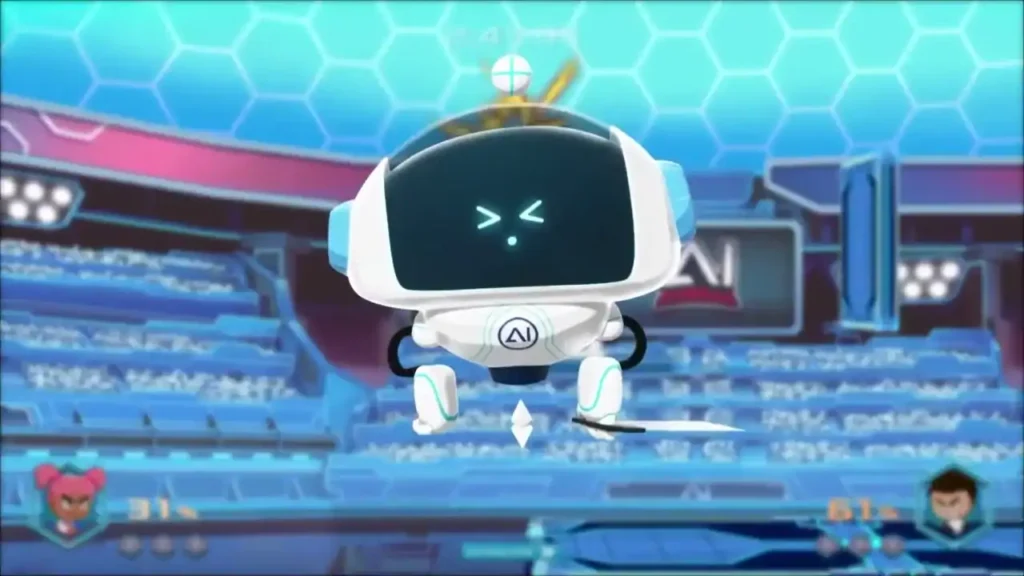
About AI Arena
ArenaX Labs developed a platform fighter where you oversee rather than pilot your characters directly. Each fighter is an NFT holding an AI model you train, then release to fight on its own. The setup echoes classic platform brawlers like Super Smash Bros.: knock opponents off the stage, with you acting as coach instead of player. Matches occur on the game's servers to stop cheating. The ecosystem runs on Ethereum, with the game and Neuron ($NRN) token sitting on Arbitrum, an Ethereum layer-2.
See more
How to play AI Arena
Training uses imitation learning: you show moves to the AI and it learns by mirroring them, spanning defense, power strikes such as charging headbutts, and edge returns. An AI Inspector tool helps you watch your model fight, spot its weak points and drill problem areas. Once ready, your fighter joins Ranked Battle mode, where ELO matching puts it against peers and refreshes the live scoreboard instantly.
AI Arena tokenomics & earning
Each fighter consists of three layers: Skin (how it looks), Frame (body shape controlling its combat profile) and Core (the AI). Play rounds happen weekly, handing out NFT and $NRN based on where you finish, with high-ranked fighters earning steeper bonuses per victory. The $NRN token has a hard cap of one billion and arrived in June 2024. In the game, it buys batteries powering ranked access and can go into a merge pool for a shot at new NFTs; merged tokens vanish, which caps NFT numbers. It also unlocks staking and voting.
On July 2, the CortX Foundation stated it would halt operations, cutting $NRN backing and starting wind-down, per public reports. Since batteries, fusions, staking and votes all depend on $NRN, the shutdown ripples through everything.
Is AI Arena worth playing?
It clicks for players who see AI training as a sport, as wins flow from how well you teach your model and real-time action is absent. Ranked mode demands a fighter NFT and $NRN for juice, meaning a starting outlay. Given the July 2 closure notice, buying in remains a meaningful gamble. Look up the official channels first to check if ranked matches still exist, what rules apply and which regions have access.
AI Arena is a platform brawler where machine learning is the skill. You never control your character mid-match: each fighter is an NFT housing an AI model, and your input happens earlier through imitation learning, teaching blocking, charged strikes and edge recovery until the model copies your approach. Matches then execute on…
Read the full verdict
AI Arena is a platform brawler where machine learning is the skill. You never control your character mid-match: each fighter is an NFT housing an AI model, and your input happens earlier through imitation learning, teaching blocking, charged strikes and edge recovery until the model copies your approach. Matches then execute on ArenaX Labs' infrastructure, eliminating cheating but removing player control.
The feedback system is most effective. The AI Inspector reveals where your model struggles, enabling focused retraining, and ELO-matched Ranked Battle gives that work measurement. Separating fighters into Skin, Frame and Core keeps cosmetics away from the mechanics that determine outcomes.
The financial layer presents challenges. Ranked entry costs a fighter NFT plus $NRN batteries, weekly rounds pay by leaderboard position, and the merge pool burns tokens to restrict NFT supply, meaning rewards concentrate at the top. It's ideal for deliberate players who love refining AI behavior and can manage upfront costs; those wanting direct control should look elsewhere.
What we checked and when
- Status
- Live The game was online and active when we last checked it.
- Last checked
- Sources
Gameplay Breakdown & Analysis
Independent assessment by eGamers game testing guild
- You teach your character's AI through demonstrations, making strategy and instruction replace mechanical skill
- The AI Inspector explains why a fighter loses specific matchups, enabling precise retraining
- Ranked matches use ELO matching with a real-time global leaderboard
- Skins, Frames and Cores keep cosmetics separate from combat-determining attributes
- Built on Arbitrum within the Ethereum network
- Ranked participation requires owning a fighter NFT plus $NRN for batteries—initial outlay is required
- Prize distribution is leaderboard-based, concentrating rewards at the top
- You don't participate in actual matches; the AI fights for you
- Developing a strong AI model demands repeated, patient training sessions
Funding & Backers
Player Reviews & Scores
Real reviews from verified blockchain wallet gamers
Be the first to review this game!
Frequently Asked Questions
How do I start playing AI Arena?
Begin with an AI fighter NFT that you train using Imitation Learning—the AI mirrors the actions you perform during training sessions. Once satisfied with its behavior, enter it into Ranked Battle where it fights independently without your direct control.
How does training an AI fighter actually work?
Gather gameplay data, then refine it to emphasize specific attributes like positioning and adjust its decision-making. The AI Inspector shows what action your fighter would take in any situation, and Simulation Mode lets you test it against built-in opponents before entering ranked competition.
How do players earn, and what is the $NRN token?
Neuron ($NRN) is the game's native token with a 1 billion total supply. Win Ranked Battles to earn $NRN—higher leaderboard rankings yield bigger rewards per victory. The token also pays for gear, equipment upgrades, character purchases, and staking opportunities.
Do I need a crypto wallet to play?
Yes. Your fighters are NFTs and earnings are in $NRN, requiring a compatible crypto wallet connected to your account for holding and managing them. The game runs through the client, but NFT ownership and token management happen in your wallet.
Is AI Arena still active, and is it worth playing?
AI Arena is playable now through its site at aiarena.io with active ranked seasons and $NRN in circulation. It's worth exploring if you like teaching AI to fight rather than reflexive control, since success hinges on training quality over reaction time.