

Media Showcase
5 Assets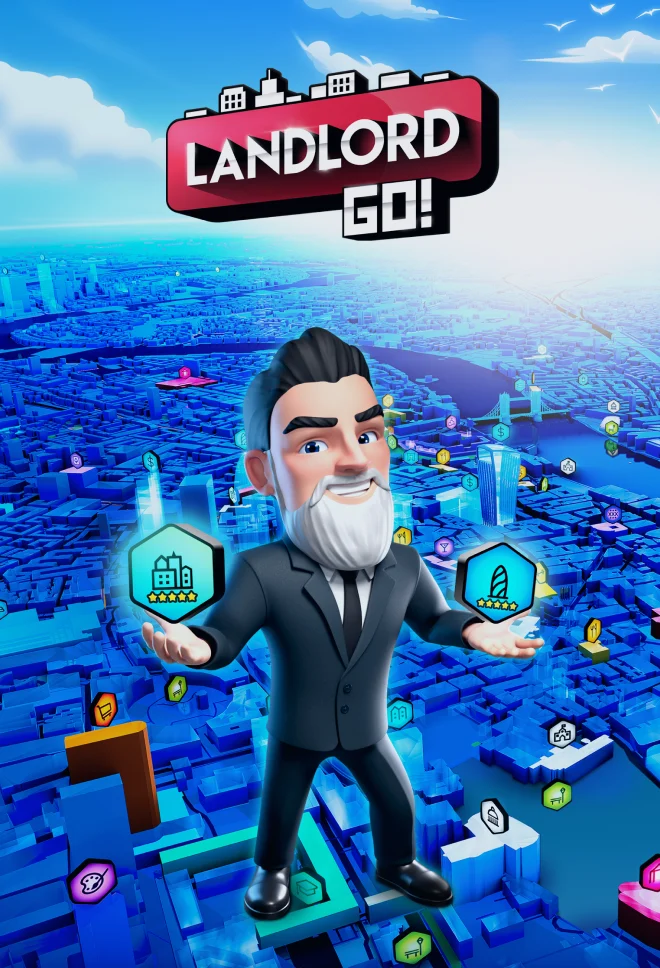
About Reality Metaverse
Reality Metaverse represents the blockchain division of Reality Games, the studio previously recognized for Landlord GO, a location-based property game that maintained a substantial user base before tokenization. That legacy shapes the approach. Instead of inventing fictional lands to parcel out, Reality Metaverse generates blockchain items tied to real locations — landmarks, major cities and nations — and portions them, turning a single high-cost NFT into numerous smaller shares so many participants can co-hold. These partial holdings then integrate into Reality Games' portfolio. It operates on Ethereum, with Polygon availability, and stands among uncommon blockchain gaming projects connected to an existing standard game with verifiable audiences instead of vaporware.
See more
How to play Reality Metaverse
The playable core comes from Reality Games' offerings, primarily Landlord GO, functioning as location-based property games typically do: the planet is your board, you accumulate and exchange properties anchored to actual areas, and you battle other users over prime territories. The blockchain layer exists alongside it — collect partial NFTs of famous places and territories through Reality Metaverse, maintain holdings, and get a portion of what those assets generate. Since the shares are fractional, starting costs drop substantially, the primary sensible difference versus digitally-invented land in a fictional world. Check the business for available asset selections, since offerings rotate through auctions.
Reality Metaverse tokenomics & earning
RLTM is the primary coin, with a fixed maximum of one billion and nearly a quarter in active use. It permits reduced prices during sales and operations, first access to token purchases, and voting power. The significant aspect is the compensation structure: holders of fractional NFTs receive payments from Reality Games' existing title ecosystem — Landlord GO chiefly — and from NFT market actions, so earnings connect to an established game with genuine engagement rather than to token-only schemes. That represents genuinely healthier construction than the broader category, with the caveat that it hinges on those games continuing to execute well, and the coin's valuation stays relatively small. See the organization's technical guides for contemporary revenue sharing details.
Reality Metaverse functions as a collectibles-centered blockchain operation rather than a single game. It originates from Reality Games founders, who have operated since 2016, building around fractional NFT structures — items divided into sections so multiple people can each hold a piece of the same asset, then used throughout games in the…
Read the full verdict
Reality Metaverse functions as a collectibles-centered blockchain operation rather than a single game. It originates from Reality Games founders, who have operated since 2016, building around fractional NFT structures — items divided into sections so multiple people can each hold a piece of the same asset, then used throughout games in the platform.
The pitch makes sense. Breaking NFTs into fractions decreases per-unit expenses and reframes collecting as a market position, a logical remedy to the barrier created when headline pieces cost too much for typical players. Dual-chain operation on Ethereum and Polygon also proposes that fundamental transactions settle on Ethereum while routine activity moves to lower-fee Polygon.
The disconnect emerges when examining playability. Public material provides no game descriptions, moment-to-moment sequences, or clarification of which experiences actually utilize the fractional tokens, while no identified development organization appears on the official platform. Token-centric ventures stand or fall on the quality of underlying entertainment, and that element stays undocumented.
Meant for participants in fractional ownership who are prepared for market dynamics and early-phase projects. Those seeking finished, polished games with transparent design should find alternatives right now.
Gameplay Breakdown & Analysis
Independent assessment by eGamers game testing guild
- Established track record through Reality Games, operating since 2016
- Fractional NFT model enables shared ownership of in-game property
- Built-in trading systems supporting collection, purchasing, and sales
- Operates across Ethereum and Polygon, offering affordable alternatives
- Framed as a larger economy rather than a standalone product
- Categorized as collectible-only genre, restricting apparent depth
- Public documentation is incomplete — specific titles, game styles and mechanics unspecified
- Asset value fluctuates with financial markets and liquidity factors
- Cross-chain structure involving Ethereum and Polygon creates wallet complexity
- No public reporting on coin valuation, community scale, or recent momentum

Reality Metaverse ($RMV)
-4.14%


Player Reviews & Scores
Real reviews from verified blockchain wallet gamers
Be the first to review this game!
Frequently Asked Questions
What is Reality Metaverse?
A GameFi ecosystem where users own, buy, and sell fractional NFTs (fNFTs) for use in games, built by the team behind Reality Games, founded in 2016.
How do I get started with Reality Metaverse?
Begin at https://realitymeta.io/. You'll need a wallet supporting Ethereum and Polygon to buy, own, and trade the fractional NFTs that power the ecosystem.
How do players earn in Reality Metaverse?
Earnings come from acquiring and trading fractional NFTs (fNFTs) used across games. Further tokenomics details are not publicly disclosed.
What are fractional NFTs (fNFTs) in Reality Metaverse?
fNFTs are digital assets divided into fractions, allowing multiple users to own shares of the same item. Here they serve as collectibles across the ecosystem's games.
Is Reality Metaverse still active?
The ecosystem operates on Ethereum and Polygon with presence at https://realitymeta.io/. Visit the official site for the current status of games and asset availability.