

Media Showcase
3 Assets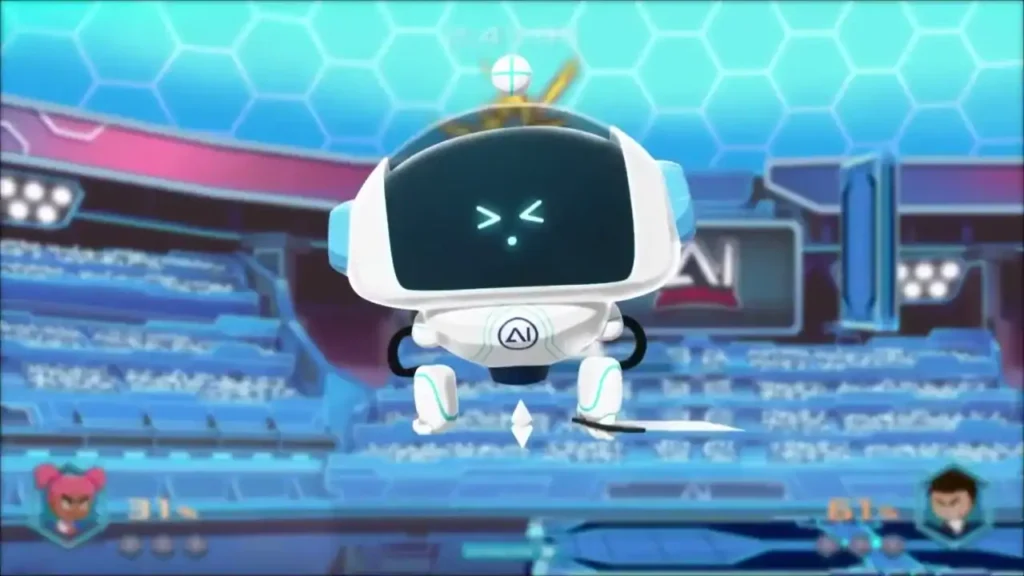
About AI Arena
AI Arena is a platform-fighting game from ArenaX Labs where players do not directly command their characters. Each fighter is an NFT containing an AI model that the owner trains and then submits to compete on its own. The format resembles a Super Smash Bros.-style brawler — the goal is to knock opponents off a platform — but the human role mirrors coaching rather than piloting. Matches run on the game's servers to stop exploits. The project exists in the Ethereum ecosystem, with the game and its Neuron ($NRN) token running on Arbitrum, an Ethereum layer-2 solution.
See more
How to play AI Arena
Training uses imitation learning: the player shows actions and the AI copies that style, covering techniques such as blocking, powered-up attacks like the slam, and getting back onto the stage. An "AI Inspector" feature allows players to see how a model acts so they can find problems and retrain specific situations. Once a fighter is prepared, it gets entered into Ranked Battle, the game's central mode, where an ELO rating puts it against rivals of equal skill and refreshes a public ranking in real time.
AI Arena tokenomics & earning
Each fighter NFT splits into three parts: a Skin (aesthetic layer), a Frame (the body shape that sets battle stats and weaknesses), and a Core (the AI algorithm). Matches run in monthly "seasons," with NFT and $NRN payouts given out by ranking at the finish of each season, and better-ranked players earning bigger rewards per victory. $NRN has a maximum supply of one billion and debuted in June 2024. In-game it funds batteries that power NFTs for ranked fights and can be put into a merge pool for odds at additional NFTs; deposited coins get removed, which is how NFT supply stays limited. It also has staking and voting functions.
Is AI Arena worth playing?
AI Arena appeals to players drawn to machine learning as a skill-based competition instead of to rapid combat, since outcomes rest on training grade rather than real-time responses. Ranked matches require a fighter NFT and $NRN for batteries, so entry has a price, and access terms and regional rules should be reviewed on the official site and docs before purchasing.
AI Arena is less a brawler than a machine-learning project dressed as a platform fighter. You never operate characters during matches: each fighter is an NFT housing an AI model, and your input arrives earlier, in training periods where you show shielding, powered attacks and recovery until the model reproduces you. Matches…
Read the full verdict
AI Arena is less a brawler than a machine-learning project dressed as a platform fighter. You never operate characters during matches: each fighter is an NFT housing an AI model, and your input arrives earlier, in training periods where you show shielding, powered attacks and recovery until the model reproduces you. Matches then execute on ArenaX Labs' infrastructure, which avoids cheating but also means the play moment is the moment you stop participating.
The strongest element is the teaching loop. The AI Inspector displays why a fighter falters in a given spot, so adjusting is fact-based rather than random, and ELO-ranked Ranked Battle gives that work concrete scoring. Splitting a fighter into Skin, Frame and Core additionally keeps looks distinct from the attributes that truly control results.
The earning side is harder to enjoy. Ranked access wants a fighter NFT plus $NRN for the batteries powering it, monthly rounds pay by standing, and the merge pool burns deposits to cap NFT quantity — so earnings concentrate at the top. It suits methodical players who appreciate tweaking behavior and can handle the upfront expense; participants who want to manage the fighting should look elsewhere.
Gameplay Breakdown & Analysis
Independent assessment by eGamers game testing guild
- Real on-chain ownership of bots and equipment via Ethereum
- Deep modification options with weapons, armor, and powers
- AI coaching mechanic gives learning and strategy genuine significance
- Blockchain-verified honesty and openness in matches
- Impressive visuals and immersive multiplayer competition
- Ethereum-bound, lacking cross-chain alternatives or lower expenses
- Ethereum gas fees can make buying and trading NFTs pricey
- NFT access to gameplay raises hurdles for fresh participants
- PvP ranking relies on steady active players to stay engaging
- Understanding AI coaching plus blockchain wallets is a tough learning curve for casual participants
($AI-ARENA)
Funding & Backers
Player Reviews & Scores
Real reviews from verified blockchain wallet gamers
No category ratings yet — be the first to rate.
No reviews yet. Be the first to review this game!
Frequently Asked Questions
How do I start playing AI Arena?
Begin with an AI fighter NFT that you train using Imitation Learning—the AI mirrors the actions you perform during training sessions. Once satisfied with its behavior, enter it into Ranked Battle where it fights independently without your direct control.
How does training an AI fighter actually work?
Gather gameplay data, then refine it to emphasize specific attributes like positioning and adjust its decision-making. The AI Inspector shows what action your fighter would take in any situation, and Simulation Mode lets you test it against built-in opponents before entering ranked competition.
How do players earn, and what is the $NRN token?
Neuron ($NRN) is the game's native token with a 1 billion total supply. Win Ranked Battles to earn $NRN—higher leaderboard rankings yield bigger rewards per victory. The token also pays for gear, equipment upgrades, character purchases, and staking opportunities.
Do I need a crypto wallet to play?
Yes—fighter ownership and reward payments require a compatible wallet. Battles and training occur in the game client, but your characters and earnings live in your wallet where you control them.
Is AI Arena still active, and is it worth playing?
The game is live at aiarena.io with active ranked competition and a functioning $NRN market. Consider it if you enjoy the appeal of training an autonomous AI rather than piloting a character yourself, since your outcome depends on training quality, not reflexes.