

Matt Freedman, a technical designer on GTA 5 at Rockstar Toronto, puts the character-switching system he built for the game’s heist missions in blunt terms: two years of development for a few minutes of play.
“I probably spent two years on what amounts to about two, maybe three minutes of actual gameplay,” Freedman said.
Most people who played those missions likely never registered the switches. He designed them that way.
Where the satellite view stopped helping
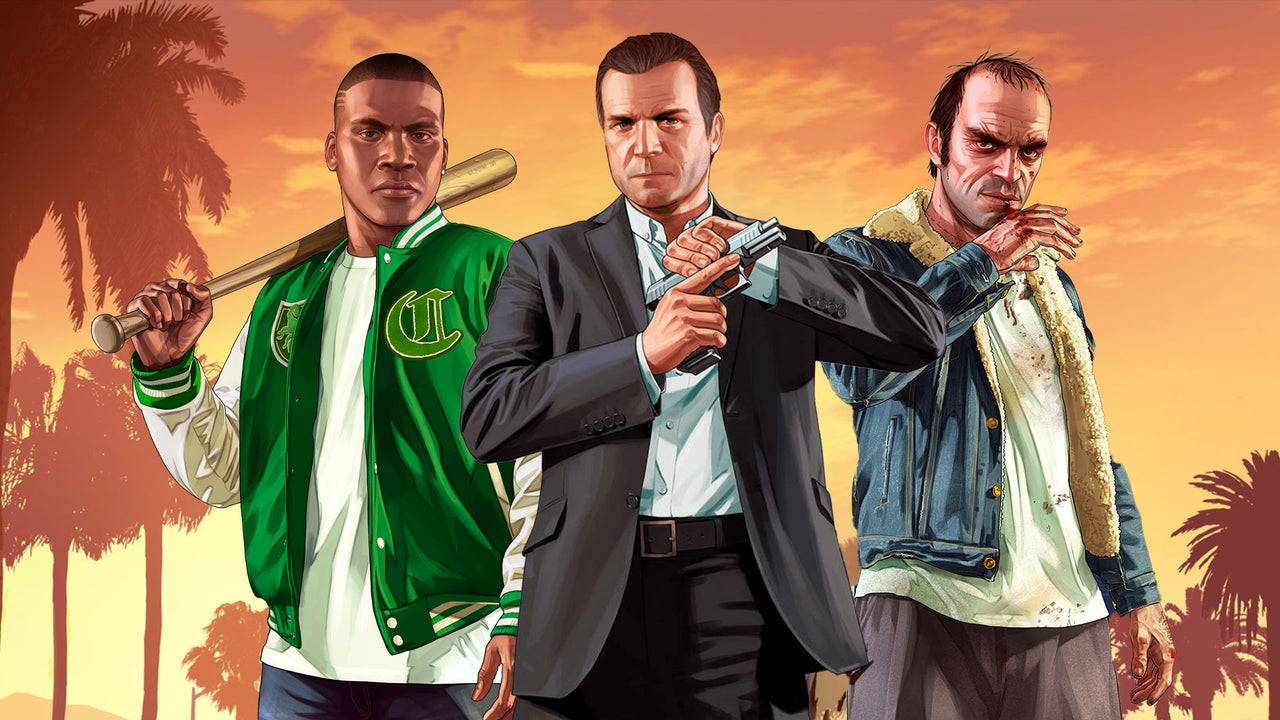
GTA 5 had three playable leads: Franklin, Trevor and Michael. Swapping between them in free roam pulled the camera up into the sky for a satellite shot of Los Santos, then brought it back down on the chosen character. The sequence hid the loading, and it also put the size of the city on display.
That option wasn’t available inside missions. In the heists, Freedman said, “we would have swaps between characters that were on completely different sides of the map, and we were not allowed to go to that satellite screen to mask the loading.”
“I don’t think a lot of people noticed this because we were doing it so seamlessly,” he said.
He described the target in terms of hardware that hadn’t arrived yet. “So, effectively, like we were trying to get like an NVMe-speed world transition, like the kind of stuff that they would have in like the portal sequence for Ratchet & Clank [on a PS5 SSD], and trying to get that to run on a PS3 and an Xbox 360.”
The city skyline had to stay in shot
Freedman started with camera tricks. A character you switched to might open the shot leaning on a wall, framed close on one hand, so the world could finish loading before control returned to you.
Rockstar's leadership rejected the idea. Close framing kept the city out of view, and the city was the game’s main attraction.
“I’d always get these notes saying, ‘No, no, we have to see the city skyline,’” Freedman said. “I’m like, ‘Let me tell you how loading works on our engine. We cannot have two copies of the city loaded at the same time. We need to allow this stuff to go into memory.’ At the end of the project, those weren’t recommendations; those were mandates. You had to see the city skyline.”
The team settled on level-of-detail changes tied to how far things were from the player. Traffic in the distance became single points of light. Faraway buildings lost their shape and turned flat, with depth of field blurring the missing detail. Designers also kept the character busy with something worth watching, which left the skyline as background that players didn’t study.
“We then would very rapidly turn on those streaming systems,” Freedman said. “And like you know, if you wanted to sit there with a sniper rifle and look off in the distance, you would see things loading in. But most players didn’t do that.”
He still takes pride in the result. “Details matter. I was very proud of the system that we made, and the fact that it held up so well. And like, you do see a little bit of streaming when we do the transition, but it’s usually very far in the distance.”
A helicopter made it harder
Streaming was one problem among several. Freedman singled out Three’s Company, the mission in which the crew extracts a terrorist suspect from the IAA building, a downtown Los Santos skyscraper with the city laid out on every side.
Trevor pilots the helicopter. Franklin watches the building through a sniper scope from a rooftop across the street. Michael rappels down the tower from the helicopter to reach the hostage. Players swap among the three, and the camera gets a few seconds to move between a man on a rope, a man on a roof and a helicopter the player can fly any way they like.
“We had to put in so much tech to make sure that we were respecting any player’s gameplay choices because that helicopter kept screwing us because it can be upside down, it can be banking, it can be doing anything,” Freedman said.
He laid out the specific issue. “The camera normally would just do a straight interpolation between two points (rotation and position). However, because the helicopter can potentially have an arbitrary rotation and position, it would oftentimes wind up with a transition to or from it that felt to the player that it was moving in the wrong direction — for example if the helicopter was upside down, then the player would see the camera seeming to flip, then go downwards instead of up.”
Freezing the player’s controls would have solved it quickly, and Freedman refused. “Whenever I work on something, taking away player control is never the answer. If we literally are hours away from shipping the game, I will consider it. But until then, I will put in the hours to keep that player control there.”
Almost nine years at Rockstar, and a draw
Freedman was at Rockstar for close to nine years. He joined as a level designer on Max Payne 3, switched to technical design for GTA 5, and then moved into a broader game design role on Red Dead Redemption 2.
He expected the switching work to go unnoticed. Then a review at a major outlet included a montage of the camera transitions his team made. Freedman and another designer had a running contest over who built the best ones, and the montage featured five from each of them.
“So we’re like, ‘All right, at the end, we tied.’ But I think that was one of my proudest moments,” Freedman said.
GTA 6 brings the mechanic back with two protagonists, Jason and Lucia. Its trailers already show control passing between the driver and the gunner in a police chase. The game launches within hours, and players will see how Rockstar handles the switch on current hardware.