























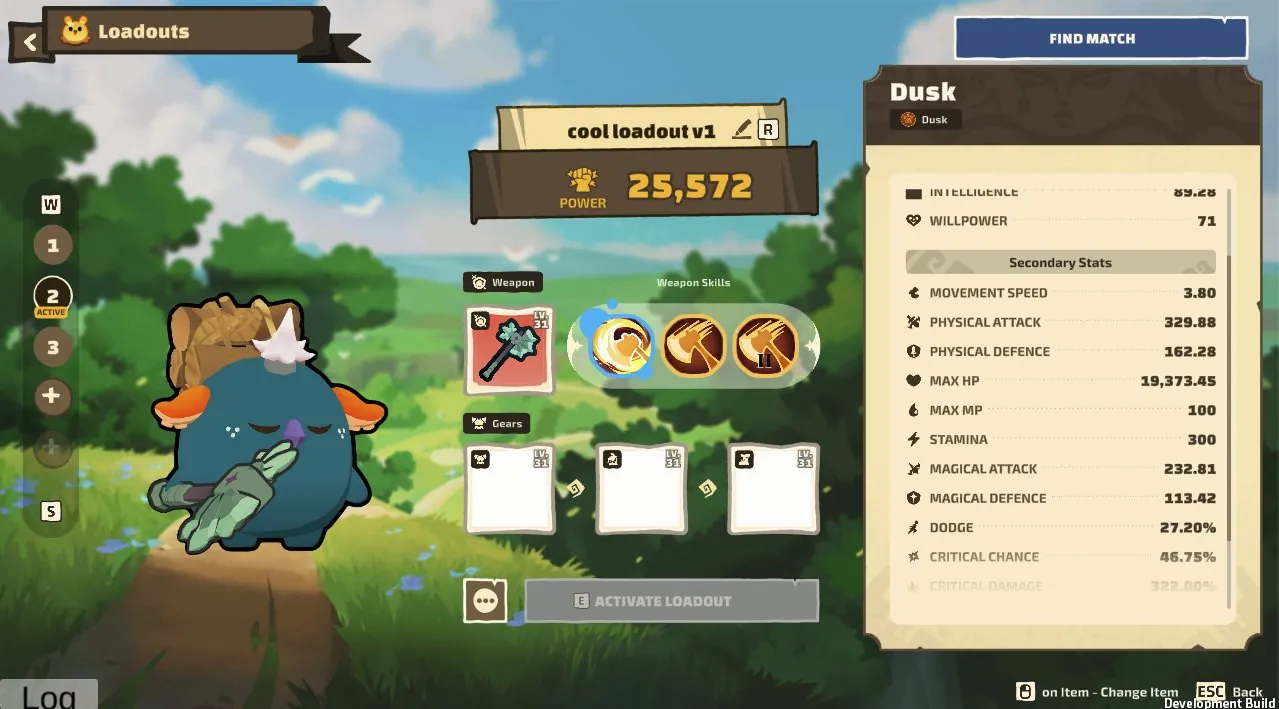
Axie Bastion, a tower defence game made by community developer YCG, has won first place in Sky Mavis’s first Axie Vibeathon. The competition asked entrants to build new Axie games with AI tools, and YCG’s entry takes home 9,000 bAXS ($6,000).
In Axie Bastion, players defend a village’s crystal Core against waves of wolves, slimes and treants. An Axie’s class and body parts decide its combat role. Axies placed next to each other connect when their touching parts share a class, so players have to think about where each defender goes and also which ones sit side by side.
The winners and finalists
Second place and 3,500 bAXS went to Emberward by xenoshiba. Lunacia Wildseed by lmoul came third, earning 2,000 bAXS. The other five finalists (exidz, TactiCards, Hardcodepunk, KingSopa and StivenDev) receive 800 bAXS each.
The finalists use Axie’s existing characters and assets in different ways:
- Emberward (xenoshiba) turns Axie genes into combat skills in a tactics game inspired by Final Fantasy Tactics and Mewgenics.
- Lunacia Wildseed (lmoul) mixes home-island farming with battles against enemy waves. Rare seeds earned in battle feed back into the farm.
- Axie Arena: Draft and Clash (exidz) is an auto-battler built on Origins artwork and abilities.
- Axie: Lost Bonds (TactiCards) is a creature-collecting RPG.
- Axrania (Hardcodepunk) pulls in a player’s Axie collection from a public Ronin address for isometric squad combat.
- Kotaro the way of a million ways (KingSopa) is a roguelite.
- Lunakai (StivenDev) is a browser-based tactical RPG that generates 3D Axies from their onchain genes.
Across the list, an Axie’s parts drive different mechanics: tower defence behaviour in one game, tactical attacks in another, RPG abilities in a third. Developers get a shared base to build on without having to recreate the original game.
How the Vibeathon worked
Sky Mavis launched the Vibeathon in September and invited people to make playable games built around Axie Core. Entry was explicitly open to people with no programming experience. Sky Mavis provided art assets, engine guidance and API documentation, and entrants picked their own AI development tools.
More than 400 people registered and 91 games were submitted in the first round. Eight finalists went through to a second round, where they spent four weeks developing their prototypes. Each finalist got 250 USDC to spend on AI tools for that round. They presented their games at an event on 12th November.
What comes next
Sky Mavis says it will assess the finalists over the coming weeks before deciding which ones get further support. It will look at how well each fits with Axie Core and how much work it would take to get each one to players. No release plans for any of the games have been announced.
Every submitted game stays in the Vibeathon gallery, and valid entrants will get a participation badge.
For Sky Mavis, the contest is a way to get more playable Axie games out of community interest. AI-assisted development could make it cheaper for one person to test an idea, and Axie already has the characters, assets and audience to build on. Whether any of this first batch keeps players after the prize money is paid out, and whether its builders keep working on their games, is still unknown.