

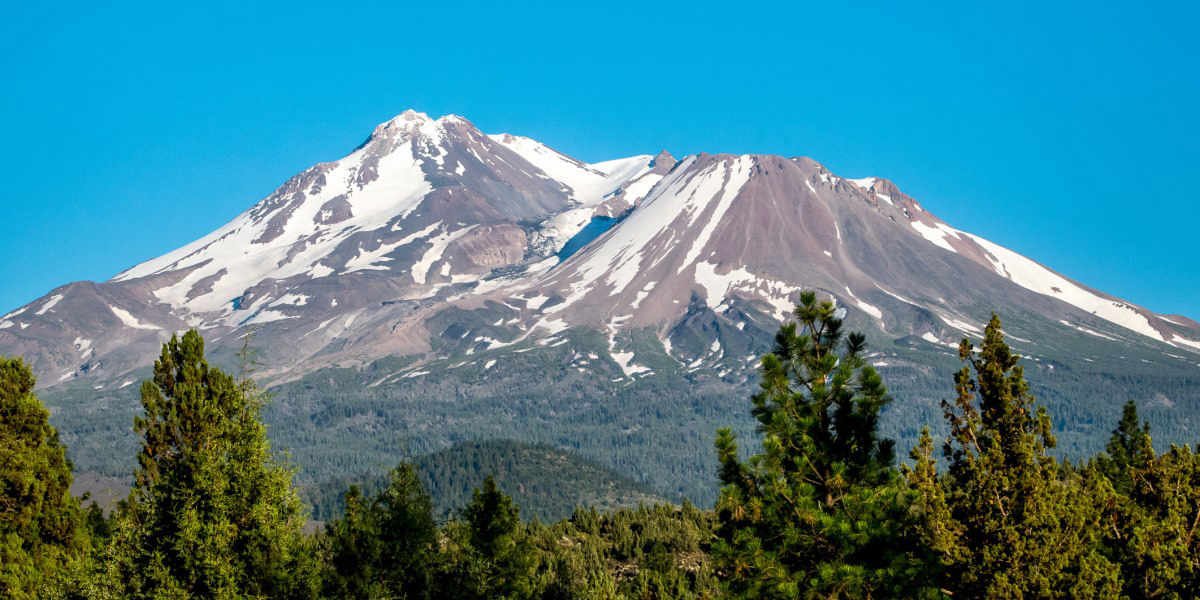
Mount Shasta’s turnaround rule says noon. The three young men on it that day stood on the summit at 7pm.
Everything else follows from that seven-hour overrun. The climb began at 3am, the cutoff came and went, and the descent of a 14,000-foot volcano happened in darkness. The night was spent in Mud Creek Canyon; the extraction came the following morning, courtesy of Forest Service rangers and volunteers.
Their planning tool had been Gemini, Google's AI chatbot.
The Siskiyou County sheriff’s office put it this way in its report: the hikers “were advised by Gemini to bring far less food and water than their group required, especially when their planned 8-hour ascent became a multiday ordeal.”
The failure hides inside that sentence. No chatbot marched anybody onto a cliff face. What it did was pack them for a single eight-hour day.
The math that didn’t survive contact with the mountain
On paper, eight hours up Shasta isn’t a crazy number. Strong climbers manage it. The trouble is that a plan lives or dies on its worst day, and the food-and-water figure is precisely where the safety margin sits.
Provision for eight hours and eight hours is fine. Provision for eight and take 16, and now you’re rationing. Provision for eight and then bivouac in a canyon at altitude, and you’ve become a rescue call.
The call did come. The three phoned the sheriff’s office during the descent to ask for directions — a detail worth pausing on. There was coverage, there was a handset, and none of it was enough to get them off the mountain.

What the chatbot can and can’t be blamed for
Whether Gemini earns the blame here is debatable, and my own read is that most of it belongs elsewhere. No AI itinerary compels anyone to keep going past a posted turnaround time. That decision was human — made at noon, then remade at 1pm, at 2pm, and all the way to a 7pm summit.
The provisioning advice, though, is a different species of failure, and it’s the one that ought to worry anybody leaning on these tools. A chatbot will hand you a confident packing list without ever disclosing the assumptions behind its estimate, or how quickly that list falls apart if you happen to be slower than average.
No error bar comes with it. Nothing says “and if this drags on twice as long, here’s what you’ll wish was in your bag.” What arrives is a neat, well-formatted answer, delivered in an identical register whether it happens to be correct or wildly optimistic.
The sheriff’s advice is the practical takeaway
As the sheriff’s office put it: “It is always advisable to call the local USFS Mount Shasta ranger station ahead of your trip to ensure you have the most accurate information, and to never rely solely on AI for your trip planning.”
That isn’t technophobia. The operative word is “solely.”

Rangers know what last week’s snow did. They know which route has gone rotten, where a creek crossing shifted, how many parties bailed yesterday. A language model knows what has been written about the mountain — averaged out, smoothed over, and blind to today.
One of those sources can describe the conditions. The other can describe the conditions as they stood whenever its training data stopped paying attention.
Use it for the outline, not the load
Plenty of people are going to plan trips with a chatbot regardless, and if that’s you, treat whatever it produces as a first draft you’re on the hook for verifying. Route names, permit basics, rough season — fine. Food and water quantities for a summit push — no.
Put the question to a person at the ranger station: what does a slow party carry? Then carry that.
All three hikers walked away, which is why this reads as a story rather than an obituary. A night in Mud Creek Canyon had every chance of ending differently.
Ahead of your next climb, make a single phone call to the USFS Mount Shasta ranger station and ask one question: what would you add to this pack? Add whatever they name. Call it a pound or two of insurance against a night in a canyon waiting on volunteers.