

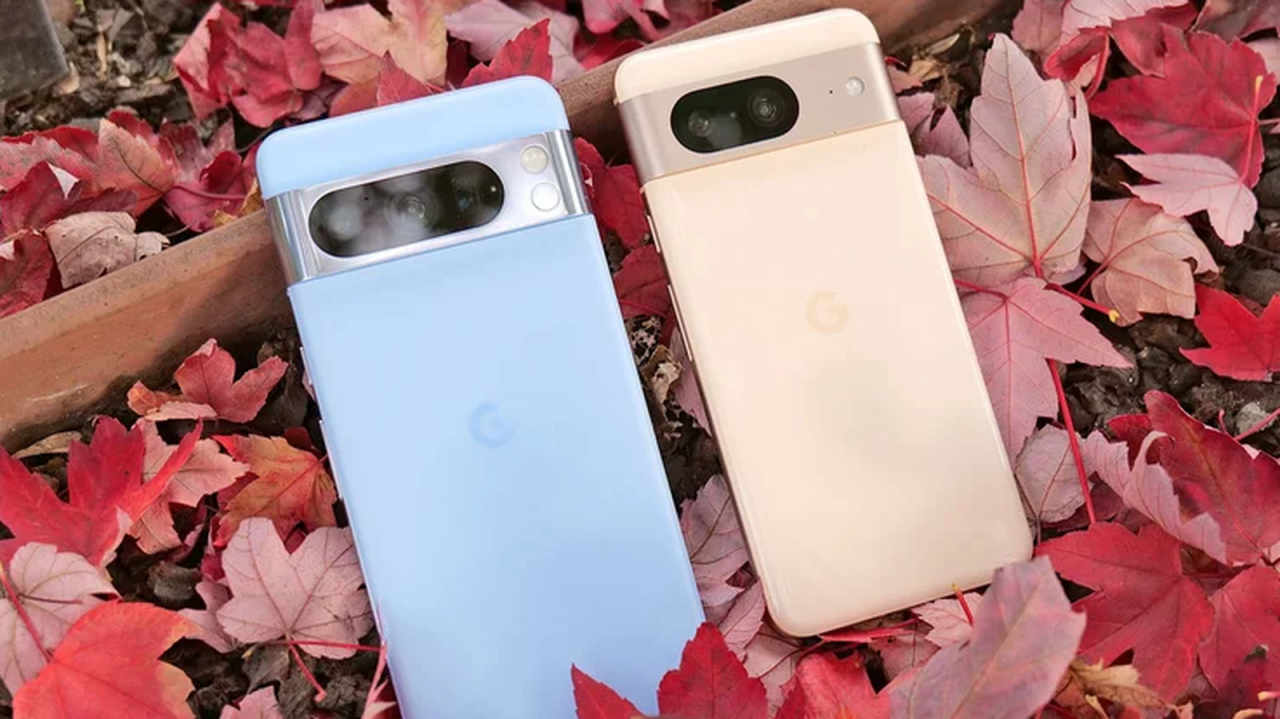
When it debuted in 2023, the Pixel 8 cost $700. These days a refurbished unit can be had on Amazon for less than $300, undercutting the $500 Pixel 10a, Google’s latest budget model, by $200. It sounds like a no-brainer on paper. In practice, it’s not that simple.
Where the phone still shines is its camera and software. Where it begins to struggle is the chip and the battery.
Updates will keep coming longer than the hardware can keep up
At launch, Google committed to seven years of OS and security updates for the Pixel 8. It’s already eligible for Android 17, and that commitment means Android updates should keep arriving until at least 2030.
That shifts the calculation. For most handsets, the end comes when apps stop being compatible or updates dry up. For the Pixel 8, it’s far more likely that the hardware and the battery’s health will fail before the software does.
Older Pixels also receive feature updates that Google brands as “Pixel Drops.” These have delivered handy quality-of-life additions such as Screen Reactions and Bubbles. Not every fresh Pixel feature trickles down to earlier devices, but the Pixel 8 is new enough that a reasonable portion of Google’s showcased features should reach it. On top of that, the interface stays clean and largely bloat-free, which remains the biggest draw for Pixel buyers.
No phone at this price shoots better
Around the back, the Pixel 8 carries two cameras: a 50-megapixel wide lens and a 12-megapixel ultrawide. The main sensor is identical to the one in the Pixel 8 Pro, and both phones left us impressed with their camera results.
Google implements AI on phones clearly better than most competitors, and nowhere is that more obvious than in the camera app. Both Magic Editor and Best Take are included. For under $300, the majority of similarly priced options simply can’t keep up with this camera.
The Tensor G3 holds it back
If what you want is Android in its purest form, a Pixel is an easy suggestion. For hardcore gamers, it’s a different matter. We wouldn’t steer them toward the current Pixel 11 lineup when raw performance matters most, let alone a model that’s three years old.
For years, Google’s own Tensor chips have drawn criticism, and rightly so, for performance that routinely falls behind comparably priced phones powered by Qualcomm or Apple chips. The Pixel 8’s Tensor G3 copes with casual games and can manage a handful of demanding ones. What it lacks is the graphics power to sustain smooth frame rates at higher settings.
Gaming may not matter to you at all. The catch is that raw performance determines how a phone feels several years on. It separates a device that still breezes through daily tasks from one that’s beginning to feel old.
Many Pixel 8 owners say their phone already falls into that second category. As it has aged, they’ve noted choppy animations, sluggish app launches and an overall slower feel.
Battery life has always been a weak point
Inside is a 4,575 mAh battery, supporting up to 27W wired and up to 18W wireless charging. None of those figures stand out. Following each Pixel release, battery complaints seem to start stacking up sooner or later.
If performance and battery life are your top priorities, another Android phone will serve you better.
It’s built like a flagship, not a budget phone
Here’s where the Pixel 8 justifies part of its price. Plastic is the norm at this price point, but the Pixel 8 pairs an aluminum frame with a glass back and carries an IP68 rating for dust and water resistance.
Its 6.2-inch OLED screen refreshes at 120Hz and hits a peak brightness of 2,000 nits. Bezels are fairly slim, and the camera visor delivers the same Pixel styling Google continues to use on its latest models. Thanks to reverse wireless charging, you can also juice up small accessories such as wireless earbuds while you’re out.
Spend a bit more and get a much better phone
The real competition for the Pixel 8 isn’t the Pixel 10a. It’s the refurbished Pixels sitting one rung higher.
On Amazon Renewed, the Pixel 9a goes for about $330. For roughly $30 more than the Pixel 8, you get the Tensor G4, the same processor found in the Pixel 9, along with one more year of OS updates. The cameras are comparable. The trade-off: the Pixel 8’s glass back is swapped for plastic.
The same store sells the Pixel 9 for $420. Beyond the Tensor G4, which should hold up somewhat better over time, it brings a 48-megapixel ultrawide camera and 12GB of RAM.
My recommendation: if you absolutely can’t go over $300 and your main concerns are photography and clean software, the Pixel 8 still gets the job done. If you can stretch to $330, go for the Pixel 9a. The additional $30 buys a newer chip and an extra year of updates, and for a phone whose biggest flaw is aging hardware, those matter more than a glass back.