

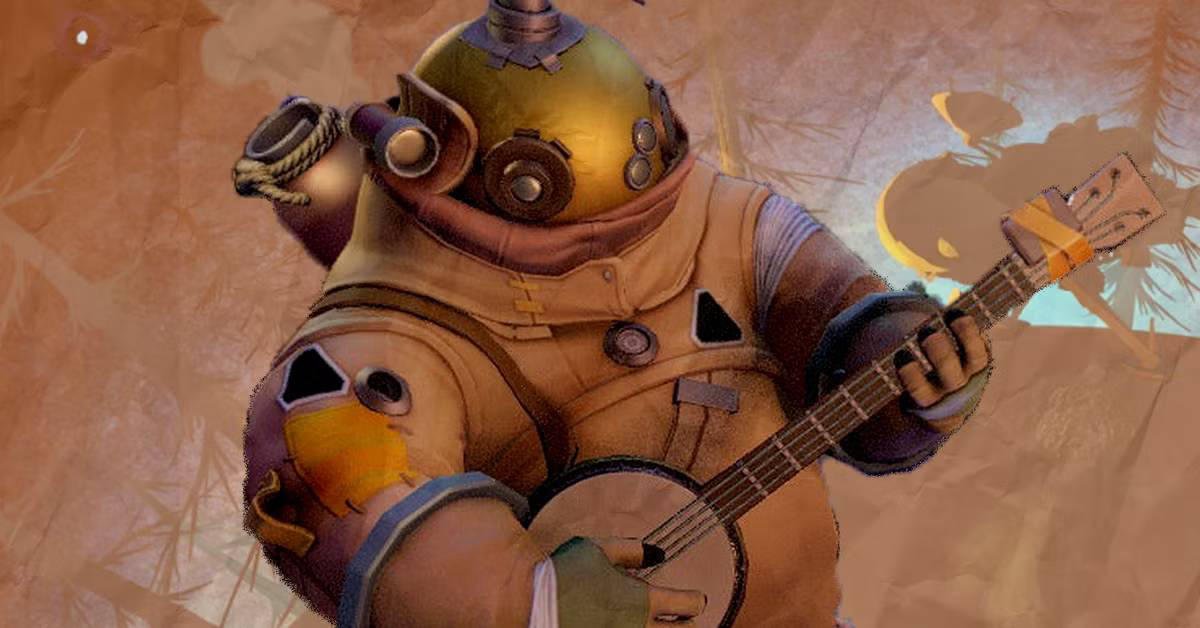
An anglerfish can swallow you whole. By choice. Purely because you wanted to see what would happen.
That’s the bargain Outer Wilds strikes with its players, and it explains why a single tossed-off remark from an alien who died eons ago has lingered in people’s heads since 2019.
The line that reads like a lunchbox note
“Be curious on your journey,” writes Bells, one of the ancient Nomai in Outer Wilds, Mobius Digital’s 2019 time-loop exploration game.
Taken at face value, it barely registers. It’s a courteous farewell bolted onto some practical instructions, the sort of thing your eyes slide over as you hunt for the next puzzle.
Stumble onto it early, though, and it flips. And you probably will stumble onto it early, since it’s precisely the kind of quote veterans love to hand newcomers. At that point it stops functioning as advice and starts functioning as permission.
Your first several hours are spent with no clue what is happening. The game deposits you into a narrative that’s already well underway, offers almost no context, then quietly points you toward the plot.
Yet the developers appear much keener on tempting you to poke at the time loop than on marching you to the next story beat.
Why nobody’s in a hurry to tell you the plot
Since no grand objective announces itself up front, you’re free, practically encouraged, to be swallowed up by the wonder of space. And by devising ever more deranged methods of breaking the game’s mechanics.
Why decode those harmonica melodies floating out of the crashed space plant when you could instead aim yourself straight at the sun, purely on the off chance something interesting happens?
And here’s what’s special about “be curious on your journey.” A time-loop game is the only kind that can say it and mean it.
A single breakable human life carries stakes. So does any game with a genuine game over screen. The you-only-live-once setup we’re all saddled with has its pleasures, no question, but it also demands that you stay at least slightly cautious around the clock.
Nobody gets to intentionally feed themselves to an anglerfish in reality. Outer Wilds actively pays you for that flavor of inventive recklessness.
Twenty-two minutes and a clean slate
Each loop wipes the board. Twenty-two minutes pass, then your memories vanish, the consequences dissolve, and your freedom returns.
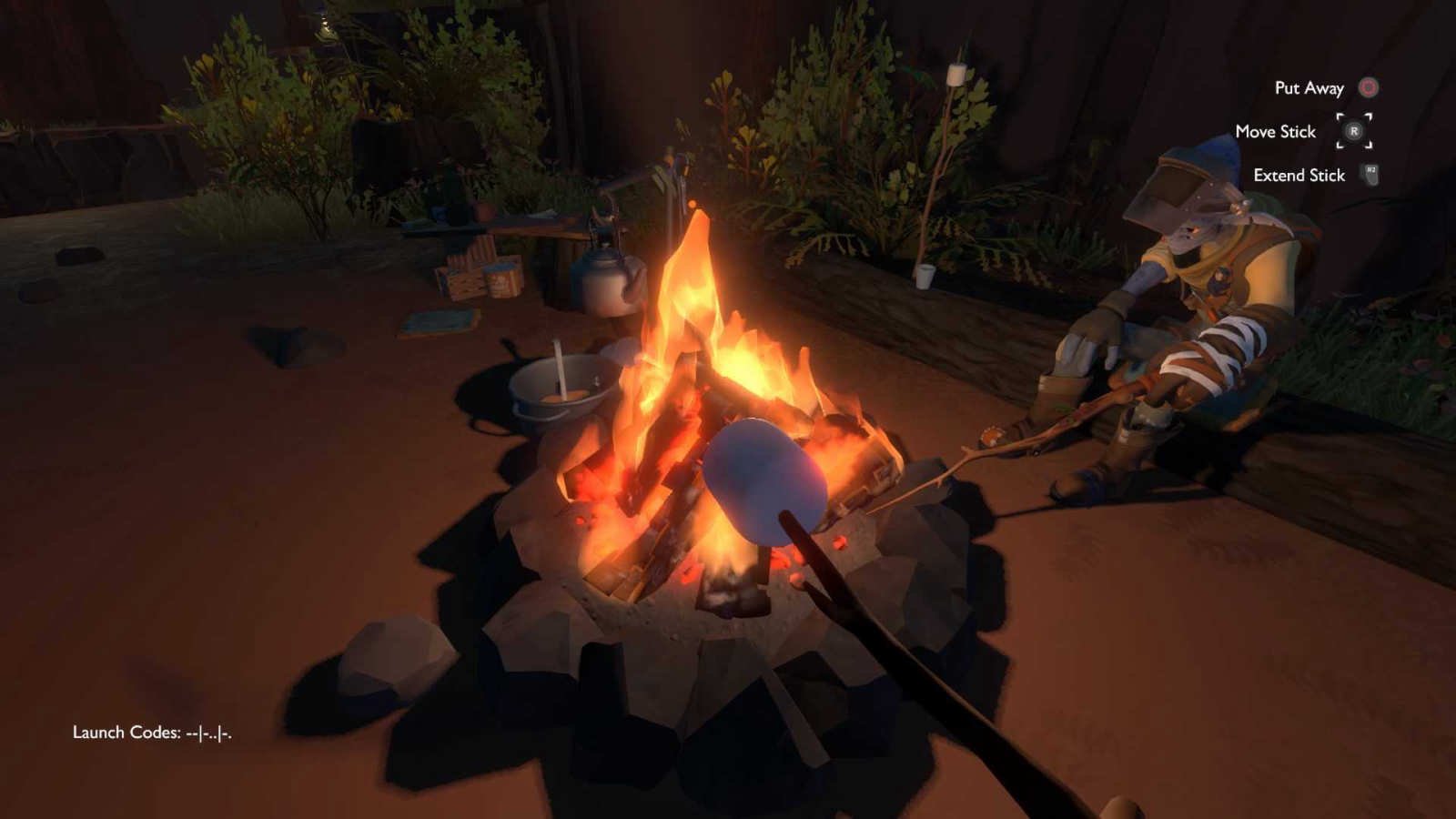
Get crushed inside a black hole. Hurl yourself off a cliff because the bottom of it was nagging at you. Whatever you do, you’ll open your eyes at the campfire again.
That recasts the Nomai’s words completely. Far less parental, far less like something taped to a child’s lunchbox, and far more like a dare dressed up as tender advice.
The achievement list is the real argument
Look at what earns you a reward here. Nearly every one of them asks you to do something no sensible astronaut would consider.
There’s an achievement for choking down a set number of burnt marshmallows (“Mmmm, carcinogens!”). Another for pushing your ship as fast and as far as 22 minutes allow, just to learn whether anything lies beyond the solar system (“It was worth a shot”). Another still for painstakingly examining the utterly mundane gear parked at campfires that aren’t special in any way (“Well, that settles that”).
There is a beautiful story waiting at the heart of all this, and the game feels no urgency about delivering you to it. In its place you get a steady drumbeat of in-game nudges to stress-test the environment until it breaks.
The lesson doesn’t stretch all that far past the monitor. But inside Outer Wilds, and inside every time-loop game worth caring about, recklessness is the entire point, which makes curiosity free.
“What if I ruin this” simply isn’t a question the game entertains. Ruining it means having another go in 22 minutes. That’s the extent of it. That’s the punishment in full.
So Bells has a taker for that dare. One scorched marshmallow at a time, for however long this loop keeps me around.