

China received 74 B300 servers. Another 56 never arrived, stopped for one reason only: a Taiwanese customs officer spotted paperwork that didn’t add up.
Those numbers sit at the heart of an indictment issued Monday in Taiwan against nine individuals, said to include a senior manager at Nvidia along with two Supermicro staff based in the country. According to prosecutors in Keelung, the group produced forged documentation to mask illegal shipments of high-end AI servers into China, breaching US export controls.
Names were withheld by prosecutors, Reuters reported, though it was confirmed that those involved had been “charged with breach of trust and document forgery.” A further suspect connected to a related case remains at large, accused of the “siphoning of funds from a distributor company involved” in giving China a path to restricted Nvidia chips.
The paperwork trick was almost insultingly simple
There was nothing sophisticated about the alleged technique. Investigators in Taiwan determined that co-conspirators attempted to fake records indicating 130 B300 servers had been installed and were operating at a facility in Taiwan. That wasn’t the case. Of those, 74 “were ultimately exported and delivered to Chinese customers,” per Reuters. The other 56 were bound for the same destination before customs officials “detected irregularities.”
No elaborate shell games were needed. Only documents claiming the hardware was in one building while it actually sat in another country.
Since 2022, Washington has demanded a license before semiconductors can be exported to China, citing national security and the goal of maintaining a lead in the AI race. Taiwan launched its own investigation following the March arrest by US authorities of Supermicro co-founder Wally Liaw, who is accused of channeling $2.5 billion worth of restricted AI servers into China since 2024.
Nvidia’s CEO scolded Supermicro in May, before this
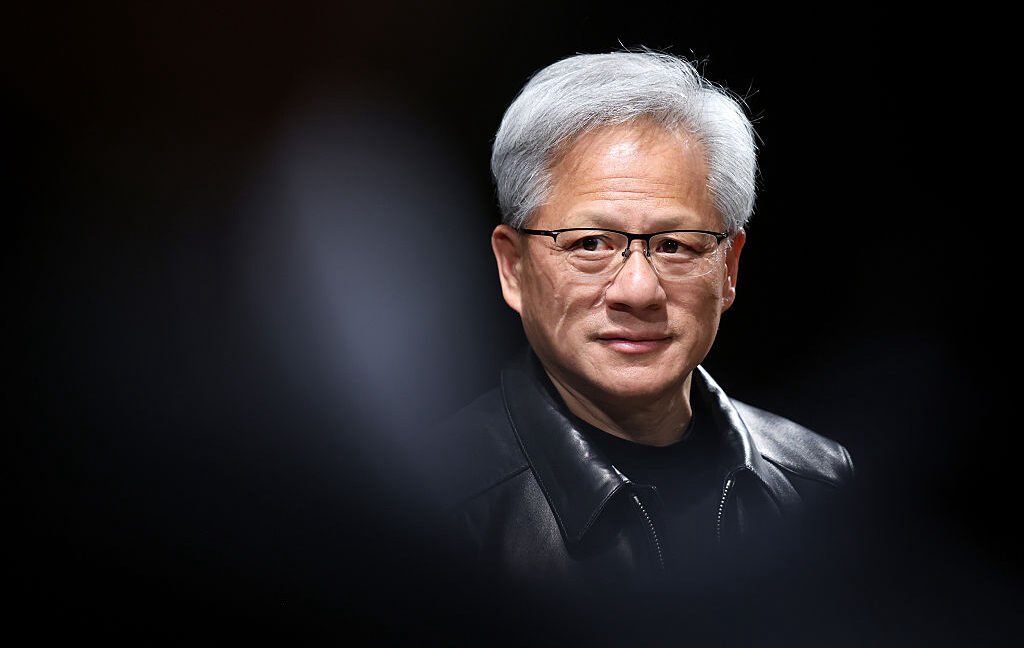
This is the detail that hasn’t aged well. Back in May, at a point when no Nvidia employee had been tied to the operation, CEO Jensen Huang openly faulted Supermicro’s compliance program and called for it to be fixed, Tom’s Hardware reported.
“We insist our partners are compliant. We hope that they will enhance and improve their regulation compliance and prevent that from happening in the future,” Huang said at the time.
Three months on, one of his own senior managers is reportedly among those indicted. Ars could not reach Nvidia for comment.
Supermicro says it’s the one who called it in
Supermicro maintains that the arrests happened because of its own assistance. In a statement, a spokesperson said: “Supermicro’s cooperation with Taiwanese authorities led to the arrests of the indicted individuals, including two former employees of its Taiwan subsidiary. The Company continues to cooperate with Taiwan authorities, is not a target of their investigation and has not been accused of any wrongdoing. As announced on August 20, a recent investigation conducted by Supermicro’s independent directors and independent legal and forensic accounting advisors found that the Company’s compliance personnel have acted in good faith, with the support of management, to mitigate the risk of illegal diversion. Supermicro will continue working to combat this industry-wide challenge and enhance its robust export compliance program to protect American innovation.”
An earlier statement from the firm had already acknowledged its cooperation with investigators in Taiwan.
“Supermicro is committed to protecting our advanced technologies and intellectual property. We are working closely with Taiwanese authorities on recent events, which underscore the importance of continued collaboration across industry and government to strengthen safeguards, enhance supply chain visibility, and facilitate the enforcement of export control laws,” Supermicro said.
Several employees have been dismissed by Supermicro following an internal review tied to the Chinese AI server operation, according to Tom’s Hardware. Current senior officials were cleared by that third-party probe. Left unanswered was the thornier question of how, as Tom’s Hardware put it, “billions of dollars’ worth of hardware was being sent to questionable clients” without anyone at the top catching on. Shareholders have filed securities fraud claims against the company, concerned that illicit sales account for a disproportionate slice of revenue.
The suspects knew the rules cold
Every indicted employee was “fully aware” that both Nvidia and Supermicro operate “rigorous internal control procedures” governing exports to China, Taiwanese prosecutors said, per Reuters. That awareness deterred no one. Prosecutors noted that the US and Taiwan had recently tightened those very controls, and the scheme only became more brazen.
Writing in an op-ed for The Hill, Lauren Barden-Hair — an expert on China’s leverage over multinational companies across Southeast Asia — argued that Supermicro’s team became emboldened enough to pursue “increasingly daring deals” for Chinese computing power. She pointed out that US findings placed “a nameless Southeast Asian firm” “at the heart of the operation,” working with co-conspirators inside both Supermicro and Nvidia and sustaining China’s access to Nvidia’s top-tier chips over a period of years.
Officials in Taiwan said Monday that additional conduct of the same kind has come to light. The Nvidia manager and the Supermicro employees “colluded with one another at various levels for enormous profit, illegally exporting high-end servers, increasing corporate compliance costs, and severely damaging our nation’s international image,” authorities said. At least 12 locations have been searched in the investigation to date.
Washington’s next move targets the cloud, not the crate
Smuggling hardware is only one route. The other is remote access, and lawmakers are considering legislation — the Remote Access Security Act — to shut it down. As CNBC reported, RASA would stretch US export controls to encompass cloud-based remote access to critical hardware and software.
That gap matters because nothing currently blocks it. Alibaba, ByteDance and Tencent are among the Chinese companies able to tap Nvidia compute via Southeast Asian data centers, and industry experts told CNBC that remote access is a major factor behind the improving capabilities of Chinese models. The region’s footprint is set to expand sharply: hyperscalers are moving from two data centers at present to 31 planned projects in the pipeline.
Resistance is likely. CNBC suggested the cost of any new compliance regime — tougher know-your-customer protocols included — would land on cloud providers.
Chinagate, 1998
Barden-Hair’s contention is that none of this ought to have caught anyone off guard. The Senate Committee on Governmental Affairs looked into “Chinagate” in 1998, a campaign finance scandal in which Southeast Asian companies served as cover for Chinese attempts to sway election results.
The lesson China drew back then, Barden-Hair said, was that courting business moguls with substantial financial stakes in China while based just beyond its sovereign borders offered the “ideal cover.” The unidentified Southeast Asian firm in the Supermicro case is running that same play.
“It is easy to point out errors in judgment after a disaster, and US export control authorities deserve support and praise for their efforts to protect national security,” Barden-Hair said. “But it is important that we take the right lessons from the Supermicro scandal amid our shaming of the guilty, and remember the hard-earned lessons of the past. With the anonymous company the Justice Department refers to, China is showing us, again, that its pawns are scattered beyond its borders, and that its financial tentacles have a real and devastating influence.”
The margins just got wider
There’s one detail worth dwelling on: Nvidia recently said it would lift AI server prices by 15 percent. Each percentage point pushes up the value of a diverted server once it reaches the other side of the strait.
Controls function only when someone actually examines the paperwork. Here, a single customs officer intercepted 56 servers — while 74 more slipped past everybody else.