

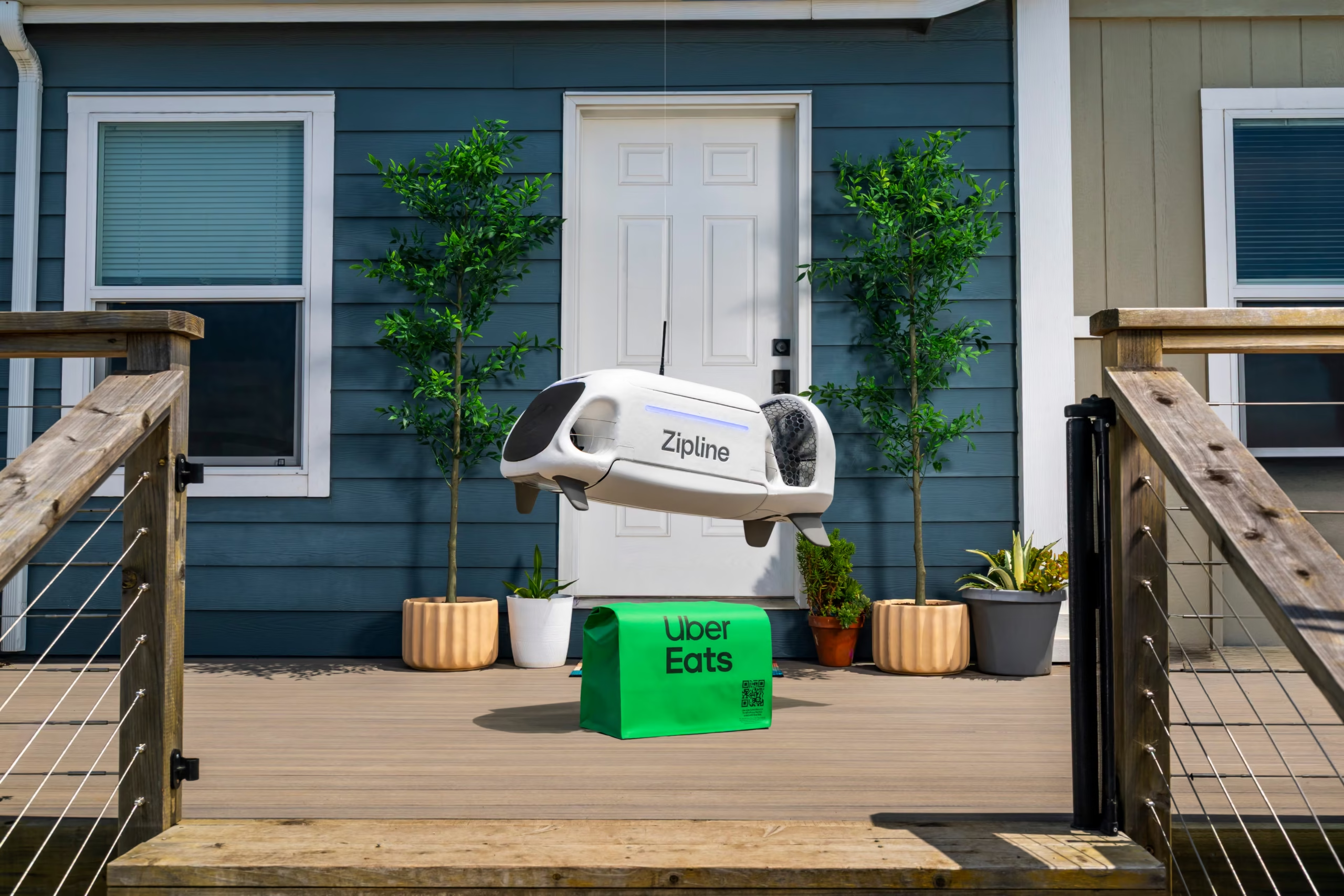
By 2029, Uber envisions drones setting your burrito down on the front lawn a million times over — every single day. That figure is what the company has attached to its newly announced Zipline partnership, and it says more about the direction food delivery is taking than any of the gentler phrasing surrounding it.
The aerial takeout era begins later this year. Alongside the tie-up, Uber is putting strategic investment dollars into Zipline, a California-based operator that has flown drone deliveries across Texas since 2025.
Dallas-Fort Worth, an existing Zipline market, will host the first Uber Eats flights, with dozens more cities slated to follow.
Zipline isn’t a startup running a pilot program
Here’s what sets this apart from the standard drone announcement. Zipline’s delivery count already stands at 2 million, a tally that dates back to its 2016 launch in Rwanda, where it ferried medical supplies to hard-to-reach places within minutes.
Its footprint also covers Ghana, Japan, Nigeria, Côte d’Ivoire and Kenya. So Uber’s claim that Zipline drones can put an order on a customer’s front lawn in a “matter of minutes” rests on a track record of actual flights rather than a concept video.
According to Uber, it is assembling the world’s largest hybrid delivery network — human couriers, sidewalk robots and drones together — pairing each customer with whichever method makes the most sense for their location. Strip away the marketing gloss and the underlying structure holds up: Uber isn’t manufacturing drones. It’s purchasing access to somebody else’s.
The Flytrex playbook, again
This arrangement has a precedent. Last year Uber cut a comparable deal with drone firm Flytrex, investment and all.
The repetition isn’t accidental — it’s strategy. Uber partners with third-party operators while competitors pursue regulatory clearance to fly hardware they build themselves.
DoorDash went the opposite direction. It rolled out DoorDash Air, an in-house drone delivery operation, last month once the Federal Aviation Administration signed off.
Why everyone is moving right now
The clustering of these announcements comes down to regulation. President Donald Trump issued a 2025 order that prodded the FAA into proposing rules that widen the scope of drone delivery operations, letting companies fly greater distances at lower cost than before.
The result has been a land grab. Drone operators are courting grocery chains and big-box retailers, targeting a sector that one analysis sizes at $7.7 billion by 2031.
Place the two figures next to each other and the scale of the ambition sharpens. Across two continents and roughly ten years of flying, Zipline has logged 2 million deliveries. Uber and Zipline want 1 million a day within about three years.
Residents of Dallas-Fort Worth will be the first to see whether the arithmetic works out. The rest of us get to follow the flight logs.