

Two thousand robotaxis. Four cities in Europe. Nobody will say when, and nobody will say where.
That is the outline of the widened partnership between Uber and Pony.ai, the Chinese autonomous vehicle maker, and the distance between that big number and all the blanks around it says plenty about the state of the robotaxi business today.
Details will come out in phases, according to the two companies. Put less diplomatically: the agreement exists, the vehicles do not.
Who does what in this arrangement
The clearest thing to emerge from the announcement is how the work gets split. The self-driving technology comes from Pony.ai, headquartered in Guangzhou. The ride-hailing platform, and the passengers using it, come from Uber.
Then there is fleet management — rarely mentioned when the press releases go out, and reliably the thing that chews through margins. Maintenance, cleaning, charging. The companies say a local provider can take that on.
Who actually owns the cars is being left intentionally flexible: the robotaxi fleet may sit with different partners from one market to the next.

The ‘joint-deployment model’ finally has a path
A joint-deployment model is something Pony.ai has been promoting for some time now. With the expanded partnership, several of the terms appear to have been settled, which hands that model a cleaner route toward commercial scale.
Read another way: owning and running thousands of vehicles on its own was never the plan for Pony.ai, and it has now landed on a structure that spares it from doing so.
The economics support that reading. It is equally an acknowledgment that the capital needed to operate a robotaxi fleet at scale is a burden neither party is eager to carry on its own books.
Uber’s strategy is breadth, not bets
Across the past several years Uber has struck deals with more than 30 autonomous vehicle companies, Pony.ai included. That figure deserves a moment.
Nobody signs 30-plus partnerships out of certainty about which technology comes out on top. You sign them precisely because you don’t know — and because controlling the demand side buys you the luxury of neutrality on the supply side.
Uber is playing the platform role here. Whichever company ends up building the vehicle that works, Uber intends to be the app sending it your way.

Pony.ai’s map is already bigger than China
Four Chinese cities have seen Pony.ai launches so far. The company has also secured agreements with local transportation authorities as it presses into European and Middle Eastern countries, Qatar among them.
Leading with the authorities counts for more in Europe than in just about any other market. It is regulators, not passengers, who set the pace here.
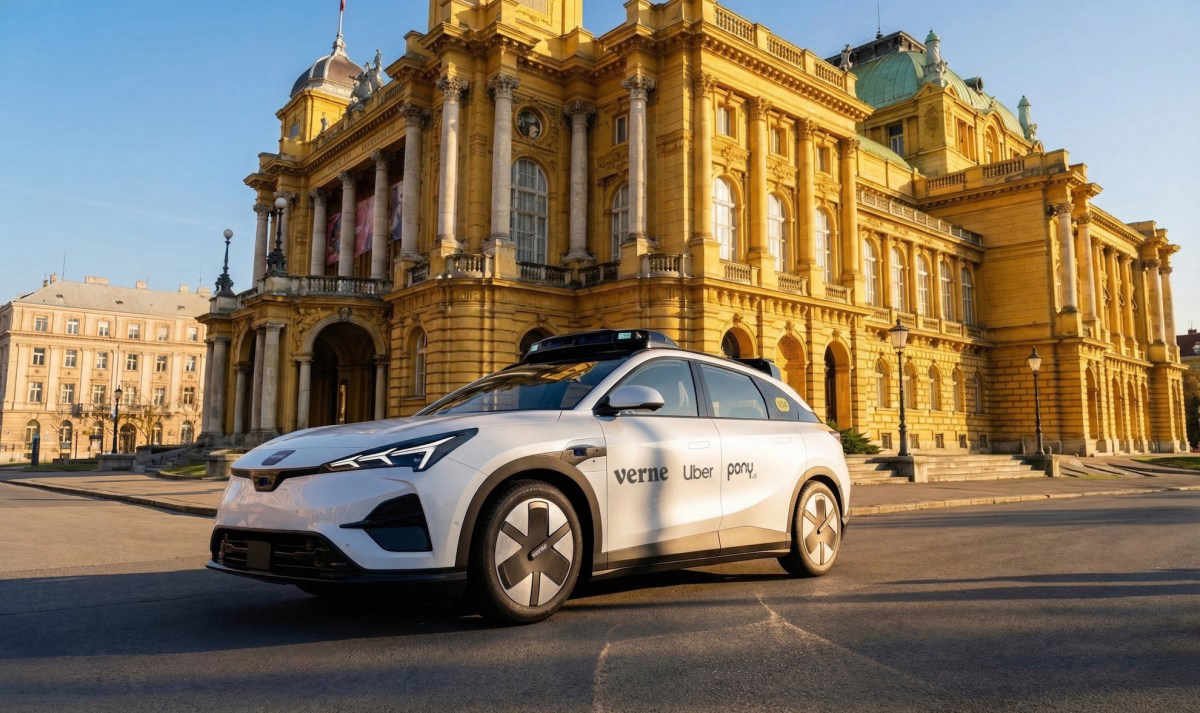
May 2025 marked the first tie-up between the two companies, aimed then at the Middle East. Europe became the focus earlier this year, when they unveiled plans for a commercial robotaxi service in Zagreb, Croatia, alongside local firm Verne.
What to watch instead of the headline number
Set the 2,000 aside for the moment. It describes an ambition rather than a delivery schedule, and no timeline has been attached to it by either company.
Keep an eye on Zagreb instead. It comes with an actual city, an actual local partner and a declared commercial purpose, making it the nearest thing either company has to European proof.
Should Verne and Pony.ai pull Zagreb off, those four unnamed cities begin to resemble an actual plan. Should they fail, 2,000 remains a figure in a press release.