

In Brief:
- Mobile browser support has gone live for Pixie Chess, letting players jump in directly from their handsets.
- Classic chess meets collectible-piece mechanics in a competitive format unlike anything else in the category.
- Tournament money comes solely from in-game piece sales, and the vault has now climbed past 100 ETH.
Pixie Chess launches on mobile
Mobile browsers can now run Pixie Chess, a rollout that widens the door for anyone who would rather play from a handset than a desktop. The team confirmed the update through its official channel and is pointing players to pixiechess.xyz/play. With a layout built for smaller screens, essential actions such as picking up pieces or registering for tournaments no longer require sitting at a computer.
Game mechanics blend chess with collectibles
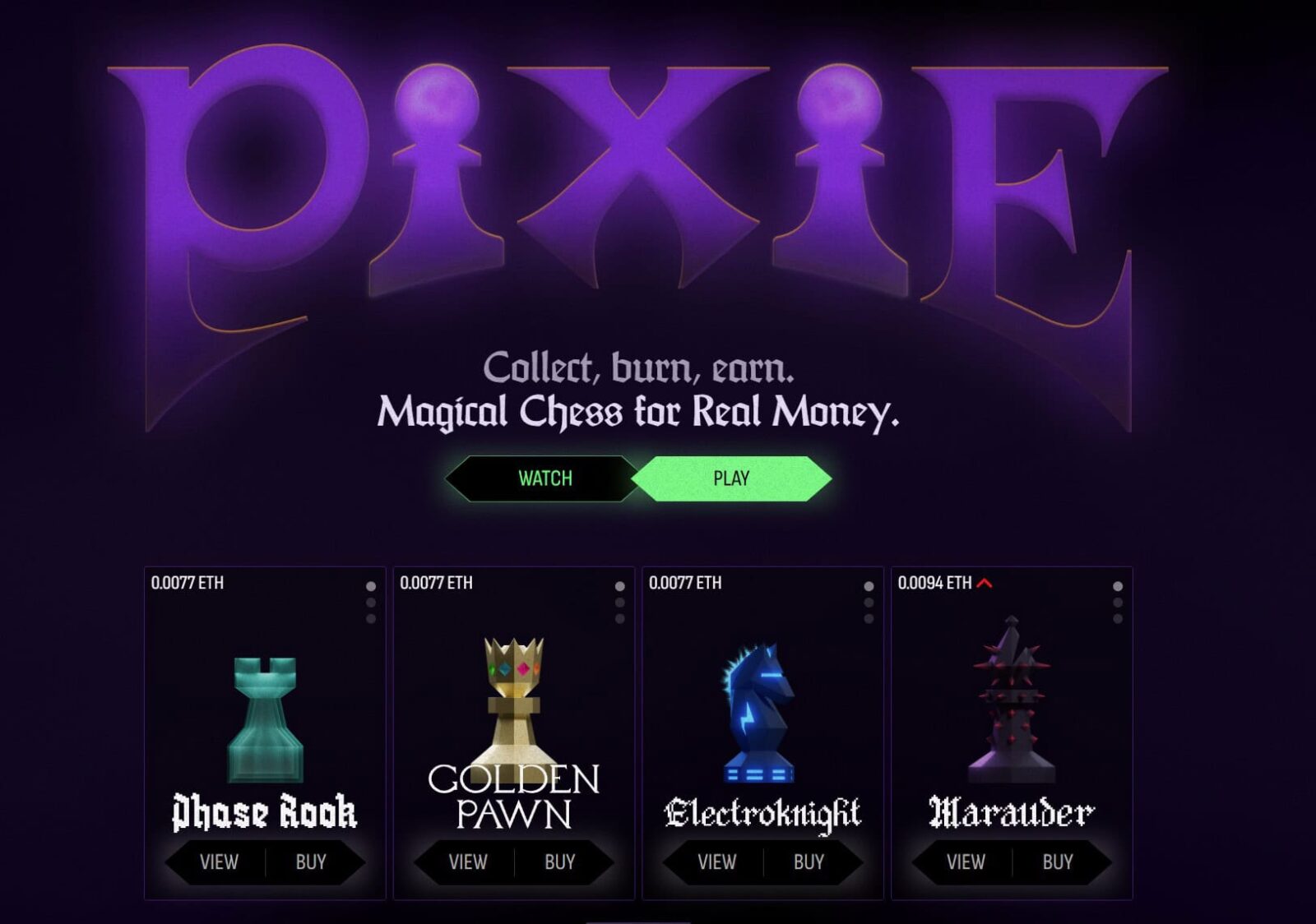
Collectible card mechanics sit at the heart of the design: standard chess pieces can be swapped out for magical counterparts, and each one brings an ability of its own. The roster runs to 58 variants, among them the Bouncer Bishop, which ricochets off the edges of the board, and the Golden Pawn, which delivers an outright win the moment it promotes. Founder Josh Harris summed it up in a sentence: “Think Pokemon and Magic: The Gathering merged with chess.”
Player-funded tournament vault
The economy behind Pixie Chess is unusual. Pieces go up for auction daily through a Variable Rate Gradual Dutch Auction, and every cent of that revenue flows into the tournament vault instead of the studio’s pocket. What began at 82.95 ETH has since passed the 100 ETH mark, and that pool underwrites prize money in full. Entering a tournament costs a player a piece, destroyed permanently, which both shapes the metagame and keeps demand alive.
Revenue model and competitive elements
ETH can be staked by competitors, and secondary currencies including USDC and BaseETH are supported as well. Newcomers are not forced to spend right away: quickplay modes and a weekly free piece offer a free-to-play on-ramp. Interest during beta testing ran hot, with one tournament drawing 300 entrants and pulling in $25,000 — five times what the studio had projected.
Investor backing and development phase
Two years ahead of the public debut, Pixie Chess closed a $5.2 million seed round with Paradigm leading. A number of angel investors joined in, several of them familiar names from adjacent projects. The capital let the team, with Harris working as an Entrepreneur in Residence at Paradigm, build quietly and stay out of the spotlight.
Current player base and the path forward
Roughly 2,000 active competitors were on the platform at the time of the public launch — a number consistent with a title still in its early days, given how restricted access had been until now. Opening things up to mobile browsers removes a barrier and could help that base expand.
Core gameplay and economic structure
Everything runs in the browser on Base, with NFTs that serve gameplay purposes rather than acting as cosmetics. Ranked play and tournaments are both on offer, and the distinct abilities attached to each piece keep strategy in flux. A steady stream of new pieces arrives through the daily auctions, while the tournament rules pull supply back out to preserve scarcity.