

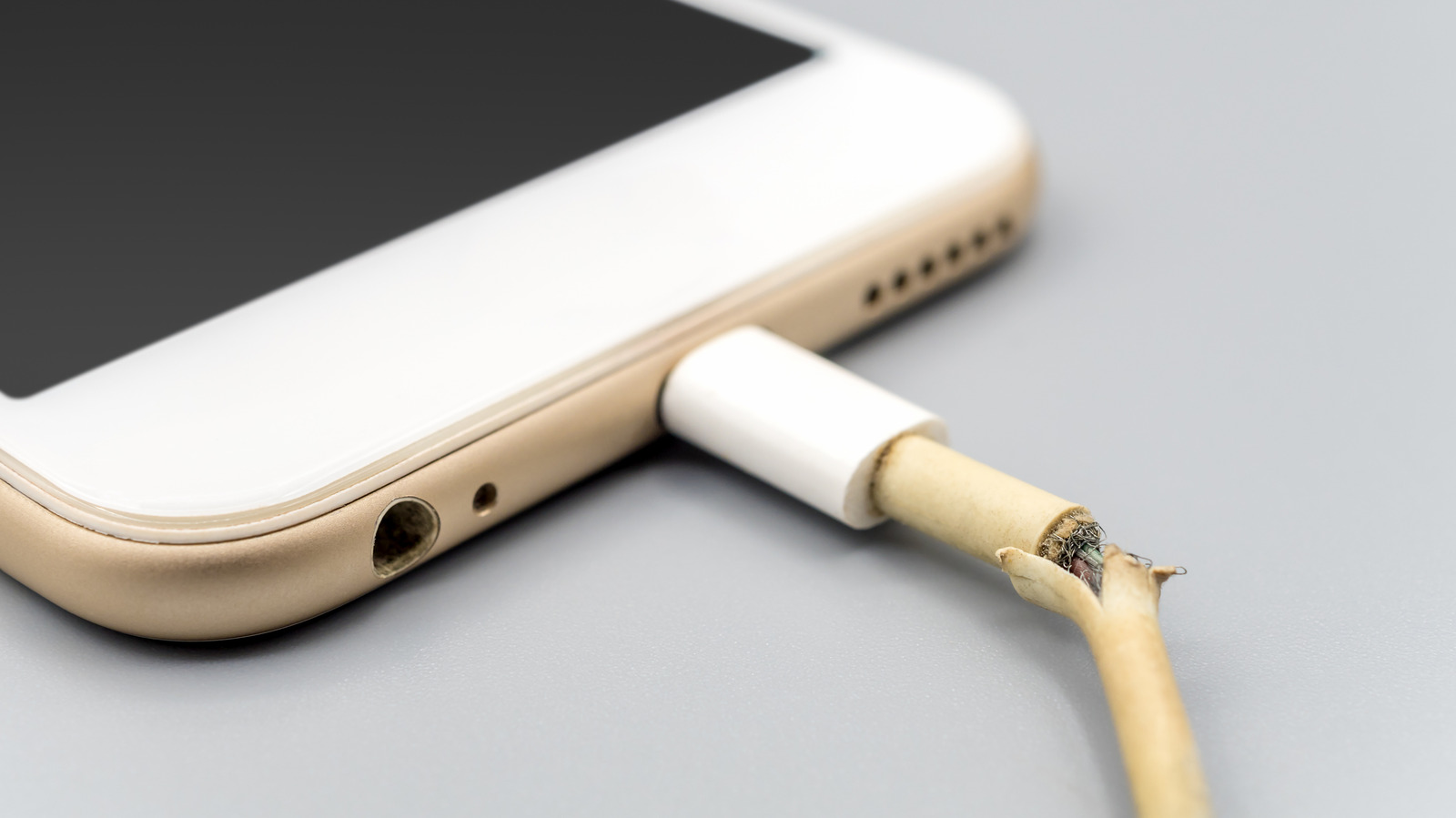
A cable that costs $5 can end up costing you thousands. A worn charging lead can burn your fingers, wreck your phone’s battery or start a fire, and any one of those costs far more than buying a new cable.
Most people hang on to a cable well after it starts to look worn out. It still charges, so they assume it’s fine. A cable can keep working and still be a hazard.
The damage begins out of sight
Pulling a cable out by the wire puts strain on the joint just behind the plug. Sharp bends also tend to land in the same places, usually at either end. Over time this wears through the thin metal strands inside, and that can happen before a single crack appears in the outer jacket.
Broken strands inside a cable often don’t stop it charging. The connection may drop in and out, but the strands that are left take the load and keep current flowing. A cable with plainly visible damage can still charge a device.
That is the problem. With fewer strands intact, electrical resistance goes up, more of the energy becomes heat, and that heat is packed into a smaller space. This is how a damaged cable starts to overheat, and the risk is higher when it carries the bigger currents used for fast charging.
Charger protections only go so far
Many chargers have built-in protection against short circuits and overheating. You shouldn’t rely on it. A damaged connection can get hot even while the current through the cable stays within safe limits. Some phones put up a warning when this happens, though only if the device supports that feature.
The circuit breaker in your home won’t help here. It responds to faults in the household wiring, and depending on how much current the faulty equipment pulls, it may never trip. A cable can reach a dangerous temperature while your lights carry on as normal.
Burns, shocks and damaged ports
Burns are the most immediate risk. Heat collects around a damaged connector until it is hot enough to hurt your fingers and melt the plastic around it. Poorly made cables do get recalled (in 2019 the US Consumer Product Safety Commission recalled a heyday Lightning cable sold at Target), but a cable doesn’t need a manufacturing defect to fail. Heavy use can do it.
The other personal risk is electric shock. USB cables run at low voltage, but a frayed one still isn’t worth the gamble. The risk rises if the cable is connected to an adapter, if the adapter is exposed, or if moisture is nearby.
Your devices can suffer as well. Unsteady power from a faulty cable can harm a device's battery or shorten its long-term health. Those disrupted electrical signals can also burn out the USB port.
Even a cable in good condition can cause problems if you charge under a pillow or blanket, because the heat has nowhere to go.
Fire is the worst outcome
A frayed USB cable won’t always start a fire, but it can happen. A properly working charger should protect against short circuits and excess current. With badly made equipment, there’s no guarantee those safeguards will step in. If a fire does break out, losing a cable or a phone is the least of the damage.
Tape only buys time
The usual fix is to wrap electrical tape (or any kind of tape) around the split. That hides the gap, but the broken strands inside stay broken and the cable is no safer than before. If you have to charge tonight and a replacement is arriving tomorrow, tape may tide you over. It shouldn’t become a permanent repair.
Signs a cable is on its way out
The warning signs tend to be easy to spot. Charging switches on and off, or it only works when the cable is held at one exact angle. Propping or bending the cable into place may help for a minute, but it fixes nothing over time.
If you’re unsure whether the fault lies with the cable or the port, try a different cable. If the spare works, the old cable is at fault. If the spare fails too, the port is the more likely problem. Test with another charger to be sure.
Shine a light into the port to check for debris. Cleaning it may help, though Google recommends against putting anything inside your phone’s port. Holding the phone port-down and tapping it lightly against your hand can knock some of the buildup loose.
Send it for recycling
A damaged cable needs to be retired, unless you’re an electrical engineer able to strip a wire, repair it and test it afterward, and you actually want to. Recycle it or put it to some other use, then pay the few dollars for a new cable before you charge your phone again.