

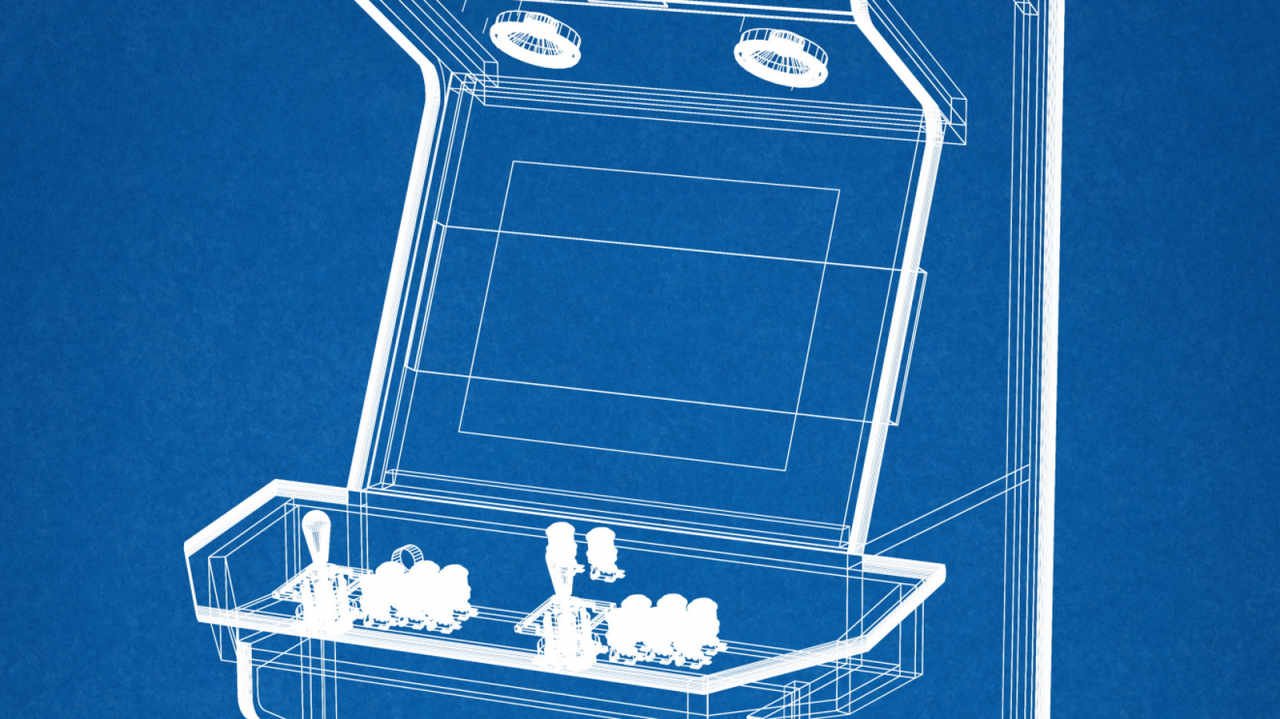
Ask someone who has just decided to build a retro arcade cabinet what they’re thinking about, and the answer is almost always the same: which Raspberry Pi should I get? Fight that instinct. It’s the enjoyable question, but it’s also the least helpful one.
Begin with the games you want the machine to run. Every other decision follows from that.
Your game list is your blueprint
A cabinet meant for Pac-Man, Galaga and their early-arcade contemporaries can get away with a much simpler control panel than one designed around Street Fighter, four-player beat-’em-ups or Golden Tee. Certain fighting games expect six action buttons for each player. Others depend on a trackball, a spinner or another specialised control.
How many players you plan for is equally decisive — particularly when a neat two-player panel quietly turns into a four-player one and drags the entire layout along with it.
Before any drill touches wood, mock the controls up in cardboard. The cost is next to nothing and it heads off the expensive error. One widely circulated Raspberry Pi build took exactly that approach, trialling the panel layout ahead of committing to the final material.
For the body of the cabinet, there are three routes: cut your own from plywood or MDF, order a flat-pack kit, or repurpose a cabinet that already exists. The electronics can be minuscule. It’s the furniture wrapped around them that starts getting ideas above its station.
The parts list is shorter than you think
The essentials: a display, a joystick and buttons, a USB encoder, a computer, storage, speakers and power hardware. That’s the backbone.
Sitting between the arcade controls and the computer, the encoder converts button presses and joystick movement into signals the machine can read. It’s the least exciting component on the list, and the one people routinely leave out of the budget.
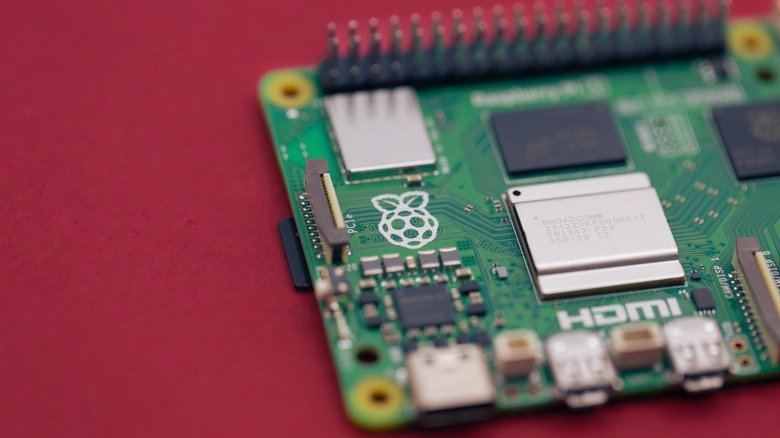
Plenty of classic arcade titles still run happily on a Raspberry Pi. The 2GB Raspberry Pi 5 is currently priced at $65, and Recalbox 10.0.8 says it performs just as well as the 4GB model. Once the board is shut inside a cabinet, that extra RAM mainly adds to the receipt.
The alternative is an old desktop or mini PC — a solid choice if something is already gathering dust, or if you want headroom for more recent systems. Batocera runs on x86 machines and says today’s Intel integrated graphics are already capable of respectable emulation. Even so, the hardware requirements rise sharply as the consoles and arcade systems you emulate get more demanding.
The software names trip everyone up
EmulationStation is not a rival to a Raspberry Pi or a PC. It’s a front end — a menu you use to browse and launch games. Recalbox and Batocera package that sort of interface alongside emulators and other utilities.
RetroPie is still a favourite, but its current weekly-image directory has no Raspberry Pi 5 image listed.
Anyone building around a Pi 5 has two extra items to handle. Raspberry Pi describes cooling as optional for ordinary use, while noting it helps stave off thermal throttling during sustained heavy loads — exactly what a cabinet running all evening will generate. The Pi 5 also did away with the 3.5mm audio jack found on earlier boards, so your sound setup needs planning.
Where the innocent shopping list multiplies
On top of the cabinet, display and computer, the list can grow to include monitor mounting hardware, a microSD card or SSD, an amplifier and speakers, a power strip, cables, cooling fans, and some means of getting back inside the cabinet later without taking half your work apart.
Artwork, illuminated marquees, T-molding and coin doors can all wait until the machine is genuinely a machine.
Game Room Solutions illustrates how fast even a restrained build adds up. Its basic bartop cabinet is on sale at $129.99. A two-player package covering joystick, buttons, wiring and USB encoder comes to $44.99. The speaker and amplifier bundle tacks on $29.99. Add a $65 Raspberry Pi 5 2GB and the total sits around $270 — still with no display, no storage, no Pi power supply, no cables and nothing decorative.
Cheaper than buying? Depends what’s in your garage
Recycling hardware rewrites the arithmetic entirely. A spare monitor and PC eliminate two of the largest line items, and a home-built enclosure undercuts a CNC-cut kit. Source it all new, though, and a full-size custom cabinet can sail past $1,000 without a single extravagant addition.
Building does sometimes come in under the price of buying. But the dependable payoff isn’t financial — it’s the control you get over the screen, the game library, the controls and the hardware inside.
There’s one last matter to resolve before switching it on. MAME directs users toward licensed software, ROM sets released free for non-commercial use, or data they dump themselves from arcade PCBs they own.
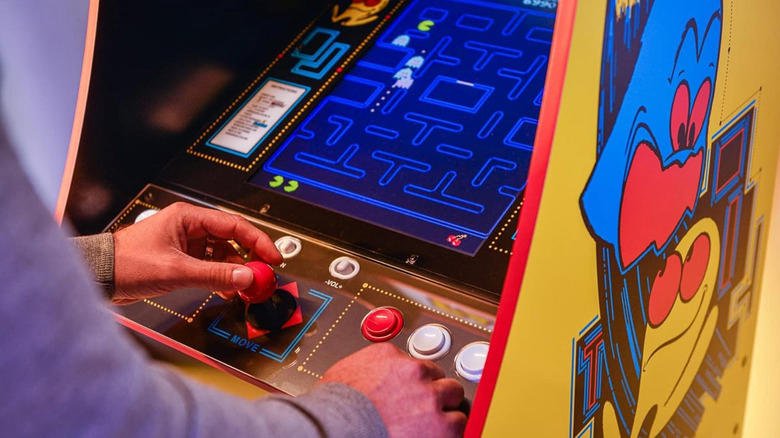
By way of comparison, Arcade1Up currently lists its Pac-Man Deluxe at $499.99.