

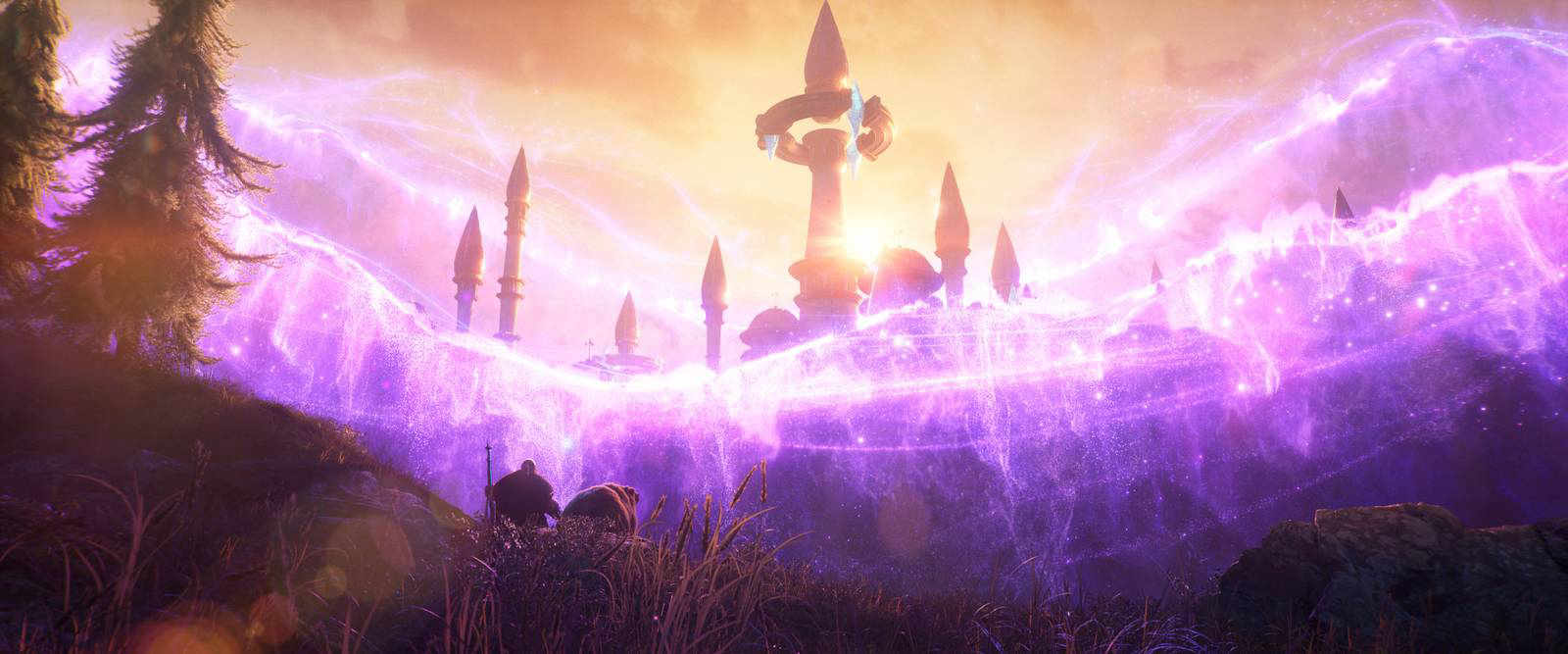
A player logs in somewhere in the Wetlands meaning to wrap up a single quest. Only one. As she heads out of town, she notices someone trying to gank another player. The quest slips her mind, and she spends the next 20 minutes in a PvP brawl before she logs off.
The player was Nora Valletta, lead software engineer on World of Warcraft Forever, and her anecdote sells the game better than anything else so far.
“It just became like a 20-minute PVP session for me. And then I logged off there. And that’s fun,” Valletta said.
Blizzard Entertainment unveiled World of Warcraft Forever at BlizzCon 2026. It is the MMO’s third major version, and it is the “Classic Plus” that fans have wanted since before World of Warcraft Classic launched in 2019. The game is in beta testing now and releases Nov. 4 on Mac and Windows PC.
The concept is straightforward. Forever keeps WoW frozen in a time bubble, leaving out the expansions and overhauls that have reshaped the game across two decades. It does still get new content: zones, quests, dungeons, a new playable race and quality-of-life improvements that distinguish it from the original. Blizzard says it is adding 1,000 new quests.
Designing by the ‘found photographs’ rule
The real challenge is adding content that doesn’t feel new. Lead game designer Tim Jones said the team studied why the Vanilla era worked, from its simple objectives to its creature design. From that study they built a set of core principles that cover combat pacing and quest complexity.
“We want to make sure that whatever content we add feels like it could have always existed in 2004,” Jones said. The team’s preferred term for this is “found photographs.”
To judge a new quest, Jones imagines a time traveler. “Ideally, if a 2004 player time traveled to now and was playing through the zone, it would feel like the objectives are simple and the creatures are the appropriate difficulty for the zone,” Jones said.
In practice, the team looks at a zone like the Wetlands and asks whether a new objective could believably belong there. They are also prepared to scrap work. “If we recognize that we’ve gone too far in one direction that doesn’t feel Classic, we rip that out,” Jones said.
The level cap stays at 60, permanently
This is the part that will divide players: Forever doesn’t want you racing to the raids.
“Our level cap is 60, and it’s going to stay at 60,” Jones said. “Some people want to rush to the end game because they’re really excited about jumping into the raids, but that’s really not what WoW Forever is about.”
“Journey before destination” is one of the team’s core pillars. Jones describes a new player who gains a quarter of a level, raises a profession or two and works through Elwynn Forest on the way to Westfall. Because nobody is rushing them, that player finds the whole thing satisfying.
This matters for anyone who played in their teens or early 20s and can no longer commit to four-hour sessions. Jones said the game rewards short play: 30 minutes to finish a couple of quests, or a stop at the auction house to buy materials for leveling a profession.
“If it takes you a hundred days to get to level 60, that’s totally fine,” Jones said. Players who want to roll alts get meaningful progression from a legacy system, and reputation grinding is also available.
Jones is part of that audience himself. “I’m a dad. I have a seven-year-old and a five-year-old daughter,” he said. During internal alpha testing, he puts his family to bed and then plays for a couple of hours. “I can’t necessarily play in a competitive raiding guild like my younger self might have wanted to, but it’s still fun.”
Valletta said the same is true for her. When she can’t give the game much time, she checks her auctions, farms some herbs or picks a single quest.
Arthas lives, and that won’t change
The lore rules are strict, and that is where things get interesting. “We’re in a time bubble,” Jones said. Forever takes place between Warcraft 3 and The Burning Crusade, before Molten Core released, and it stays locked in roughly the one year covered by the original Vanilla game.
“Arthas is still alive. Illidan is still alive,” Jones said.
Within those limits, the team builds two kinds of content. The first is the expected kind: places everyone knows exist but that nobody has visited in this period, such as Mount Hyjal. Its presence surprises no one, but it is still new territory.
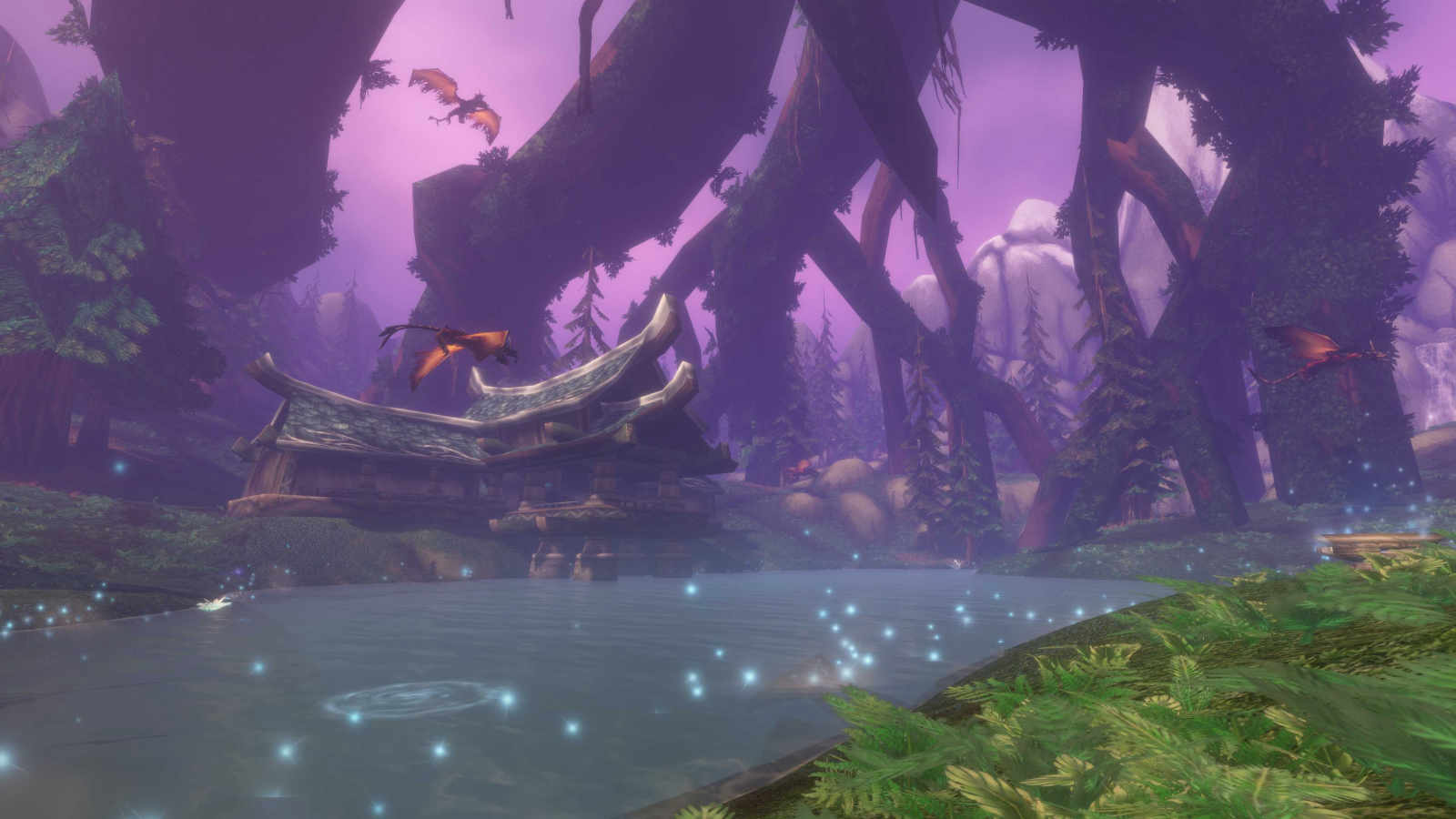
The Riverglades belongs to a related group of zones that are new but plausible, and Valletta called it a good example. According to Jones, its lore goes back to Warcraft and Warcraft 2. That includes the sacking of Stormwind and campaign missions in which humans pursued retreating orcs, possibly toward the eastern coast of the Eastern Kingdoms.
“The landmass was always there in the Vanilla game, so how can we turn elements of preexisting lore into a new and exciting space for people to quest in?” Jones said.

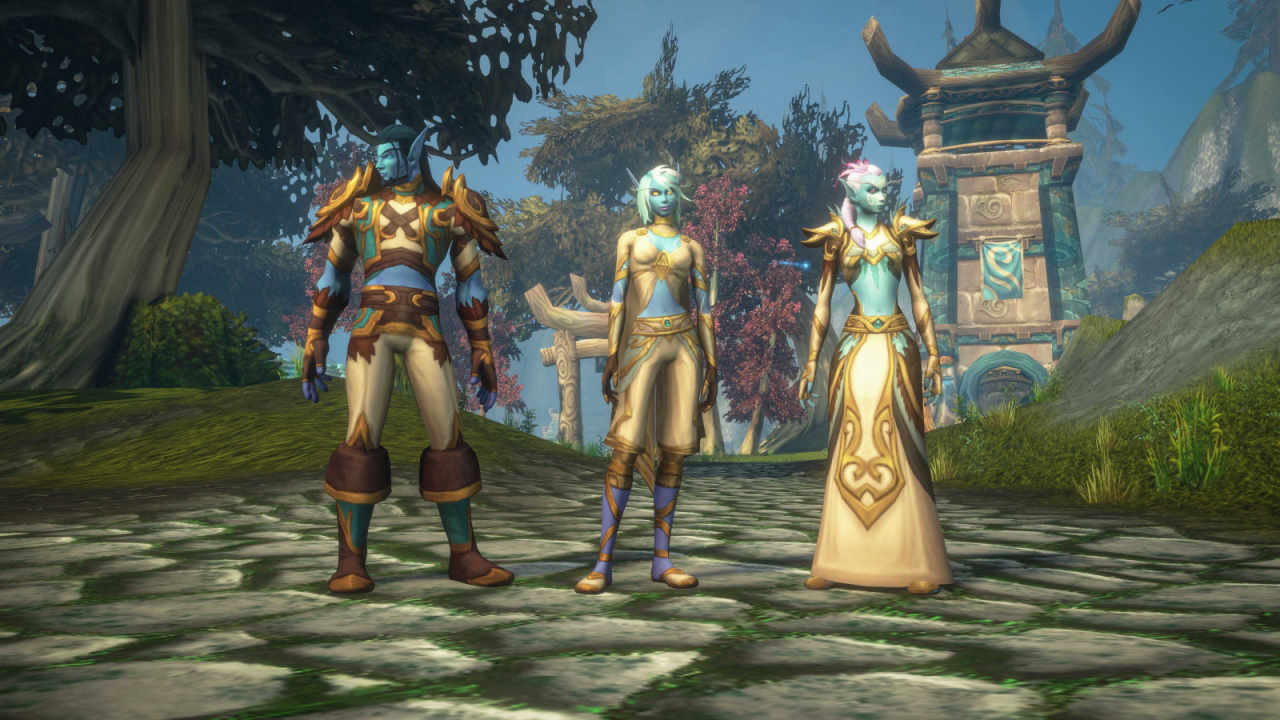
The second kind is the unexpected, and that is where Zephras Isle and the Skyborne come in. The Skyborne are highborne exiles from Eldre’Thalas who resisted Prince Tortheldrin when he tried to summon demons through Dire Maul. Jones said their story resolves some mysteries players have long wondered about and raises new ones the team can keep exploring for years.
Some lines won’t be crossed. “We’re not saying that Arthas never became the Lich King or Jayna’s secretly a dread lord, and we’re also making sure that geographically speaking, the continents keep their silhouette,” Jones said.
Valletta cares more about the small stories anyway. She said the setting has room for everyday tales about the people who live in this world, stories that are relatable on a human level, alongside the large-scale catastrophes. That is the angle I’m most curious about, since Vanilla’s best quests were rarely about the end of the world.
How Season of Discovery sparked it
Why build it now, after years of player requests? “I’d say it was a combination of both player wishes and our team’s wishes,” Valletta said.
The Classic team was formed in 2019 with a modest aim: time-capsule releases that stayed faithful to how the game used to be. Valletta said the team’s ambitions grew as the community’s excitement grew, and each fed the other. Season of Discovery was the team’s experiment in making many changes to a Classic environment.
“We found that the player response was just overwhelming,” Valletta said. “There was a deep hunger there. We felt it, too.”
That raised an obvious next question for the team: what would something large and permanent look like? Forever is their answer.
No pop-ups explaining how quests work
Jones makes a bold case for newcomers. “I think Vanilla Warcraft is one of the best ways for people to jump into WoW,” he said.
He argues that the original game teaches you without a tutorial. You create a character, log in, and your first quest is right there in front of you. “The game is deliberately simple and it exposes you to systems at a very gradual pace,” Jones said. He expects new players to see Forever as a ground-floor entry into a non-seasonal game that they can play slowly without falling behind.
Valletta said the team has to resist making everything too smooth. “It’s a lot like walking a tightrope,” she said. The tempting option would be a pop-up that explains quests the moment you approach a questgiver. That removes friction, but it also takes away the player’s chance to learn.
“Sure, they might just Google it, but they may actually ask other players for help, and that’s an opportunity to make a relationship,” Valletta said.
Jones boiled the principle down to five words: “Protect and nurture social experiences.”
The campfire may be the cleverest feature
A new camping system shows this principle most clearly. Once you leave your starting zone, a quest teaches you how to build a campfire. After you put a few levels into a trade skill, you learn a recipe that lets you add an object tied to that skill to the fire. Sit by it for about a minute and you get a leveling buff.
The minute is the whole point. Jones said internal playtesters would pick up quests in Gadgetzan, spot a friend who was also questing in Tanaris and set down a campfire so they could buff each other. Sitting beside someone for a full minute starts conversations: are you on the Murloc quest too? Want to party up?
Jones said flight points follow the same logic. Forever doesn’t teleport you across the world. A flight lasts a couple of minutes, which is enough time to catch up in guild chat.
The engineering behind it is quietly the most ambitious thing Blizzard described. The backend keeps track of the people you interact with, such as who you partied with in Westfall and who joined your Deadmines run. The server then deliberately groups those players together, so when you reach level 40 in Desolace you might run into the same person again.
“Maybe that random person that you quested with turns into a guild mate,” Jones said. “Maybe you will go to BlizzCon together next year.”