



























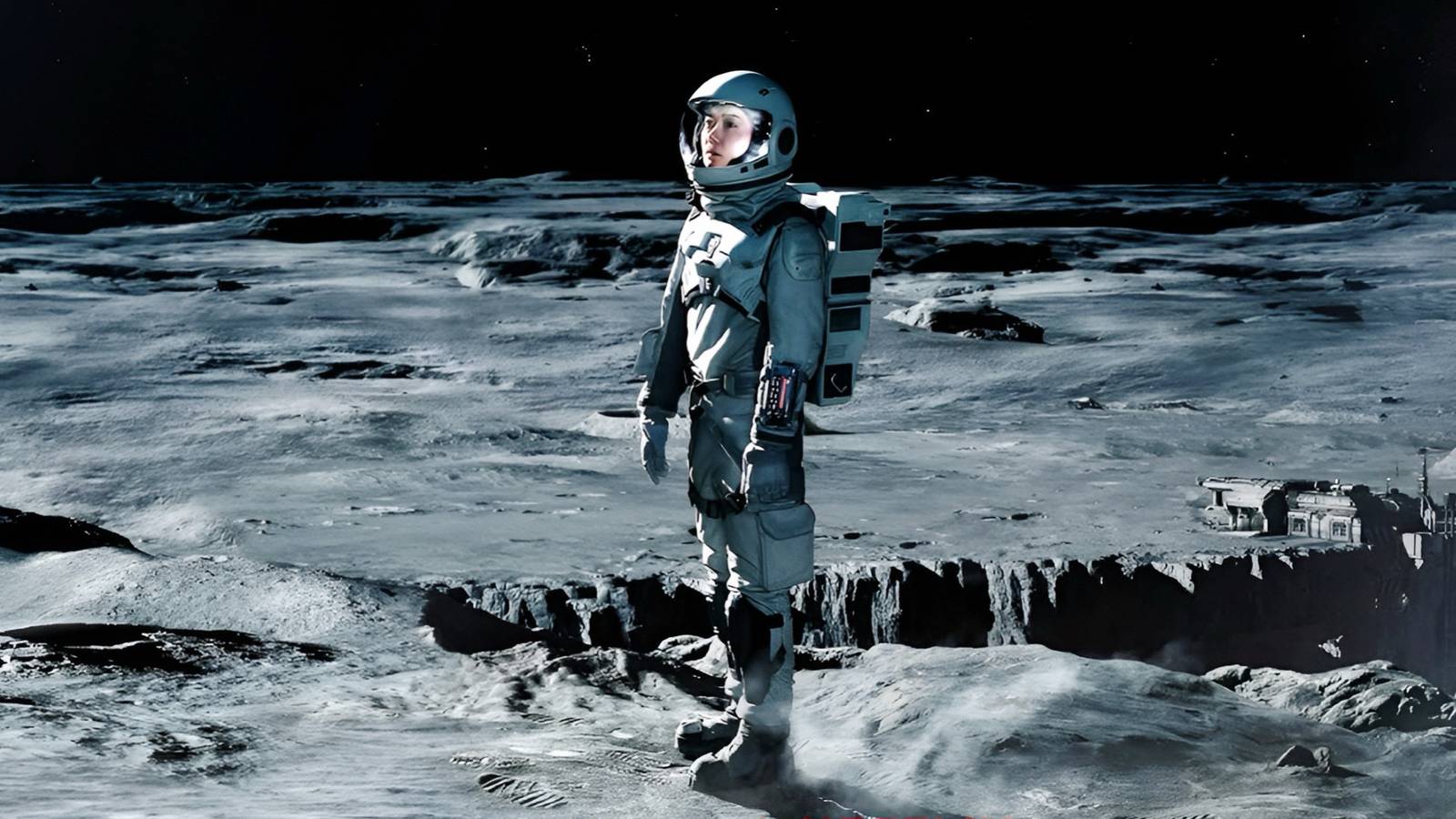
Astronauts cross the face of the moon and get no reply. There’s no wind and no sound, just rock and black sky in every direction, 384,400 km from a dying planet at their backs.
That feeling runs through The Silent Sea, a South Korean sci-fi thriller on Netflix that runs eight episodes. Few series have handled cosmic horror this well.
The opening recalls Interstellar
Anyone who has watched Christopher Nolan’s Interstellar will recognize the premise. Earth is in decline. A hand-picked crew is ordered to Balhae Station, a research base on the moon that has been left empty, to bring back a sample. The mission has 24 hours and very high stakes, and secrecy surrounds the station from the first scene.
Most mainstream sci-fi frames space as the final frontier, where humanity scores its great scientific wins. People gaze at the night sky and ponder their “place in the stars.” When the world falls apart, the way to survive is out there somewhere, waiting to be found.
The Silent Sea begins with that same optimism. Then the mission becomes an examination of “the oldest and strongest kind of fear” people carry:
“The fear of the unknown.”
A lonelier moon than you’ve seen before
Scenes set in zero gravity usually come across as dreamlike, even on a studio set. Bodies float, lighting softens, and nothing seems to weigh anything.
The Silent Sea keeps that weightlessness and makes it eerie. Being on the moon in this series looks isolating. The empty, silent setting carries most of the effect, and it shrinks the people standing in it.
Balhae Station is no giant leap for mankind either. It’s a monument to hubris: what remains after curiosity is allowed to run with no limits.
The threat is water
The true horror is a body of water on the lunar surface.
Viewers who know Color Out of Space or Annihilation will recognize the kind of thing it is. In those films, the “Color” and the “Shimmer” ignore every law of biology and science as we know them. The “Water” in The Silent Sea behaves the same way. On contact with living tissue it multiplies fast and drowns the victim from within.
This is where the series goes from cold to grim. A frozen, dry rock in space is unnerving enough. Turning something as everyday as water into an uncaring force of nature makes it worse.
A hard genre to get right
Cosmic horror doesn’t translate easily to the screen. It draws its power from the unknown, the unexplored and the incomprehensible, while live action naturally wants to put things in front of the camera.
If a story stays too vague, the fear drains out and it just feels blurry. If it explains too much, it breaks the Lovecraftian rules completely. Only a small number of sci-fi horror films and series show enough to grab you while leaving the source of the fear unexplained.
The Silent Sea is one of them. The moon supplies the cosmic dread, and the series attaches that dread to a threat audiences haven’t seen on screen before.
Watch Archive 81 next
Looking for something to follow it? Archive 81, another Netflix series, is based on a cosmic horror podcast. It stays on Earth the whole time, but it brings in an otherworldly, nearly god-like entity that people either worship or lose all reason and control before.
That makes a list of two. Netflix should add to it.
When The Silent Sea ends, it arrives at the same idea found throughout H.P. Lovecraft’s writing: “We live on a placid island of ignorance in the midst of black seas of infinity, and it was not meant that we should voyage far.”