

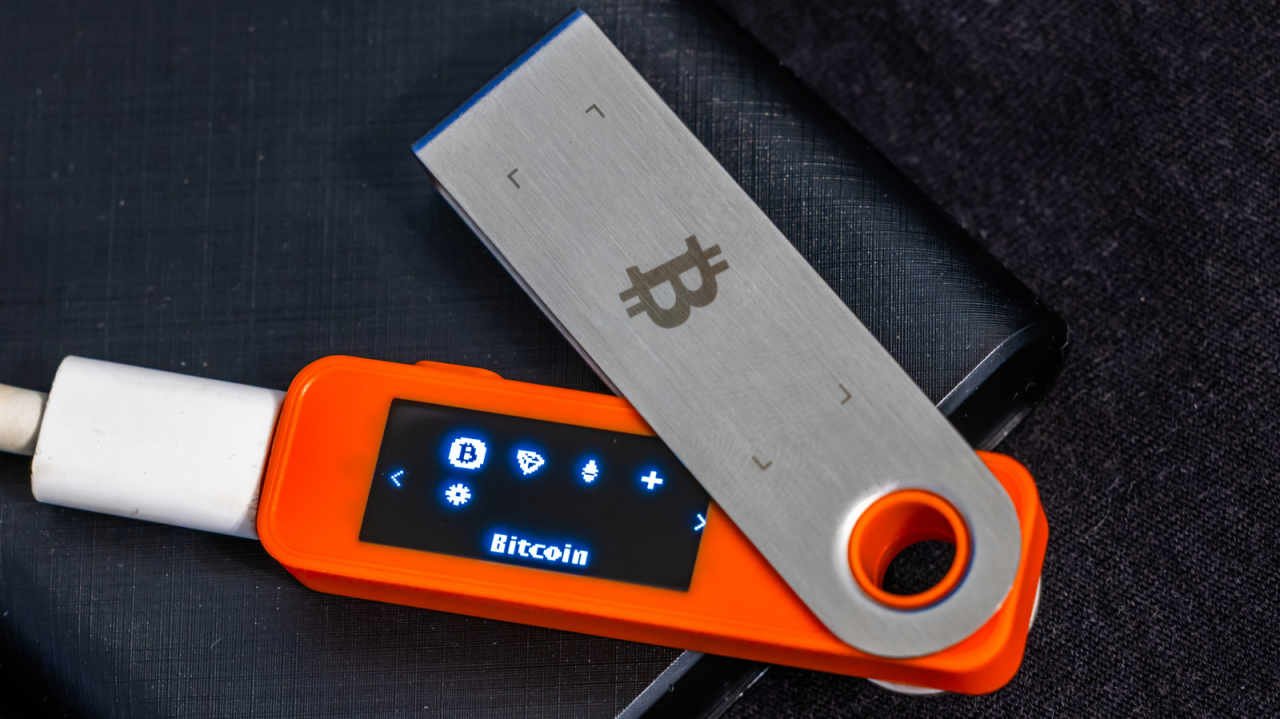
A software flaw introduced back in 2021 cost users thousands of Bitcoin in July 2026. The wallets that lost the funds were cold ones — offline, air-gapped, exactly as the marketing describes. They were drained regardless.
That caveat never makes it onto the packaging, so we’ll begin with it and then work our way back to the basics: what a cold wallet is, what it genuinely protects against, and where the model shows its cracks.
The Coldcard bug is the best argument for and against cold storage
Randomness was the root of the exploit. Rather than sourcing true randomness, certain Coldcard devices were producing private keys that were weak or predictable. Creating a unique set of keys is the very first step in setting up any wallet, and the whole security model depends on those keys being unguessable.
In this case, they could be guessed. Attackers worked through the known list of wallets Coldcard users might have generated, then remotely triggered transactions and drained them. Throughout all of it, the devices remained cold. The isolation counted for nothing, because nobody ever had to lay a hand on the hardware.
It set off a scramble: patch the device, create a fresh wallet backed by genuinely random keys, and shift the assets before an attacker beat you to it. By the time that race was over, thousands of wallets had already been emptied.
Your wallet doesn’t hold your crypto
This is the detail that catches almost everyone out on day one. The name is misleading — a cryptocurrency wallet contains no funds whatsoever.
Picture your crypto as a balance sitting on a blockchain network such as Bitcoin or Ethereum. What the wallet stores are the cryptographic keys demonstrating that the balance belongs to you. The better analogy isn’t the leather item in your pocket; it’s an online bank account you log into to manage your money.
Hence the mantra repeated endlessly across online communities: not your keys, not your coins. Self-custody removes third-party risk, and after years of major trading platforms losing customer assets in security breaches, the argument has held up well. The trade-off is that the entire security department is now you.
Hot versus cold is one distinction, and it’s simple
Hot wallets sit on a device capable of connecting to the internet. Cold wallets stay offline. That’s the whole distinction.
Isolation is the entire point. Putting private keys beyond the reach of anything an attacker can access over a network lifts the security floor under everything you hold.
At its simplest, that means a paper wallet — literally what the name suggests: a physical sheet of paper carrying the private keys that unlock your crypto on the blockchain, typically written out as a 12- or 24-word list. Authorizing transactions still requires an app or program, via a process known as signing. Paper can store; it can’t sign.
What the hardware is actually doing when you plug it in
Software wallets — the desktop and smartphone apps — are designed around convenience: sign from anywhere, and sign quickly.
Hardware wallets go the other way, keeping private keys sealed off on a dedicated device. A transaction still starts in an app, but the signing takes place entirely on the hardware, which is the reason you connect the device over USB, Bluetooth or NFC.
Today’s hardware wallets rely on tamper-resistant chips and additional security features designed to make key extraction as difficult as possible. Whatever the device is plugged into never receives your private keys. Should the app on your laptop or phone be compromised, your balance remains untouched.
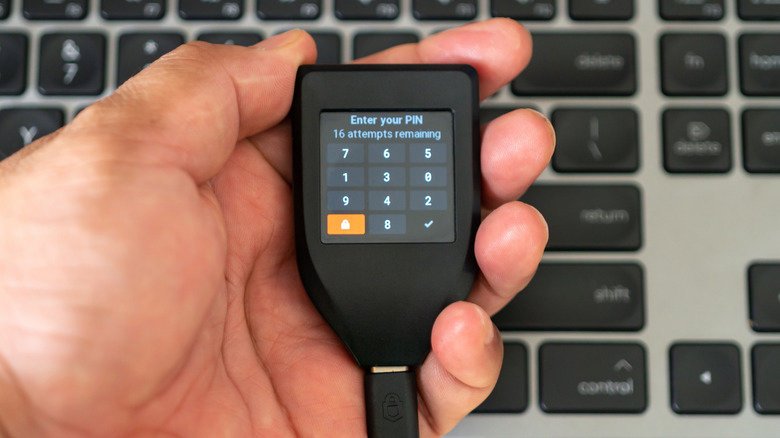
Practically speaking, the companion app can only forward the details required for signing: the destination and the amount. Those appear on the device’s own display, and you confirm the transaction manually. The signed data returns to the app, which then broadcasts it to the network.
That separation is what “cold” actually means. A key that never leaves the device can’t be siphoned off by malware. Even someone holding your phone with the companion app open can’t start anything. And if the wallet is stolen outright, these devices generally demand a PIN and erase their storage after a few incorrect attempts.
Your phone already does a version of this
Crypto hardware has no monopoly on cold storage. Inside your smartphone sits an encrypted, tamper-resistant chip unlocked by your PIN — Apple’s name for it is the Secure Element.
When Apple made NFC available to third-party developers in iOS 18.1, that chip’s remit expanded, though it remains restricted to particular sensitive data such as Apple Pay transactions and your biometrics. What a hardware wallet contributes that a phone can’t: the keys never live on the phone in the first place.
Which doesn’t make them invulnerable, as July 2026 made clear.
Two habits worth more than the device you buy
Impenetrable cold wallets don’t exist. Firms such as Trezor or Ledger make their code public and enjoy popularity in the crypto community for precisely that reason, but open code is no guarantee, and caution is still warranted.
The simplest safeguard is a passphrase, sealing your wallet behind a password known only to you. It costs nothing, takes seconds, and turns a stolen device into a brick.
After that, write your keys down. Any hardware wallet offers a means of exporting them as 12 or 24 words. Keep that backup off your computer and phone — storing it electronically returns everything the cold wallet was there to protect. Some owners etch the words into fire-resistant steel. Paper does the job as well, and paper tucked in a drawer beats a screenshot sitting in your camera roll every single time.