

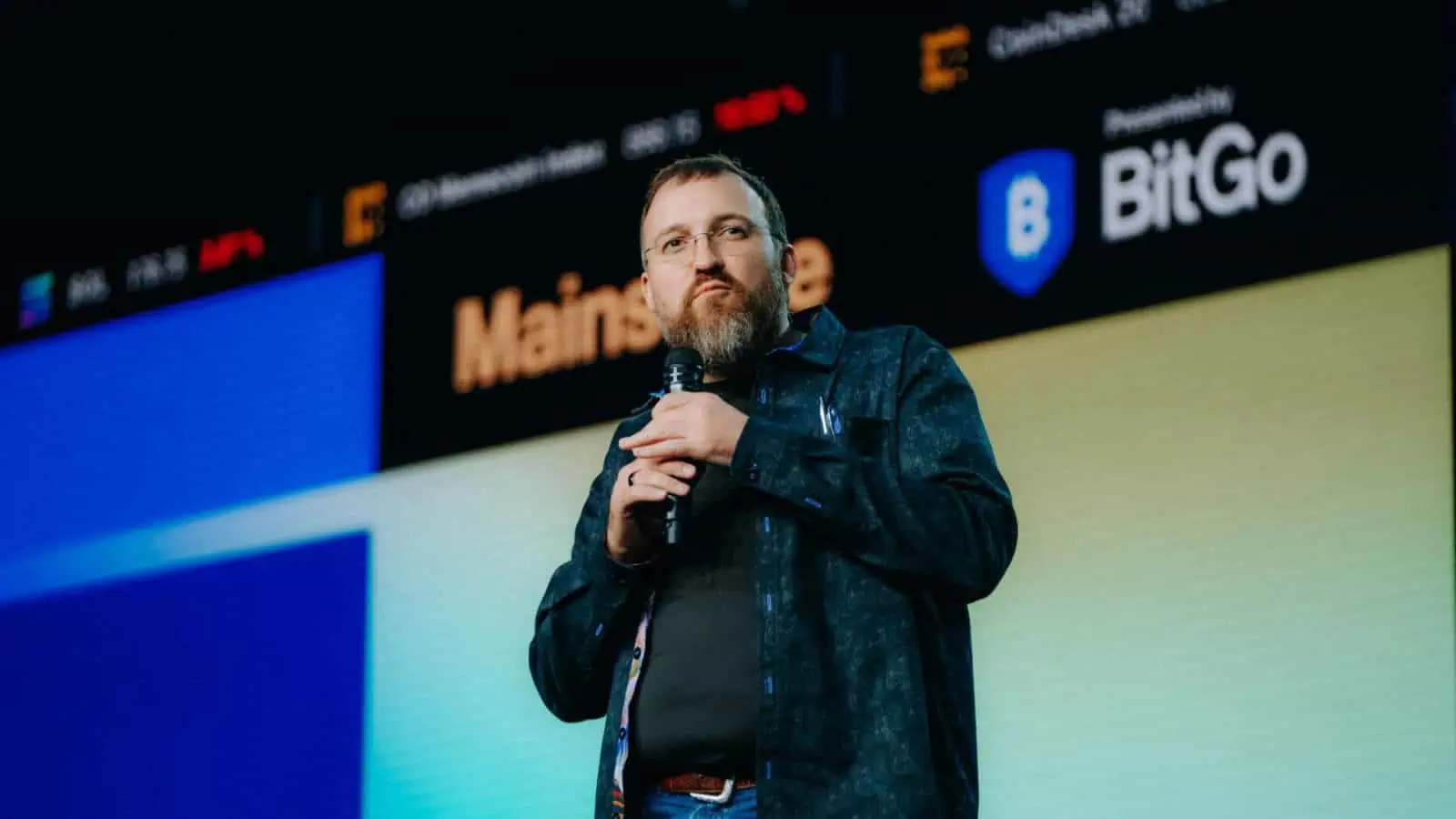
Cardano founder Charles Hoskinson says he is writing the blockchain’s next programming language himself. According to Hoskinson, the new language will support intents and proof-carrying data (PCD) through Groth16 proofs.
“I’m actually personally developing a programming language for Cardano. It’s the first of its kind enabling intents + PCD via Groth16 proofs,” Hoskinson wrote.
He didn’t say anything more. The language has no name yet, there are no published specs, and Hoskinson gave no release date.
A reply to a community question
The announcement came in a reply to a community member. They had asked what makes Cardano useful as a highly decentralized base layer for blockchain use cases. Hoskinson pointed to the language and said it would bring advanced cryptography features to the chain.
A few days before, in the same week, he hinted at a larger project for Midnight, the privacy-focused partner chain to Cardano.
“I’m working on a concept that only Midnight can bring to the cryptocurrency space to solve most of the problems. It’s gonna be the magnum opus for my career,” he said.
It’s unclear whether the language and the Midnight concept are related, and Hoskinson hasn’t addressed it.
His second thoughts on Haskell
Hoskinson has spent years debating programming languages in public. He’s a fan of Haskell, the language Cardano’s development architecture was originally built on.
In June 2022, Elon Musk and Jack Dorsey were discussing which languages are worth using. Musk said he preferred C to the newer C++, and Hoskinson joined in to suggest they try Haskell.
He later admitted he hadn’t been certain Haskell was the right choice for Cardano. In May 2024 he said that at one point he almost picked Clojure. Haskell came out ahead, he said, because of Cloud Haskell and because it gave him access to tools like Liquid Haskell and Agda.
In an April 2025 interview he said that if he could rebuild Cardano from scratch, he would probably use a different language.
How it fits with existing options
Cardano developers already have a few smart contract languages to choose from. Plutus is built on Haskell, and Aiken is the other main choice. Privacy-focused contracts on Midnight use a language called Compact.
Hoskinson’s language would be added to those options. Until he shares a name, a spec or a release window, though, developers have nothing to build with.