

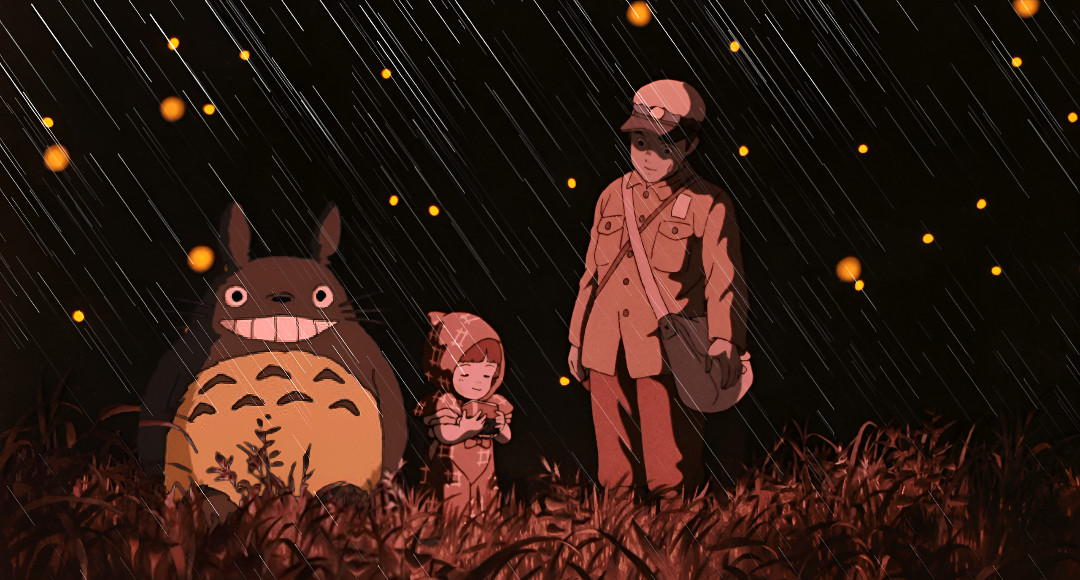
Sheets of paper fold themselves into living creatures whenever a young boy plays his stringed instrument. That image drives Kubo and the Two Strings, the 2016 stop-motion film from Laika set in Japan. No studio outside Studio Ghibli has come closer to making a Ghibli movie.
Tubi is streaming it for free as of November 2026. Anyone who has finished the Ghibli catalog and wants something in the same spirit should start here.
The opening Miyazaki’s exit created
In 2013, Studio Ghibli co-founder Hayao Miyazaki said he was retiring from filmmaking, and fans around the world were upset. Over more than 30 years, he and Ghibli had produced imaginative worlds and whimsical stories with a global following. My Neighbor Totoro (1988) and Kiki’s Delivery Service (1989) would have been enough on their own to define the studio’s charm.
He didn’t stay retired. The Boy and the Heron (2023) marked his return. In the meantime, though, Miyazaki was out of the picture, and many Ghibli staffers had gone off to found studios and tell stories of their own. Someone had room to step in.
With Kubo and the Two Strings, that someone was Travis Knight, the CEO and lead animator of stop-motion studio Laika.
He has already lost one eye
The film takes place in a fantasy take on early feudal Japan. When Kubo (Art Parkinson) was a baby, his tyrannical grandfather, the Moon King (Ralph Fiennes), stole one of his eyes. Kubo grows up on the edge of town, and his real talent is a magical instrument that brings paper to life.
He lives under one strict rule: he must never be outside after dark. If he is, the Moon King will track him down and take his remaining eye.
Of course, night falls while he’s still out. The Moon King and Kubo’s demonic aunts (Rooney Mara) hunt him down. Kubo gets away, but the only path left to him is a quest to defeat them. Two companions join him on the road, an anthropomorphic macaque (Charlize Theron) and a humanized stag beetle (Matthew McConaughey).
Viewers who know Coraline or ParaNorman will spot Laika’s usual formula. Its hero is an outsider, held back by his situation, and he can only push through the obstacles stacking up against him after he accepts who he is and what he’s capable of.
The Ghibli feeling, defined
Ask ten people what makes a film feel like Ghibli and you’ll get ten answers. Ours comes down to a specific blend: everyday life sitting beside magic, the beauty and the hardship of growing up, and small, character-led stories. Princess Mononoke works on a larger scale, yet it still makes time for quiet moments between characters and doesn’t rush from one plot beat to another.
Kubo nails every part of that. Few materials are as ordinary as paper. Laika, working from a script by writers Shannon Tindle and Marc Haimes and a score by composer Dario Marianelli that uses traditional Japanese instruments, makes paper impossible to look away from.
The film has a lot of action, and the giant skeleton sequence is the one that sticks in people’s memories. Its strongest scenes, though, arrive once the fighting stops and the characters simply talk. Kubo’s traveling party is a monkey, a beetle and some paper creations, and each one still teaches him something. The film treats them as people, much as Miyazaki made Totoro into more than a big furry creature.
Recognizable at a glance
The visuals are where the Ghibli connection is strongest. A Ghibli film looks so distinctive that you can name the studio before you know the title. Laika blends its own sculpted, hand-painted style with ukiyo-e woodblock prints and origami, so Japanese art runs through the whole film. That’s the reason Kubo stands up beside the Ghibli films people compare it to.
Wildwood, Laika’s latest film, is playing in theaters now and is worth seeing. For an evening at home, pick Kubo. It’s stylish and beautiful to look at, and its story about adolescence plays out like a dream. Nobody from Ghibli worked on it, yet it could easily pass for one of their films.
Kubo and the Two Strings is available to stream now on Tubi.