


Camera scanning through the darkness, the robot pushed 15 to 20 feet into the shattered interior of an apartment block in La Guaira, as a father waited nearby, hoping the machine would locate his son. It did not. Either the boy wasn’t there or he couldn’t be reached. Even so, the man expressed his gratitude to the researchers.
That is the unvarnished account of what a 4-foot snake robot accomplished in Venezuela this summer. It wasn’t a rescue. It was a glimpse into a void that no dog, no camera-on-a-stick and no human arm could enter, and while it found nothing, it gave the search crews something concrete: a reason to keep searching, or a reason to stop.
The devices are the work of Howie Choset, who leads the Biorobotics Lab at Carnegie Mellon University in Pittsburgh, and they arrived in the wake of two earthquakes that struck Venezuela on June 24, leaving more than 5,000 dead and 16,740 injured. Teams from across the globe combed the collapse zones with trained dogs, seismic and acoustic detection equipment, thermal imaging and video cameras strapped to poles. The snakebots handled the single task that none of those tools could.
What a snake robot actually does at a collapse
“The reason why snake robots are useful is they can get into tightly packed volumes that machinery and people otherwise cannot, and that’s important in search and rescue because we were able to extend the visual reach of the rescue workers in a safe way,” Choset told Ars. “In a sense, you’re doing minimally invasive surgery on a structure with a snake robot.”
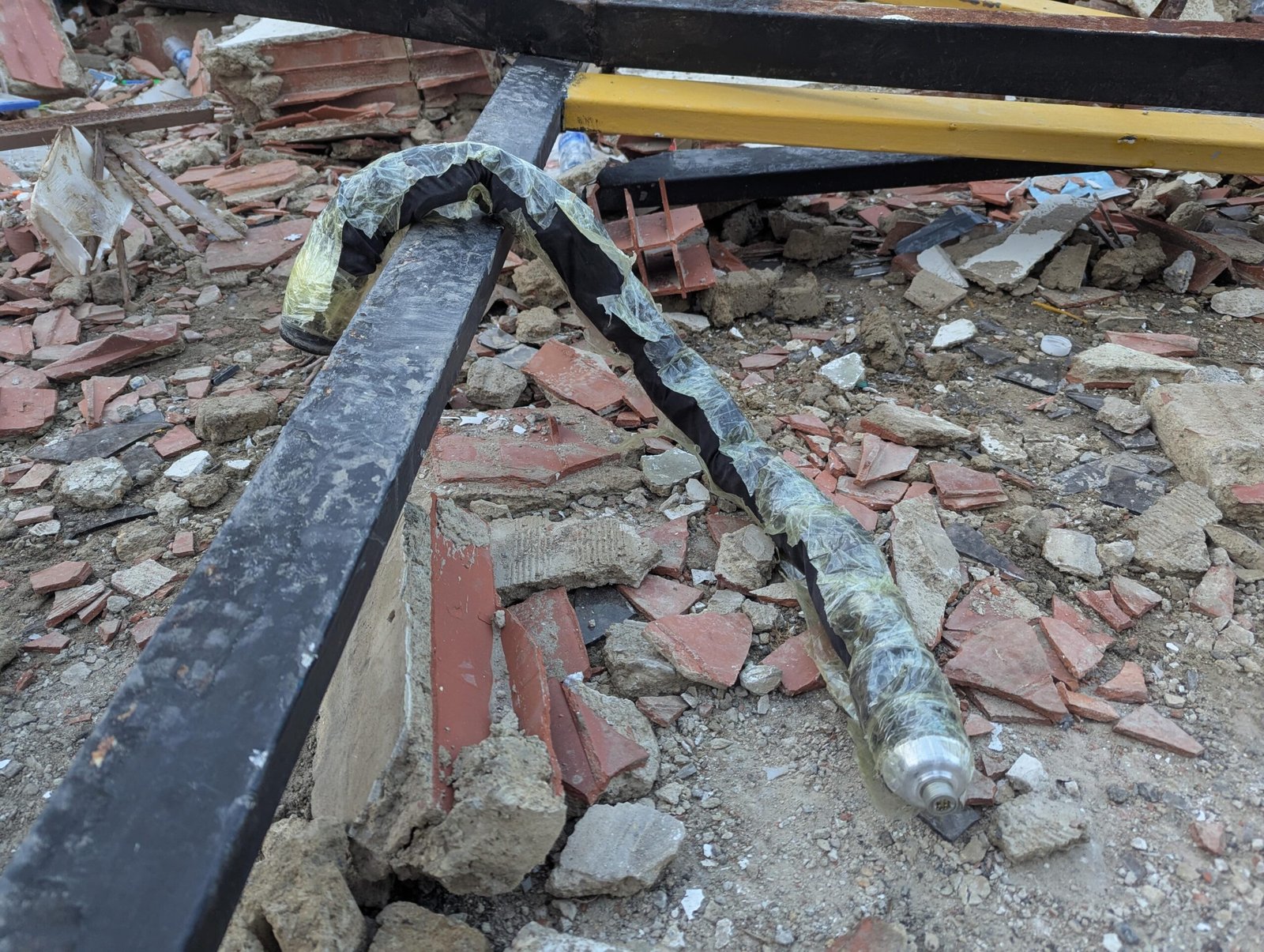
Measuring roughly 4 feet in length, each robot is assembled from modular segments that can be detached, replaced or upgraded. An operator steers it using a video game controller and a laptop housed in a control case tethered to the machine. The messy work is left to the software, which orchestrates every body segment into the correct undulation whenever the operator simply commands it to travel from A to B.
For close to twenty years, Choset’s lab has developed iterations of these machines to navigate archaeological digs, move through water and support minimally invasive surgery. Their first search-and-rescue outing followed the September 19, 2017 earthquake in Mexico City, where a snakebot aided the search of a collapsed apartment building.
A chatbot is why they were on the plane
Here’s the twist that shouldn’t have panned out but did. Beatriz Gonzalez, a Venezuela native based in Atlanta, turned to the AI chatbot Grok to ask how she might support search and rescue back home after the quakes. According to The Tribune-Review, Grok directed her to a Carnegie Mellon article about the 2017 Mexico City mission. She got in touch with Choset’s lab.
The researchers agreed — and they did so in an unlikely setting. They committed to going while standing onstage, moments from demonstrating the robots at a June 27 concert marking America’s 250th anniversary at Pittsburgh’s Point State Park. “We were on between Third Eye Blind and Nelly the rapper,” Choset said.
What followed was an overnight rush. The team replaced head-mounted cameras on several of the robots to verify they functioned, loaded up spare batteries for the control case that also serves as the robot’s power source, and within 24 hours were airborne toward Miami with three snake robots on board.
The trip nearly stalled in Miami
The June 28 layover dragged on as the crew searched for a private jet owner prepared to carry them into Venezuela. Several pulled out, citing restrictions imposed by the Venezuelan government. Gonzalez tapped her network and secured a flight.
The aircraft touched down June 30. US Marines received the team before passing them to the Venezuelan Red Cross, which transported them to La Guaira, a badly damaged city in the north. Over three days, from June 30 through July 3, the Carnegie Mellon group worked a number of collapse sites alongside international crews.

One location distilled the entire purpose of the mission. A Jordanian team with a dog had determined there were no survivors inside a collapsed apartment building. Yet a Colombian team’s infrared cameras hinted that someone might still be alive. With the two readings at odds, the snakebot entered through a small opening to resolve it, the missing boy’s father standing close by. Fifteen to 20 feet in, there was no one. The man thanked them regardless.
“The people in Venezuela were beyond gracious,” Choset told Ars. He recalled residents bringing the team hot meals throughout the work, offering sports drinks, and on one occasion a pound cake.
“They were very caring, and they’re showing this kind of love, this kind of affection for us while they’re suffering a burden that no human should ever have to suffer,” Choset said.
The money question hanging over the wreckage
The United Nations has appealed for close to $300 million to assist more than 1.3 million people affected by the quake. The World Bank estimates building damage at $19.6 billion.
Set against that, the Trump administration has taken in over $13 billion from Venezuelan oil exports and sales, according to Financial Times calculations. Washington assumed control of Venezuela’s oil revenues after seizing President Nicolás Maduro in a January military raid and winning the cooperation of vice president Delcy Rodríguez.
Those funds could rebuild the nation. But the sluggish recovery visible on the ground prompts the question, per the Financial Times, of whether all of it has actually been made available for Venezuela’s benefit — and the administration has offered no account of how it is managing the money, even as US lawmakers press for answers.

No save on the scoreboard, but the work counted
The snakebot team returned home without a rescue on its record. Around the world, search crews extracted nearly 6,500 people. Choset did catch a fragment of one of those rescues indirectly, during a lengthy talk with a woman whose husband — a security guard — had been trapped for eight days in the collapsed basement of a shopping center. Learning afterward that the man had emerged alive, Choset said he was overjoyed.
“She had two kids, and the age difference was the same as my two boys, so it hit home for me there,” Choset told Ars.
What they’d change before the next call
The lab is already compiling improvements. High on that list: light-based sensors for 3D point cloud mapping of a snakebot’s surroundings, giving both the operator and the rescue teams a genuine picture of how to guide the robot beneath a collapse rather than relying on a lone camera feed.
The crew also turned its field observations into a checklist for the next unexpected deployment. “The big thing is what to pack and how to pack,” Choset said.
Don’t confuse these with polished rescue gear. They are research prototypes, and Choset states that outright. What made them valuable in Venezuela was years of breaking and repairing them during training runs, together with a lab discipline of engineering for reliability well beyond the demo phase.
“My students and staff took the attitude of, ‘Let’s make sure these are robust systems as much as possible,'” Choset said. “So that when we’re doing our research, we’re not constantly fighting with the robot to get things to work.”