


The GameCube isn’t underrated — it’s overlooked, over and over, by people who ought to know better.
Anyone who actually owned one remembers how odd and how strong that library was. Plenty of its best titles tore up the rulebook. And it stings that the whole aesthetic vanished along with the hardware. This was Nintendo operating at peak creativity, and most of what it produced has quietly drifted out of view.
The one that set the standard
There’s a single title from that catalogue that still demands your time today. It showed up while Nintendo was only beginning to work out its own appetite for RPGs, and it did more than lift expectations for what followed. It launched an entire sub-genre that remains enormously popular.
That game is Paper Mario: The Thousand-Year Door.
Nintendo had circled the genre before. Fire Emblem and Super Mario RPG are the obvious cases, yet the formula never fully locked in. Quest64 flopped. Fire Emblem, for everything it got right, couldn’t rival the storytelling of its peers. The original Paper Mario on N64 answered all of that with a smart combat system, exploration ideas nobody else was attempting, and a story entertaining enough to hold the whole thing together.

What Intelligent Systems finally cracked
Then The Thousand-Year Door arrived, and both Nintendo and Intelligent Systems proved they’d worked it out. The story ran darker, landed harder emotionally and lingered longer than the first game’s did. The new companions carry the sort of depth you’d associate with Final Fantasy, or to a slightly lesser extent Xenogears.
The combat system, retired after TTYD, took what the debut nearly nailed and saw the job through. It’s the finest version the series ever managed, and it inspired a whole generation of Paper Mario imitators.
World design, music, writing — every piece clicks into place. That’s how it became one of the best-selling GameCube games of all time and why fans around the world treated it as essential. It simply never earned the reverence handed to its more famous shelfmates.

The remake made the case
Is it the single greatest GameCube game ever made? Subjective, clearly. My answer is yes. It’s one of the rare titles from that era that still holds together visually and mechanically, and it was well ahead of its moment.
Consider the remake. The visual overhaul suits the theme and aesthetic beautifully, but the gameplay was left broadly untouched beyond a few quality-of-life tweaks. Nobody leaves a 2004 design alone unless it was already that refined.
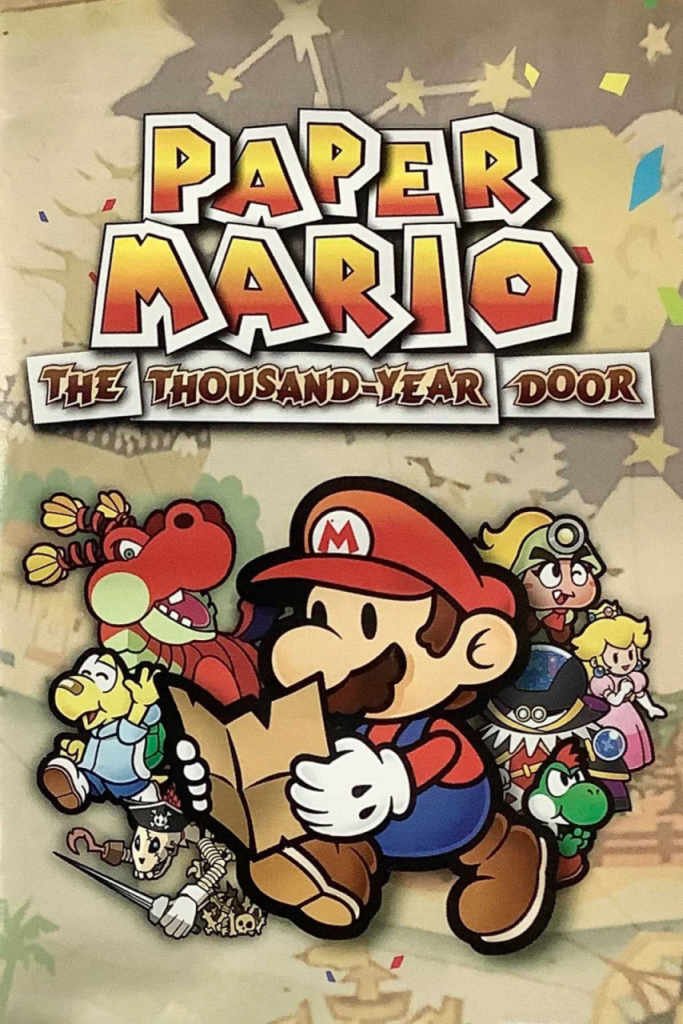
Not the most important game on the console. Still the most complete.
Other GameCube games moved the industry more directly. Others carry heavier nostalgia, usually because they were inescapable or belonged to a mainline series rather than being a spin-off.
But The Thousand-Year Door plays like a perfect masterpiece. An experience built without compromise, one that realises its vision completely in a way most of its contemporaries never did.
Best of the era? Debate that, it’s fair game. Among the best isn’t up for debate. It elevated the RPG genre, birthed its own sub-genre, shaped the developers who came after it and left a mark on people like me.
If you want to grasp what made the GameCube era feel different — the creativity, the craft, the sheer willingness to try something — this is where you start.