

Spoiler warning: the endings of many well-known AAA games are discussed below.
From a broadcast screen, Wallace Breen addresses a conquered world and tells it that accepting alien rule is like a lungfish dragging itself onto dry land rather than perishing in the familiar water. The speech is unsettling. Look at it from a slightly different angle, however, and it’s not a bad argument.
This is why the most memorable game villains linger. Strip away the theatrical monologues and some of them raise points that are hard to dismiss. Across these eight, the charge sheet covers one occupied planet, one erased painting, one underwater utopia left to decay and an enormous body count.
Consider yourself the jury. Go through the case files before casting your vote, since the evidence may lead somewhere you’d rather it didn’t.
The collaborator who stayed well-fed
The story of Half-Life 2 picks up seven years after humanity’s defeat by the Combine, an alien empire that took over Earth within hours. For those seven years, former scientist Breen has served as humanity’s selected administrator, governing on the Combine’s behalf.
Under his rule, City 17 is a grim place. Reproduction has been suppressed. People vanish from their neighborhoods with no warning and no explanation.
At the core of Breen’s case is the claim that society is “refusing to grow,” and viewed a certain way, he has a point. His entire pitch boils down to collaboration being preferable to extinction. The problem lies with the messenger: a man who kept himself well-fed while others handled the enforcement.
Put simply, his defense is this. He surrendered humanity to an occupation, yet he may also be the sole reason humanity survives to hate him for it.
Two Renoirs, two grieving fathers

With its main antagonist, Renoir, Clair Obscur: Expedition 33 plays a clever card: it divides him into two separate people. One is real. The other is painted.
Aline’s painted Renoir stands with her to preserve the Canvas and everyone painted within it, including people the expedition has grown to love. Anyone who endangers that world falls to his blade.
Meanwhile, the real Renoir has spent years trapped and appears noticeably older than his idealized painted counterpart. His goal is the reverse. He wants the Canvas wiped out completely, so that the family he’s drifted away from can quit channeling their grief into a fantasy and begin healing in the real world.
In other words, the Renoir you battle is defending the fantasy, while the real one is trying to pull his family free of it. Choosing a side means deciding whose heartbreak, between two grieving fathers, counts as the genuine one.
Andrew Ryan never walked it back
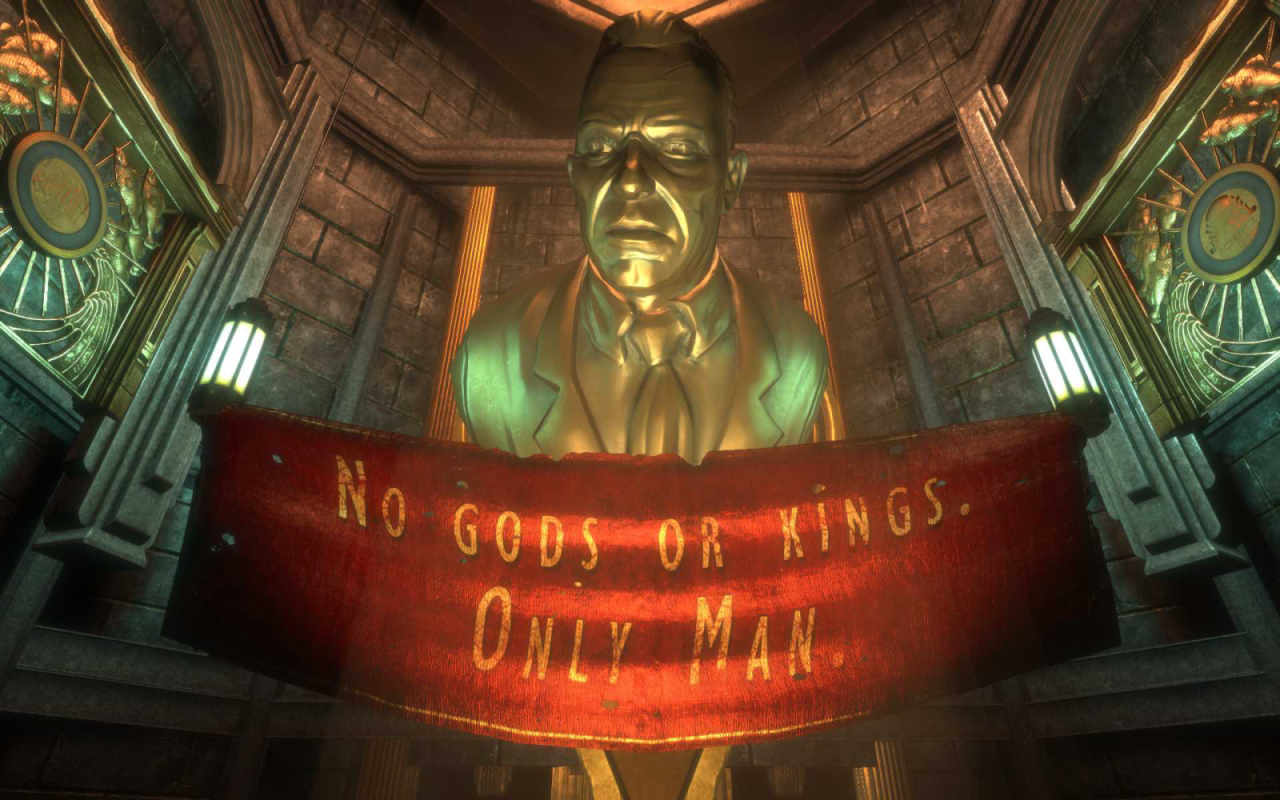
Andrew Ryan had a single motive for building Rapture on the floor of the Atlantic: getting away from government oversight and religious meddling. All of BioShock‘s city is founded on one promise, that a man’s success belongs to him and nobody else.
To his credit, he never retracts it. He holds firm right to the end, even with death by golf club looming.
By that point, though, many of Rapture’s residents have soured into addicts of ADAM, a gene-altering substance Ryan allowed to spread with no oversight whatsoever. As far as he was concerned, oversight was the true enemy. His bootstraps philosophy never shifted. What did shift was how forcefully he was prepared to impose it, particularly after Frank Fontaine’s black market began outplaying him at his own game.
Kreia is right, and that’s the problem

There are teachers who are right about nearly everything on a technical level and still pull you into their cruelty. In Knights of the Old Republic 2, that teacher is Kreia, the blind mentor who guides your character.
She perceives, more clearly than the Jedi or the Sith, just how broken the galaxy’s whole relationship with the Force has become. And her reasoning is sound. In her view, total detachment and total hunger are simply two separate ways of avoiding the same uncomfortable truth about the Force. Throughout the game she maintains that both sides are mistaken about the same thing, and neither one succeeds in disproving her.
Harder to defend is the way she drains Force energy directly from her companions, weakening them without their consent. It’s the same offhand cost-benefit reasoning that once had her helping to gut the Jedi order she now claims to critique from a place of wisdom.
Emet-Selch will debate you over wine
Prevent one apocalypse by triggering a smaller one! Emet-Selch spends all of Shadowbringers, the third major expansion for Final Fantasy 14, selling you on that idea. And he’s sincere.
He’ll happily pass an evening sipping wine and joking about the extinction he’s orchestrating, then rebuild the souls of his long-dead friends simply to spend one more night in their company. Clearly, the man is dealing with something.
He’ll even debate the weaknesses of his plan with you face to face, a level of intellectual honesty most heroes never reach. Still, the numbers don’t add up from your side. Every stage of his scheme sets off calamities that devastate Eorzea’s present-day population, killing real people you’ve come to know over years, all on behalf of a civilization gone for thousands of years. To him, it’s a fair exchange. You’re the one footing the bill.
Solas built the wall himself
Through most of Dragon Age: Inquisition, Solas comes across as a modest elven apostate mage traveling with the Inquisitor (meaning you). He’s a companion you trust. He could even be your romantic partner.
He is also revealed to be Fen’Harel, the Dread Wolf of elven legend.
The Veil, the barrier dividing Thedas’s physical world from the occasionally troublesome spirit realm, is his own creation, raised thousands of years ago to stop a war among ancient elven gods. In fairness, it did the job. It also severed his people from their own immortality and condemned the elves to a decline their descendants can’t even recall. He has devoted centuries to reversing that mistake.
Solas does weep and apologize as he lays all of this out. Whether remorse over something horrifying erases his guilt remains the open question, and whispers about his role in Dragon Age: The Veilguard suggest it’s the right one to ask.
Big Boss built a country for used-up soldiers
Born Naked Snake, Big Boss spent decades as an elite soldier serving governments that exploited him and then tossed him aside. Metal Gear Solid 5 begins with him coming out of a nine-year coma after precisely that kind of betrayal took his eye, his arm and most of the left side of his face.
Rather than seeking revenge on a single government, he creates something no government can strip away from the soldiers who serve. Outer Heaven, the soldier-run nation he later establishes, is his response to a lifetime of being treated as expendable: a home for the soldiers every real nation had already used up and discarded.
His case loses some strength once you realize he brings child soldiers into his ranks without any visible hesitation.
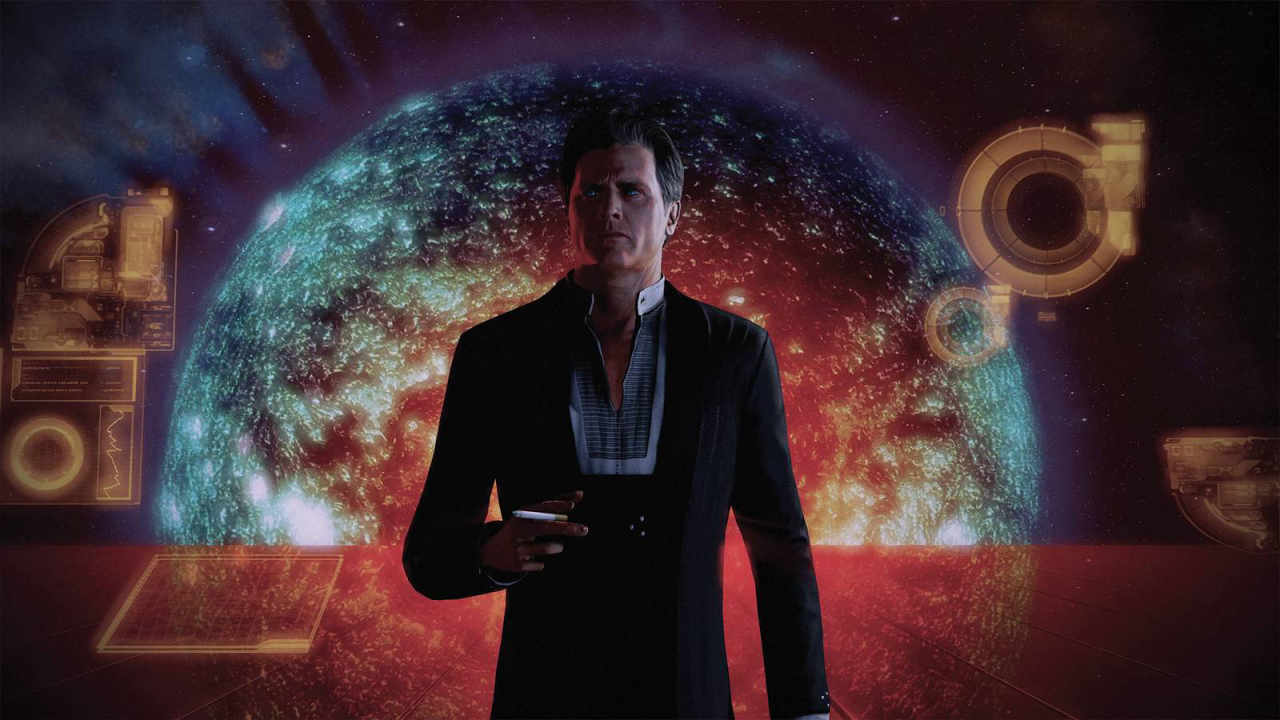
The Illusive Man saw the Reapers coming
In Mass Effect 2, the Illusive Man leads Cerberus, a pro-human paramilitary organization that the rest of the galaxy regards as a terrorist group. One conviction drives Cerberus: the Reapers, an ancient machine race that destroys advanced civilizations on a cyclical schedule, are on their way, and no one else is treating the threat with enough seriousness.
He’s prepared to play the villain if that hands humanity an advantage. It’s why he bankrolls Commander Shepard’s resurrection, to put someone capable back into the fight. That same reasoning allows him to sacrifice operatives who placed their personal trust in him.
The tragedy is that bracing for the worst can look identical to turning into it. He’ll raise one soldier from the dead to fight a war the galaxy refuses to believe in, then spend the very people who trusted him to win it.