

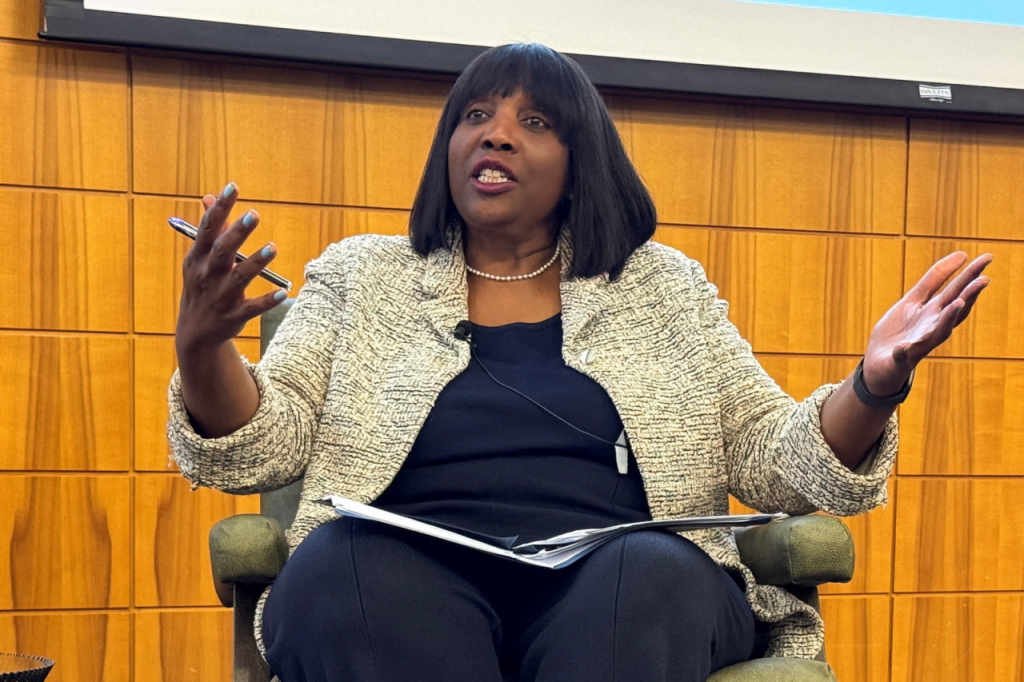
One of the Federal Reserve’s governors has now stated plainly what futures traders have been murmuring for weeks: the next rate move could well be higher.
Speaking Wednesday, Lisa Cook signaled she would support raising interest rates unless inflation readings improve.
“Inflation is too high, and I consider the risks to the inflation side of the dual mandate higher than the risks to the employment side at this point,” Cook said during a speech in Anchorage, Alaska. “As such, I am prepared to act by raising rates, if necessary.”
There is no central-bank hedging in that phrasing. It is a governor spelling out exactly where her next vote is headed.
Inflation did soften in June, largely on the back of a steep drop in energy prices. Cook, however, wasn’t willing to stake policy on it, cautioning against reading too much into any one data point while price growth still sits well above the Fed’s 2% target.
Why she voted to hold anyway
Cook sat with the 9-3 majority that opted last week to leave the benchmark borrowing rate parked in a 3.5%-3.75% range.
She was specific about why she chose to wait. Three distinct pressures still need to work their way through the price data, in her view: tariff effects that may be fading, an energy supply shock stemming from the Iran war, and the demands created by the artificial intelligence buildout.
In other words, the hold was a look-before-you-leap decision rather than an indication she feels at ease.
The five-year problem
The most consequential portion of Cook’s remarks had little to do with June. It concerned what happens once above-target inflation shifts from a headline into a habit.
“If I do not see signs of continued disinflation soon, I am prepared to act,” Cook said. “With five years of above-target inflation, the risk grows that higher inflation may become entrenched in price- and wage-setting behavior, leading to persistence that would be much harder for us to attack. The longer inflation is above target, the more likely this scenario becomes.”
Five years is the figure worth pausing on. Entrenchment in how wages and prices get set is precisely the failure mode that keeps central bankers awake, because once it takes hold, rate policy has to strain far harder to dislodge it.
No luxury of waiting
Cook conceded that a different backdrop might give the Fed room to stay put for longer. This isn’t that backdrop.
“We do not have that luxury in this one,” she said.
Traders have already braced for action. CME Group’s FedWatch shows the central bank could move as early as September, although the market assigns better odds to an October step.
Cook also isn’t alone in leaning this way. Minneapolis Fed President Neel Kashkari — one of the three dissenters on last week’s decision — said on CNBC earlier that same day that he continues to see a case for higher rates.
Kashkari broke ranks; Cook did not. Should the next batch of data fail to deliver a disinflation signal, that gap between them may close.