


Two hundred and nineteen hours. Spent in Hoenn. On a machine small enough to slip into a coat pocket.
That is the completionist figure for Pokémon Emerald, and it tends to upend whatever most people think they remember about the Game Boy Advance. Conventional wisdom filed handheld titles under snacks between proper meals — something for the back seat of the car while the PlayStation 2 sat at home holding the real epics. That’s largely fair. Measured against what the PS2 or the GameCube were putting out, the GBA catalogue does lean short.
A few of them, though, will still swallow your entire month.
The console mattered more than its footprint let on
Nintendo’s handheld amounted to a revolution inside the industry, an evolution of the Game Boy Color that formally cracked open a fresh generation of games and possibilities. A number of its finest releases have aged well enough that they still turn up among the best titles ever made.
Gen 3 Pokémon is the obvious case. It raised the bar for what the series was capable of, even while building on the original formula that had detonated during the Game Boy Color years. The system was also home to The Legend of Zelda: A Link to the Past and Four Swords.
The hardware, in other words, was never the constraint people assumed. Five games in particular make the case.
The tactics series that finally opened the door for the West
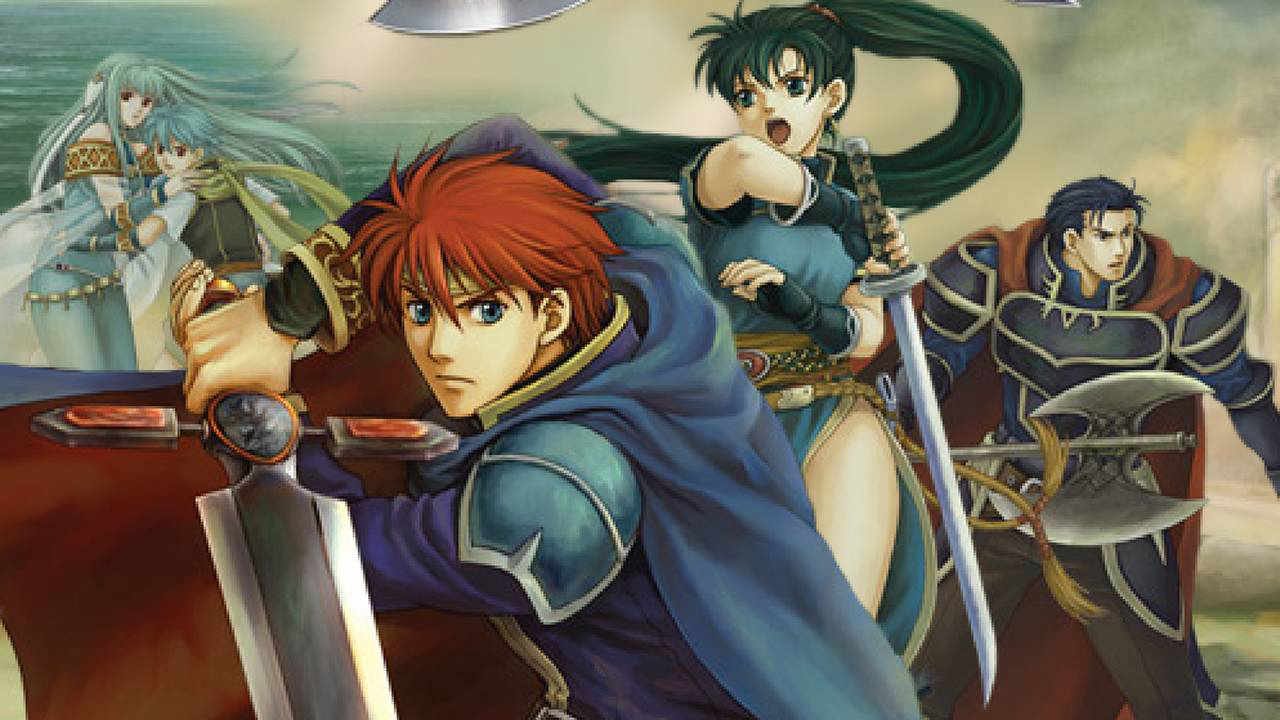
The Fire Emblem franchise had been running for well over a decade before most players outside Japan even learned it existed. Shadow Dragon and the Blade of Light turned up on the Japanese Famicom back in 1990. Western markets got nothing resembling a proper entry until Fire Emblem: The Blazing Sword reached the Game Boy Advance in 2003.
Locally it went by Fire Emblem and nothing more. The seventh installment in the series brought in a new kind of tactical encounter, casting you as Lyn, Eliwood and Hector, marshalling armies across a grid while steering individual characters through tighter skirmishes.
That introduction did its job. The IP kept growing across the decades that followed into a hit, and players will soon see Fire Emblem: Fortune’s Weave on the Nintendo Switch 2.
The campaign clocks in near 27 hours, unremarkable for an RPG of that vintage. Wring out everything on offer and the total climbs to roughly 46.

Three Sega RPGs on a single cartridge
By the tail end of the 1990s and the start of the 2000s, companies were already digging through their back catalogs for material to port onto newer hardware. Phantasy Star Collection is exactly that instinct pressed into cartridge form, a bundle of the series’ first entries. Japan got it originally on Sega Saturn in 1998; the Game Boy Advance version followed in North America in 2002 and in Europe in 2003.
The two packages are not the same. Saturn owners got the first four games, while the GBA edition shipped with three. Even so, a great many Nintendo handheld owners met Phantasy Star for the first time right here.
Taken one at a time, none of them is a marathon. Stacked together, the collection asks for about 63 hours and 35 minutes to finish all three. Worth flagging: that number rests on a single polled entry, so real playtime may vary a lot.

The farm that Stardew Valley sprouted from
Harvest Moon: Friends of Mineral Town ranked among the GBA’s most popular releases, adored enough to earn a 2020 remake called Story of Seasons: Friend of Mineral Town. The rename came down to licensing. It was the platform’s first Story of Seasons release, and here’s the fun part: the 2003 original was already a remake itself, of 1999’s Harvest Moon: Back to Nature on PlayStation 1.
You take the role of a farmer who inherits a farm from an old man, chooses to stick around, and gradually builds the place up while tending crops and raising animals. That template was the foundation for Stardew Valley, and plenty of people will tell you Stardew ended up the better game.
The campaign runs roughly 27 hours, which hardly sounds daunting. Chase everything, though, and you can burn 99 hours in that virtual farmland.
The Square Enix release that gets far too little credit
Final Fantasy Tactics Advance lifts the ceiling considerably. Arriving in 2003 as the successor to 1997’s Final Fantasy Tactics, it was built exclusively for the Game Boy Advance and spun a brand new story set in the same world as the original. The goal was the FFT tactical experience across more contained encounters.
Encounters vary in flavor as you progress, some tied to the campaign and others attached to side quests. It also introduced the Law mechanic, policed by a Judge who slaps restrictions on certain actions mid-combat. Few games in the series are as overlooked, and it remains remarkable, all the more so for a handheld.
The main campaign alone: around 45 hours. Completionists can push that to 113, a startling figure for a GBA cartridge.
Hoenn will keep you captive
That first wave of Gen 3 games set in Hoenn counts among the longest things on the system. Ruby, Sapphire and Emerald each hand over hundreds of hours, and Emerald is the biggest of the three. It landed in 2004, nearly two years after Ruby and Sapphire opened Gen 3, and the Rayquaza-led title sends Trainers back to Hoenn for a similar story told from a slightly different angle.
Emerald retains most of what Ruby and Sapphire changed while folding in wrinkles of its own. Team Magma and Team Aqua both show up. Groudon and Kyogre are catchable. One of the three Gen 2 starters is yours to grab, and the postgame Battle Frontier opens up, something Ruby and Sapphire never had at all.
Average playtime sits around 51 hours. Rush straight through the campaign and you’re out in 31.
But there’s so much buried in Hoenn that the completionist path stretches to 219 hours, one of the longest Game Boy Advance titles Nintendo ever made. That’s nine straight days of a screen with no backlight, and a generation of players did it anyway.