

Magic isn’t dying or slowly fading out. It’s dead — and the body hasn’t stopped twitching.
That premise is the foundation of Coda, the 2018 BOOM! Studios series by Simon Spurrier and Matías Bergara, and it explains why the book lands with more force than nearly any fantasy comic on the shelf. Most fantasy sells you on magic as the thing that makes the impossible beautiful. Coda takes that promise and throws it down a well.
Once the apocalypse has stripped a formerly wondrous world of almost all its magic, what remains is a hostile wasteland where fantasy’s leftovers are grotesque, dangerous, or simply ridiculous.
A bard who wants nothing to do with heroism
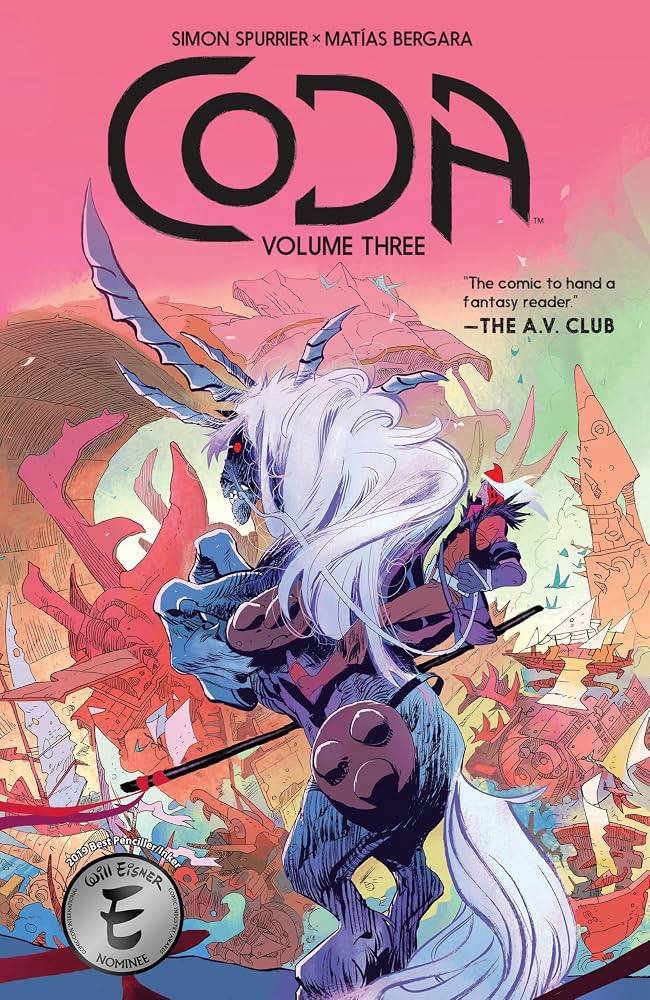
Over its 12 issues, Coda tracks Hum — an antisocial ex-bard — as he crosses that shattered landscape to rescue the soul of his wife, Serka.
That’s the entire engine driving the book. There’s no throne he’s after. No glory, no destiny scribbled on some prophecy scroll. He just wants his wife back, and the world keeps pulling him into a bloody struggle over who gets to control whatever’s left of it.
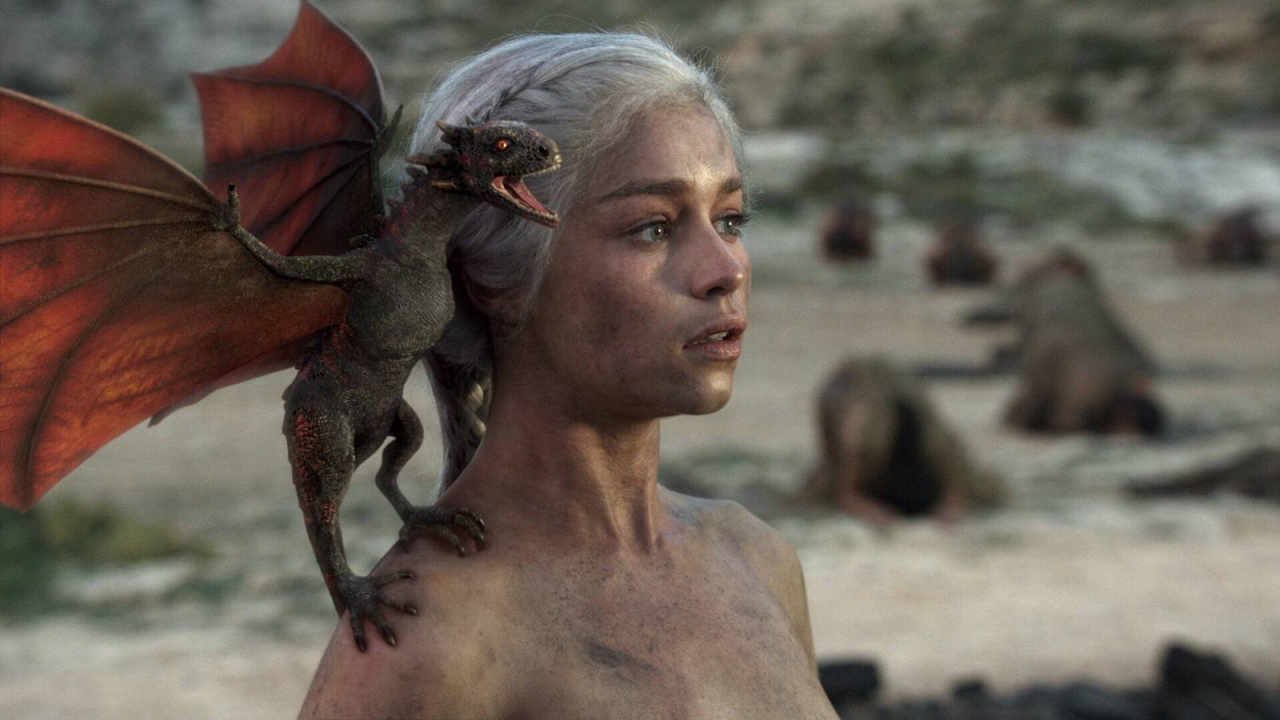
Collapsed kingdoms, monstrous creatures, endless power struggles — assemble those pieces and the result is a brutal fantasy atmosphere that reads like Game of Thrones smashing into The Witcher. What anchors all that epic scale, though, is the deeply personal motivation underneath it.
The fantasy already lost
This is the part that sets it apart. In Coda, fantasy is presented as something that has already been beaten.
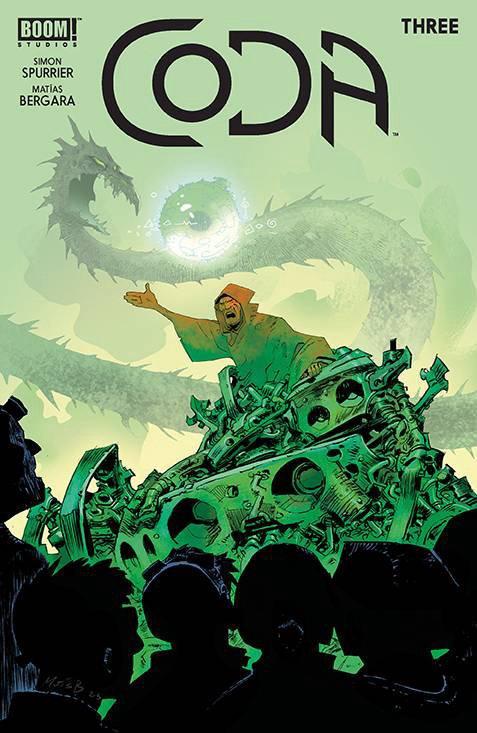
The setting is still haunted by dragons. Magical creatures and legendary wonders persist too. But all of them are shadows of whatever they once stood for, and Spurrier makes sure that never slips your mind. No pristine realm waits patiently for a chosen one to come exploring. Every spectacular detail on the page bears the marks of the catastrophe that preceded it.
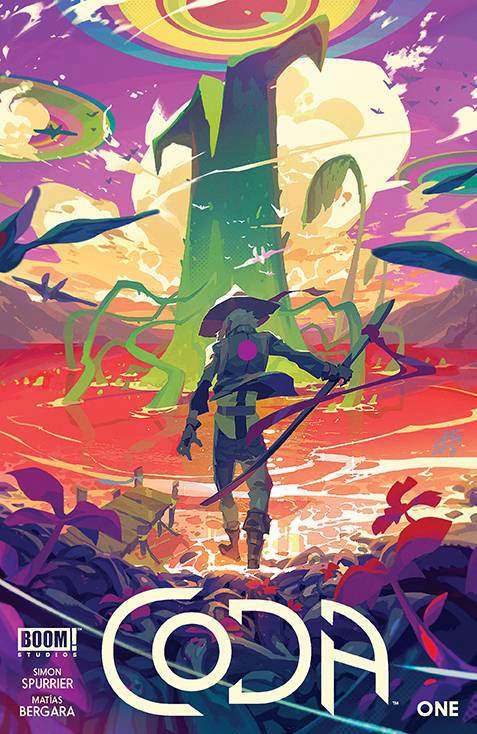
The upshot is a book far darker than its bright, colorful artwork initially lets on. That’s a trap — and an intentional one.
Survival beats heroism, every time
It’s Hum’s journey that justifies the Witcher comparison. Time and again, staying alive counts for more than valor. He operates on instinct, sarcasm, hard-won experience and whatever he can salvage from the wreckage.
Traveling alongside him is a foul-tempered mutant unicorn — a deliberately warped riff on the noble fantasy sidekick, and the clearest possible signal of what this book is up to.
What comes out of that mix is funny, grimy and often unsettling. Yet it never stops working as an adventure, which is a far tougher balance to strike than it appears.
Politics in the wasteland
Coda also nails the political viciousness that fuels prestige fantasy. Rival settlements and factions — Dryfleet, Thundervale and Ridgetown among them — maneuver against one another across the wasteland, and Hum winds up caught in a conflict capable of determining the entire region’s future.
None of it gets romanticized. Desperation produces manipulation, violence, opportunism and terrible decisions, and the story is willing to sit in all of that without flinching or delivering a lecture.
Bergara’s art does the heavy lifting
If any single element distinguishes Coda from run-of-the-mill post-apocalyptic fantasy, it’s what Bergara puts on the page.
The pages lurch from dusty wastes and skeletal remains into explosive color, bizarre monsters and enormous action sequences, and somehow the visual coherence never breaks. His designs preserve the familiar silhouettes of classic fantasy before twisting them into something harsher, stranger and sometimes grotesque.
You always know what you’re looking at. You just wish you didn’t.
The apocalypse has jokes
That visual contrast lands because Coda refuses to wallow in unbroken misery. The book will construct a genuinely menacing scene, then cut its legs out with strange humor, an over-the-top character expression or some absurd creature ambling into frame.
That tonal flexibility stops the apocalypse from turning monotonous, and it underlines the bigger idea running beneath the series: a broken fantasy world can still be strangely alive.
Spurrier’s script keeps pace with that unpredictability through dry wit and cynical dialogue. Hum comes across as a man worn down by the myths that surround him, which turns every encounter with the wider fantasy machinery into a pleasure.
The writing constantly interrogates heroic archetypes while still grasping why those archetypes have value to begin with. That’s precisely the line separating this from a plain genre parody, and Spurrier stays on it.
The world explains itself, slowly
Density arrives without the creative team burying you in exposition. Most of Coda’s backstory comes through visual clues, peculiar character behavior and the plainly visible fallout of the apocalypse rather than paragraphs of explanation.
Forcing readers to piece together what was lost turns the setting itself into part of the mystery — the sort of trust in an audience that plenty of fantasy refuses to extend.
Anyone after dark fantasy with more on its mind than swords and monsters will find this 12-issue run unusually ambitious. It carries the ruthless political air of Game of Thrones, the monster-haunted grime of The Witcher, and a post-apocalyptic visual identity that belongs to nobody else.
And for all that ruin, the broken world still makes space for hope, love and survival. A bitter ex-bard, a bad-tempered unicorn and a soul worth crossing a dead world to reach.