

In Brief:
- Chapter 1 of a BLOCKLORDS LRDS $0.01562 ▼ -11.7% (official site) animated series, titled “The Approaching Storm,” has been published by MetaKing Studios on the project’s YouTube channel.
- Production ran entirely through BLOCKLORE, the node-based AI generation canvas the studio switched its focus to once it announced the game was closing.
- Seven-plus years of development and a $15 million raise preceded the March 31, 2026 Steam launch of BLOCKLORDS. News of the shutdown emerged Aug. 6.
Only weeks after informing players that the game was shutting down, MetaKing Studios has put out the opening chapter of an animated series set in that same world.
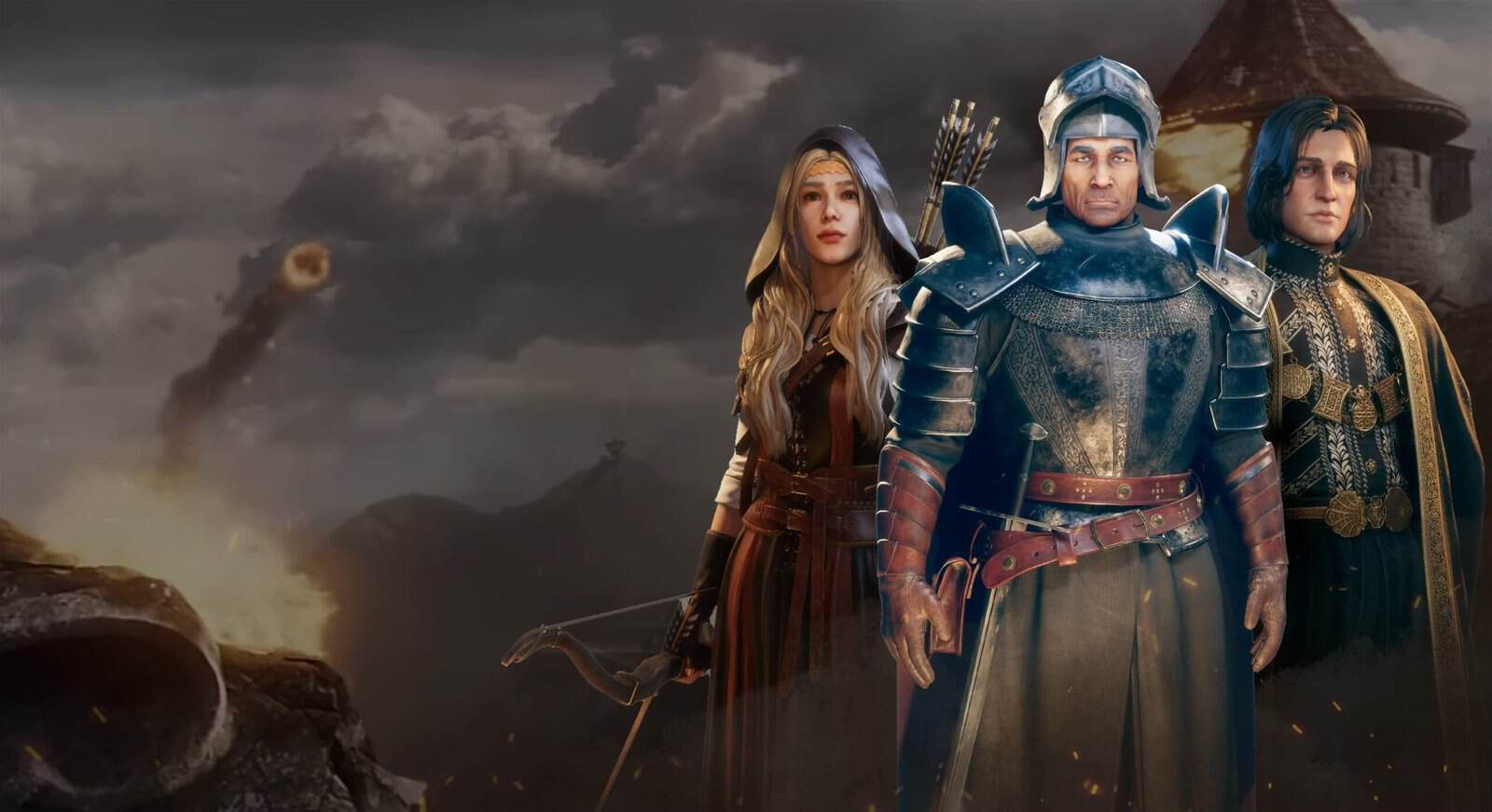
Titled “The Approaching Storm,” the episode centers on Sela, who on her Blessing Day ventures beyond her village’s borders alone for the very first time. The complete chapter is available on the project’s YouTube channel.
A first look at The Approaching Storm, Chapter 1 of the BLOCKLORDS animated series.
On her Blessing Day, Sela steps outside the borders of her village alone for the very first time.
Built shot by shot inside BLOCKLORE.
Watch the full episode in our Youtube Channel. Link in the@BLOCKLOREView on X ↗
According to the studio, the episode was “Built shot by shot inside BLOCKLORE” — the AI product it pivoted to in the wake of the game’s closure.
What BLOCKLORE is
Concept art, character consistency, video and editing all live in a single workspace on BLOCKLORE, a node-based canvas built for AI generation. The company describes it as a multimodal AI creation infinite canvas that pulls ideas, assets, models and storyboards together onto one executable canvas.
The workflow is upload assets, wire up nodes, then click to generate. Each intermediate step drops onto the canvas, ready to be tweaked, reused or exported. Calling multiple models from a single workflow is possible thanks to a unified model layer.
Metaking Studios OU operates the product, which is paid and offered on monthly or yearly terms. Image, video and audio generation are billed in credits. Twenty daily credits come with free accounts, subscription credits refresh on a 31-day cycle, and all models are bundled into every plan. Team plans exist as well.
The game closed first
Word of the shutdown broke Aug. 6, after the account formerly operating as BLOCKLORDS started posting under the BLOCKLORE name and confirmed the medieval strategy MMO was finished. No end date accompanied the announcement. When servers go dark, what happens to assets held by players, and what becomes of LRDS all went unaddressed in the post.
March 31, 2026 was the Steam launch date for BLOCKLORDS, with MetaKing serving as both developer and publisher. Steam reviews currently rest at “Mostly Negative,” where 35% of 65 user reviews are positive. Roughly four months separated launch from closure.
When the announcement landed, LRDS carried a market capitalization of roughly $1.15 million. Exchanges were already retreating by then. A delisting of LRDS — along with MAIGA, TRN, PLU and DATA — was announced by Coinsavi, which halted withdrawals at 8:00 UTC on July 20.
Background
Seed funding of $15 million went to MetaKing in a round led by Makers Fund and BITKRAFT. The backer list also featured Delphi Digital, Spartan Group, Square Enix, Krafton, SevenX, Funplus and Animoca Brands. Work on BLOCKLORDS was started in 2018 by David Johansson, the CEO, co-founder and creative director. COO duties fall to Nicky Li. Eventually the team spanned 20 countries.
The move toward AI, though, had been building for a while. An AI agent called Elisa Revard was introduced by the studio in late 2024, followed in February 2025 by an AI roadmap called “Age of Intelligent Heroes” — a plan in which players would create in-game agents to handle trading and farms next to autonomous AI heroes and generals. The studio had likewise admitted that AI-assisted tools produced some of the 2D art in the game’s narrative segments, with developers checking the output.
Games weren’t Johansson’s starting point. Film studies in the United States led to a few years in Hollywood working with production companies on higher-end indie films, and he eventually landed in China, where he shifted into game development.