

Back in February 2004, MIT Technology Review named universal translation one of 10 emerging technologies that would change the world. The IBM researcher the magazine spoke to expected a practical version before that year was out. It arrived 13 years behind schedule, and that’s only if you count Google’s first attempt with the original 2017 Pixel Buds.
The idea now holds up at a dinner table. Wear a recent pair of AirPods in a Parisian bistro, and when the waiter reads out the day’s specials in French, his words reach you in English a moment later. Apple shipped that Live Translation feature in September 2025.
The distance between a prediction and a product is a good way to judge any tech forecast. Gartner, Deloitte and Juniper Research have all put out lists for 2026. Each of the five technologies below has something beyond a lab: a product on sale, a customer paying for it or a factory under construction. They run from closest to furthest from your daily life, beginning with one you probably already use.
An encryption upgrade that happened quietly
You already have post-quantum encryption. Since late 2024, Google’s Chrome browser has used ML-KEM, a post-quantum key exchange, by default. Apple has covered iMessage users with its PQ3 protocol since iOS 17.4.
The algorithms are built to resist attacks from future quantum computers far more capable than the ones that exist today. The threat behind the urgency is called “harvest now, decrypt later”: attackers gather encrypted traffic now and keep it until a quantum machine can break it.
Google’s researchers estimated in March 2026 that elliptic-curve cryptography, the industry standard protecting much of the web and Bitcoin, could fall to a machine with fewer than 500,000 physical qubits. That is about 20 times fewer than earlier estimates. A computer of that size could potentially forge the digital signatures that confirm a website is genuine or prove who owns a Bitcoin wallet, and it could decrypt traffic captured years earlier.
No machine that large exists. Google’s Willow chip has 105 qubits. Even so, the company has set 2029 as the deadline for switching its own services to post-quantum encryption.
Signal, the open-source encrypted messaging service, brought its post-quantum layer to chats in late 2025. By late 2026, Cloudflare said about 70 percent of browser traffic reaching its network was protected this way. The National Institute of Standards and Technology (NIST) has finalized guidance that deprecates RSA and elliptic-curve algorithms after 2030 and bars them from federal use after 2035.
Satellite texting works, within plenty of limits
T-Mobile’s T-Satellite service uses SpaceX’s Starlink STARL $0.0000001 ▼ -14% Direct to Cell network. Most smartphones from the past four years can use it to send texts, photos and 911 messages from places without cell coverage. Since late 2025, it has carried data for a small set of apps too, WhatsApp and Google Maps among them.
Those limits are real. Voice calls over T-Satellite work only through WhatsApp, and apps that haven’t been optimized for it won’t run at all.
The money keeps coming regardless. In May 2026, the Federal Communications Commission signed off on SpaceX buying EchoStar’s wireless spectrum, a deal valued at around $20 billion. The month before, Amazon agreed to acquire Globalstar, the company that powers the iPhone’s satellite SOS features, and said its own direct-to-phone system would follow from 2028.
AST SpaceMobile makes satellites designed to bring broadband to ordinary, unmodified phones. In August 2026 it had 13 in orbit, with a goal of about 45 by the end of 2026. Its US service remains in beta.
Right now, satellite texting is a safety net for dead zones and no substitute for cell towers. At the current pace, though, space-based phone connections could become common within the next few years.
Robotaxis are growing, and so is the recall count
Waymo started its first driverless ride-hailing service in Phoenix in 2020. Since then it has added 14 more US cities, among them Los Angeles, the San Francisco Bay Area, Austin, Atlanta, Miami and, as of September 2026, Las Vegas.
That same month, TechCrunch estimated Waymo was handling around 500,000 paid rides a week with about 4,000 vehicles. In October, Waymo said it had topped 20 million trips in total. The company also said riders in Madrid should be able to book its cars in 2027, followed by Toronto in 2028. Madrid will be a new kind of test, because European streets are laid out differently from the US cities Waymo has driven so far.
According to Waymo, over 271 million rider-only miles through June 2026, its vehicles were in 82 percent fewer injury crashes than human drivers would be expected to have across the same distance, and 95 percent fewer crashes involving serious injury or worse. The figures come from Waymo itself.
The record isn’t spotless. In June 2026, Waymo recalled about 4,000 cars after some of them drove onto closed freeways, and it suspended freeway rides until late July.
Rivals are showing up. In July, Amazon’s Zoox became the first robotaxi with no steering wheel to win regulatory approval for paid rides, after the National Highway Traffic Safety Administration gave it an exemption for up to 2,500 vehicles a year. Tesla’s pedal-free Cybercab began taking passengers in Austin in September. In the same month, NHTSA opened an audit into how Tesla self-certified the Cybercab.
AI agents can act on your behalf, when websites allow it
During 2026, AI shifted from passive chatbots that reply to prompts toward systems that take action. You hand an agent a goal, and it carries out the work.
In January, Google gave Chrome an “auto browse” mode. Give it a job, like booking an appointment or filling a shopping cart on a set budget, and it moves through the websites by itself. It pauses to check with you before making a purchase or posting for you. Auto browse is available only on Google’s paid AI plans in the US. Anthropic’s Claude in Chrome offers something similar on paid Claude plans.
Meta’s Muse agents take care of shopping. Each runs inside its own isolated virtual machine and pays with single-use card numbers via Stripe. Mark Zuckerberg said Meta is “entering a new phase” with Muse. The Associated Press reported that he told analysts in October that over 10 million people in the US and Canada had created accounts, and roughly a quarter of them use it on a typical day.
Some agents didn’t last the year. OpenAI closed its ChatGPT Atlas browser in August 2026, less than a year after it launched, and folded its agent features into the ChatGPT desktop app. Google shut Project Mariner, its first browsing agent, in May.
There’s pushback as well. Some websites refuse agents outright, and eBay has prohibited orders placed by agents without human review. Gartner predicts that more than 40 percent of business agent projects will be canceled by the end of 2027. Security and safety worries about agents have also been covered widely in the media.
Humanoid robots have reached factories, and a handful of homes
The robot jobs furthest along are the boring ones. Agility Robotics’ Digit humanoid has worked at a GXO warehouse in Georgia since June 2024, moving more than 100,000 plastic totes.
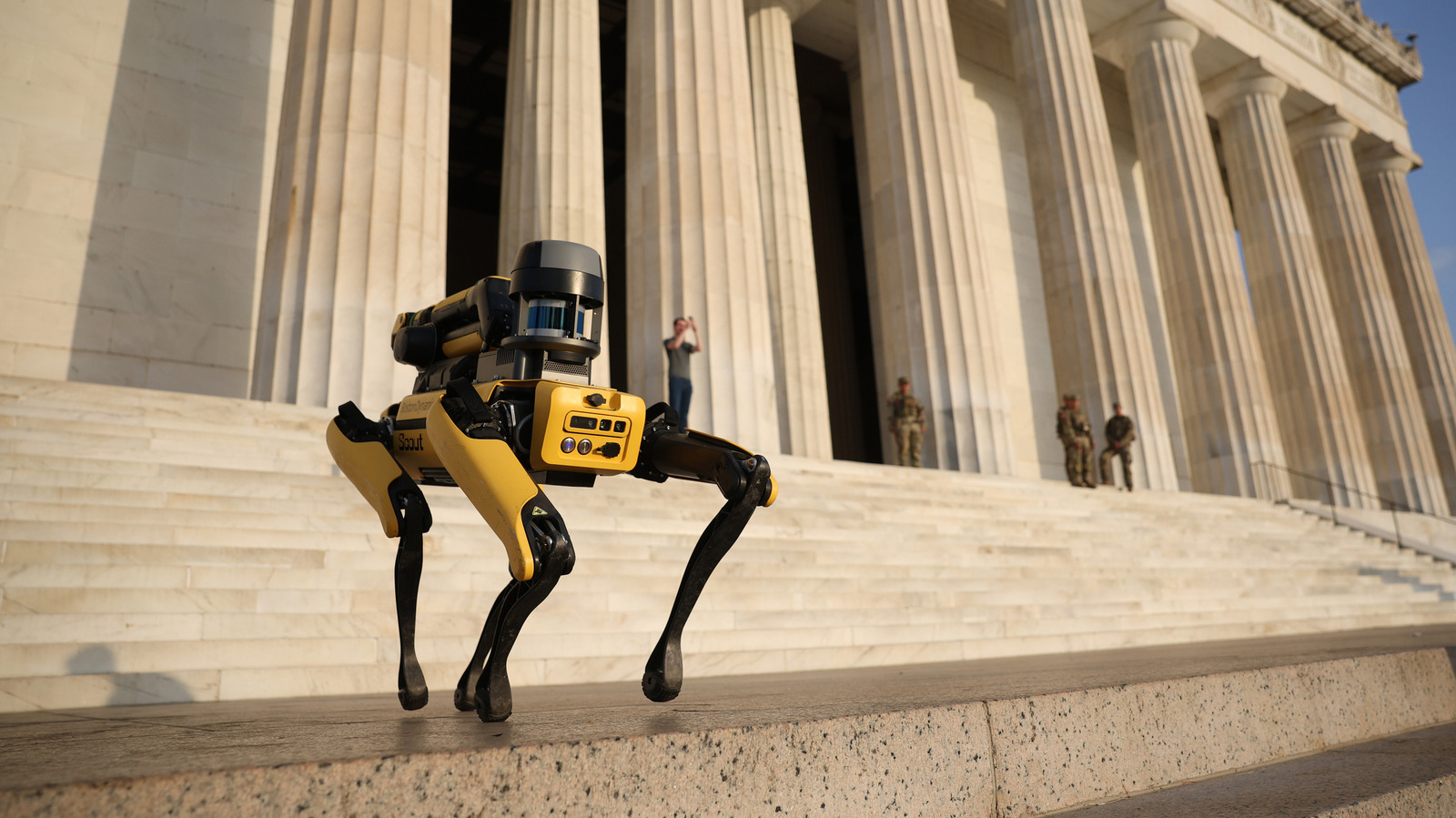
At its Spartanburg plant, BMW now has Figure’s newest robot sorting parts. Its predecessor helped assemble more than 30,000 X3 SUVs over an 11-month trial. Hyundai plans to deploy 25,000 Boston Dynamics Atlas robots across its own factories and Kia’s.
Homes are where things get awkward. The 1X Neo is a $20,000 home robot that will pick up chores through teleoperation. If Neo gets stuck, a human operator working remotely can take over and finish the task, viewing the inside of your home through the robot’s cameras. That hasn’t scared buyers off: 1X says its first year’s run of 10,000 robots sold out in five days.
Success rates remain low. In September 2026, Figure, a California robotics lab, tried its newest AI in 30 homes it had never seen before. The robot completed tasks such as folding towels and making beds 56 percent of the time, compared with 9 percent using its old training data. Few people would keep paying a cleaner who failed almost half the time.
Tesla is behind. Around the same time, Tesla CEO Elon Musk said Optimus bots won’t reach outside customers until roughly late 2027, and that they will go to factories before homes.