


On a slave ship is where American Gods stages its finest moment.
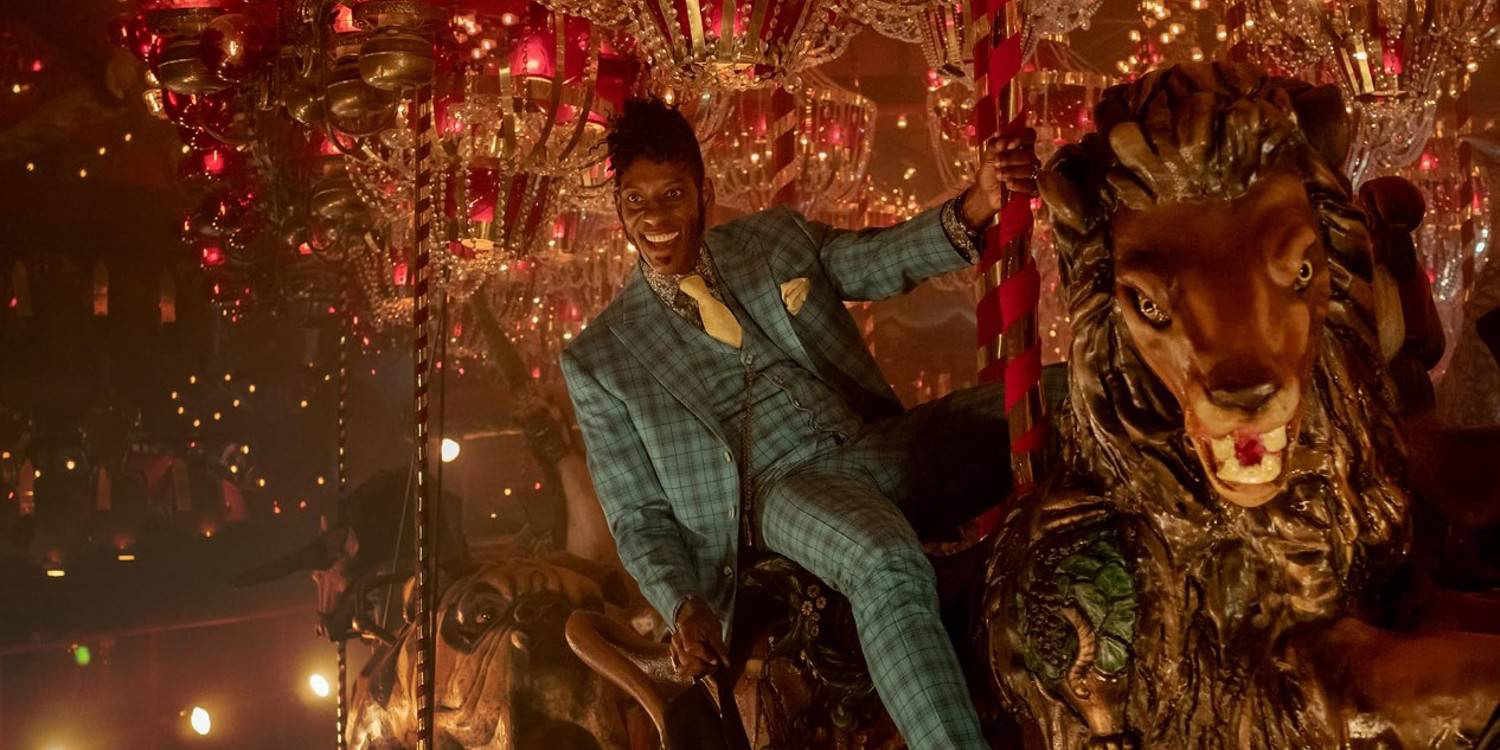
Episode two begins below deck, with Orlando Jones as Anansi, the Ghanaian trickster god, laying out for the chained men before him precisely what awaits them in America. His advice: torch the ship and die free men. No performance in fantasy television over the past ten years has been more overlooked, and it lands about 90 minutes into a show that most viewers had abandoned before season two ended.
Compress the entire case for this series and you get that monologue. Prime Video’s 26-part adaptation had the chance to turn a mirror on the United States and deliver a scathing verdict on the reflection. What derailed it was the turmoil off camera.
Old gods, new gods, one very tired ex-convict
Across three seasons, American Gods dramatizes a conflict between the deities immigrants carried to America and the ” new gods ” of technology angling for worship in their place. Odin, Jesus Christ and Anansi occupy the same continent as Technical Boy, Mr. World and Media. Stepping into all of it is Shadow Moon, a heartbroken ex-convict whose appearance is poised to tip the scales.
Beyond some familiarity with the internet, Lucifer and The Matrix are barely related. Lucifer humanized Biblical figures with knowing humor; The Matrix built a horror premise around technology that no longer answered to anybody. American Gods borrowed the strongest elements of each and was never recognized for it.

The casting is the reason to show up
What makes Gaiman’s novel land is how tangible its characters are. Mad Sweeney and Mr. Wednesday come across as guys you’d steer clear of in a parking lot rather than as myths. Getting that onto a screen required character actors capable of holding divine gravity and bar-stool sleaze within a single frame.
Nowhere else will you find Gillian Anderson portraying David Bowie and Marilyn Monroe alike. Peter Stormace — Peter Stormare — reimagines Czernobog, the Slavic god of death, as a surly slaughterhouse worker with a hammer. Emily Browning somehow makes a zombie worth sympathizing with, a trick that has no business succeeding. Factor in Ian McShane, Ricky Whittle, Iwan Rheon and Omid Abtahi, and the result is among the finest ensembles fantasy television has ever assembled.
Awards nominations went to Anderson, Jones, Whittle and McShane for their work on the series.
What went wrong, in order
Calling the cancellation sad undersells it. It’s maddening, because every wound was self-inflicted.
Season one was developed by Michael Green and Bryan Fuller, who then exited amid rumored friction with Gaiman — the author of both Lucifer and American Gods. From there, each season arrived with a different showrunner. Kristin Chenoweth and Anderson reportedly exited over that upheaval, and the continuity began to unravel.
Jones left next, reportedly after being told his character, Mr. Nancy, ” sent the wrong message to Black America .” Since racism is the book’s central concern and Mr. Nancy had become a fan favorite, the explanation went over poorly. Season three ended on a significant cliffhanger before the axe fell. With Gaiman now facing multiple accusations of sexual assault, a fourth season — or any resolution — looks out of reach.
The numbers track the decline exactly
The 2017 debut season holds 92% among critics and 84% among audiences. By 2019, season two had fallen to 61% and 63%. Season three, arriving in 2021, climbs back to 74% with critics while audience scores hold at 62%. The change in tone registers in those numbers much as a fever registers on a chart.

Of the five seasons mapped out, only three were produced. Yet the visuals remained striking from start to finish, season one comes close to flawless, and the performances never faltered — not even as the writing around them did.
Watch it, then, for what always justified watching it: a chained man aboard a ship, telling a room of strangers the truth about their destination.