

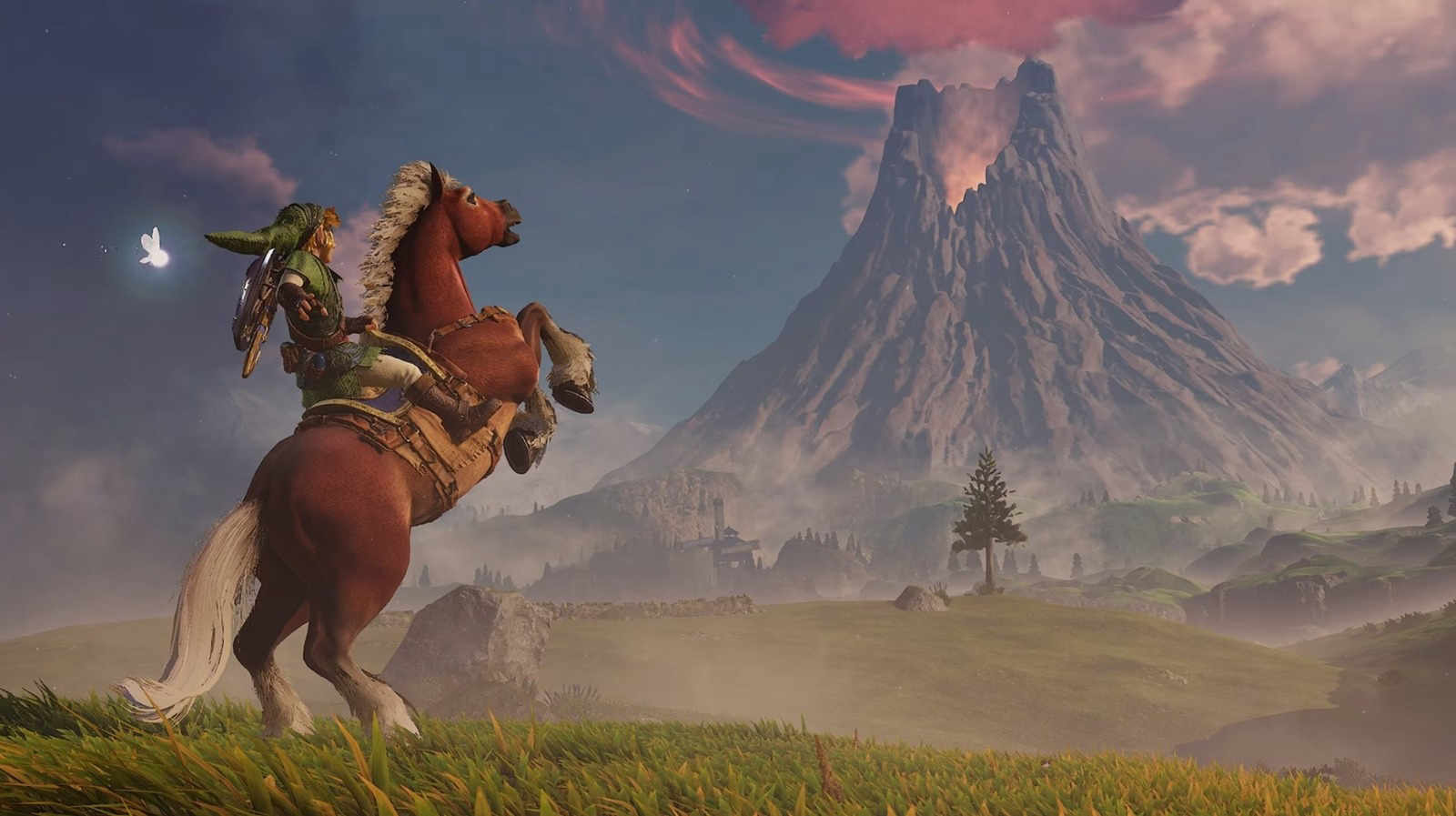
Strike an enemy with Link’s sword for the first time in the new Ocarina of Time and small particles scatter off the target. Then you pull off a Spin Attack, and rings of energy ripple outward from our hero, as if he’s at last getting the entrance music he should have had back in 1998.
That’s when it clicked for me that Nintendo understood the assignment.
I’ve had preview time with The Legend of Zelda: Ocarina of Time remake for the Switch 2. Most of the attention will go to the visual overhaul, and that’s understandable. The more interesting story, though, is how it handles. This remake plays even better than it looks.
Hyrule’s makeover shines brightest in the little details
A bit of background for anyone new to the series. Ocarina of Time ranks as one of the best video games ever made, no qualifiers. Following A Link to the Past, it carried the franchise from 2D into 3D and reinvented what a Zelda game could be. The excitement when Nintendo announced a remake of the 1998 classic was entirely justified.
For a 3D game in the late ’90s, an era when most titles were still stuck in two dimensions, the original looked fantastic. The N64 had its limits, however, and more than 20 years on, they’re obvious. Here, Nintendo has rebuilt Hyrule from the ground up with an affectionate makeover suited to a 2026 release.
The world now bursts with life. Kokiri Forest is dense and overgrown. Hyrule Castle Town’s main square teems with people and pets, while taller buildings and fresh alleyways lend it a depth the original never had.
It’s the textures where things really get enjoyable. Kaepora Gaebora, the wise old owl, has become delightfully fluffy without losing his dignified air. The Deku Shield no longer resembles a slab of thick cardboard with a swirl painted on it. Now you can make out the bark it was carved from, so it feels as much a part of the forest as the rest of the village.
Link’s nose has finally been given a natural shape, too. (Before, it looked sharp enough to cut glass.)
Water is the lone weak point
Venture further and the improvements keep piling up. Inside the Forest Temple, a low fog curls through the rooms as you search for items, making the place genuinely creepy.
My single complaint concerns the water. Once he’s been for a swim, Link looks as though he’s been dunked in high-fructose corn syrup. Rivers and streams appear to be full of light blue Jell-O rather than good old H2O.
Still, lots of modern games continue to wrestle with water, and it’s an easy flaw to overlook when the rest looks this good.
Link finally has a jump button
Wisely, Nintendo left the core formula largely alone. You still rely heavily on Z-targeting (locking onto nearby enemies by pressing one of the Z shoulder buttons), which comes across as a little quaint today.
That said, a dedicated jump button for clearing platforms and obstacles has been added, and it makes getting around feel far more natural. There’s also a new sprint button to speed up travel. Anyone who’d prefer to pretend it’s 1998 and roll everywhere is free to do so. Running, combat and traversal all feel smoother and less clunky than they did originally.
Cutscenes now feature full voice acting, lending scenes such as your first encounter with the Great Deku Tree some added weight. Navi still shouts “Hey, Listen!” at you. It may wear thin eventually, but I wouldn’t want it any other way.
The downside is that chatting with lower-level NPCs around town remains largely text-based. Since Link says so little himself, it can feel like something is absent.
Quality-of-life upgrades just keep coming
A new Threads of Time system provides story summaries and tool tips, helping you recall what you were up to and resume where you stopped. If you end up stuck in an awkward position, you also have full camera control, though I seldom found it necessary.
Swimming has been greatly improved. The inventory screen has also been redesigned, making it quicker than ever to switch between tools and weapons.
And those are only the headline changes. Plenty of subtler ones are in there as well: Link physically shoves doors open, full day/night cycles are included, and the map and terrain have been adjusted. If pressing buttons isn’t for you, you can even hum or sing into the Switch 2 to play notes on the in-game ocarina.
I first played this game at launch nearly 30 years ago, and a great deal of it still feels fresh. It retains everything that made it a classic. Veteran fans and complete newcomers alike will find plenty to explore, and I’m eager to discover just how far Nintendo’s changes reach.
The Legend of Zelda: Ocarina of Time for the Switch 2 can be pre-ordered now for $60 ahead of its official release on Nov. 5. Hearing the Song of Time once more still lands hard.