

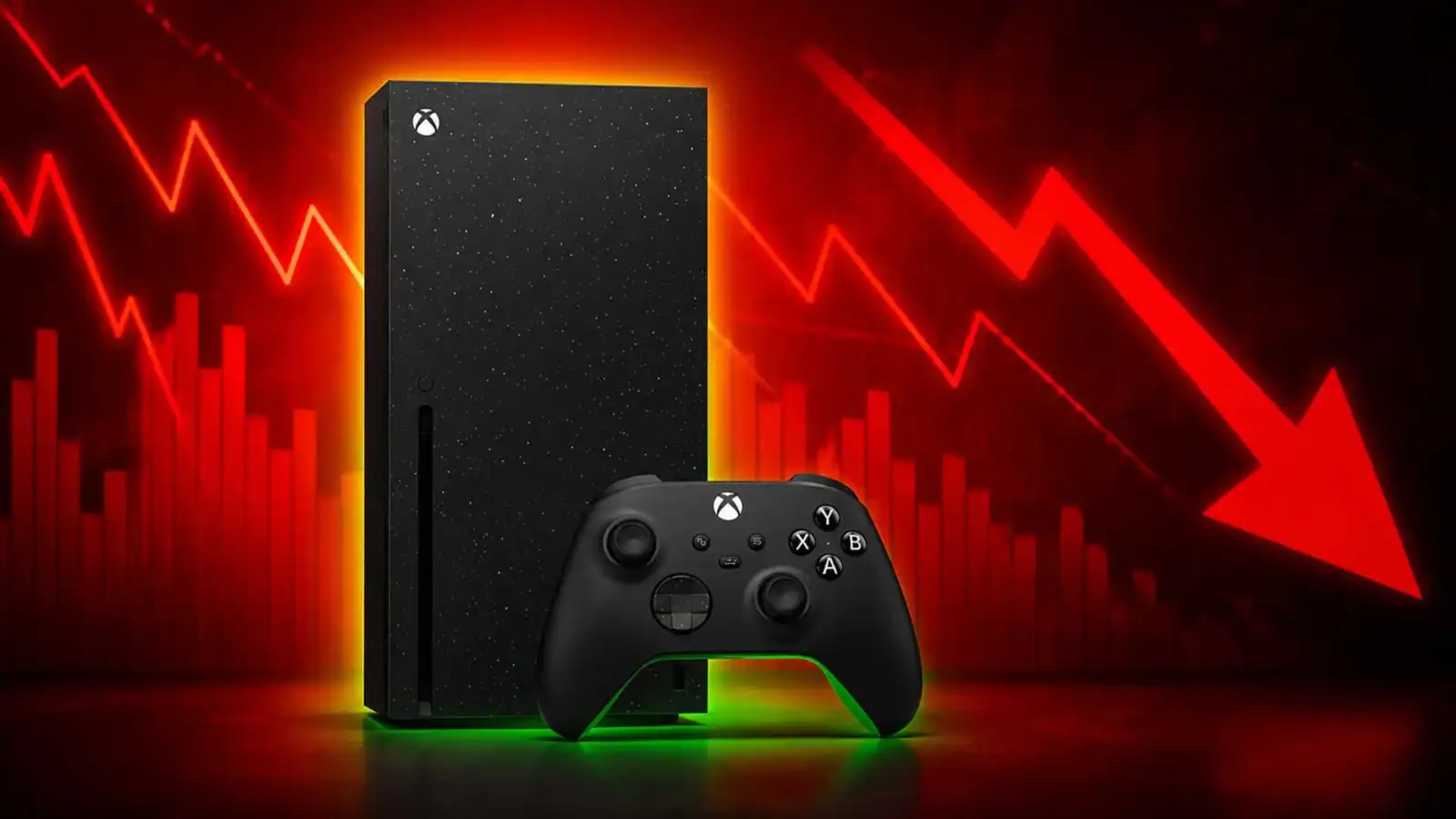
Fiscal year 2026 brought Xbox more than 200 million new players. It also brought a $1.7 billion revenue shortfall. Neither statement cancels the other out, and Microsoft would strongly prefer your attention stay on the first.
These figures surface in the company’s Form 10-K filing with the SEC — the document where the optimism ends and the arithmetic takes over. Xbox revenue overall slipped 7% year over year. Content and services were down 5%. Hardware sank 29%, a decline attributed to weaker console sales.
It’s that hardware line that deserves a long look. Close to a third of the business, erased inside 12 months.
Xbox CEO Asha Sharma made no attempt to talk around the disconnect. She noted that upwards of 200 million new players arrived at the company’s ecosystem and its games over the course of FY26, and then conceded that the swelling audience never translated into a bigger business.
The audience showed up. The money didn’t follow.
She put it plainly: the company has to put money behind the things players genuinely care about. Read another way, that’s an admission that the present strategy draws people through the door and then loses them in every sense a balance sheet can measure.
“In FY26, over 200 million new players came to XBOX and our games, but our business did not grow with our audience. We need to close that gap by investing in what players value. That will take time, but we expect to return to growth by the end of FY27,” Sharma said.
Pay attention to the deadline. Not the coming quarter. Not the coming holiday season. The close of FY27.
Nadella wants changes across the board
Microsoft CEO Satya Nadella hasn’t softened his description of what it will take to get there. In his words, significant changes are needed across the content, the platform and the wider operation of the gaming division.
Those are three distinct pillars of the business, all called out in a single breath. Once the person in charge of the whole company names your content, your platform and your way of operating as things requiring significant change, very little remains that isn’t up for revision.
Returning to growth by the end of FY27 now stands as the official target — and it’s the figure against which every Xbox announcement to come will be judged.
What the split actually tells you
A 5% slide in content and services and a 29% hardware collapse are two different narratives. Subscriptions and software are unsteady. The console side is in free fall.
Layer the 200 million new players on top and the contours of the problem sharpen. Players are arriving. Players are playing. What they aren’t doing is buying boxes, and whatever spending they do elsewhere isn’t filling the hole.
Microsoft’s own phrasing was that the business did not grow with the audience. For a line aimed at investors that’s remarkably candid, and it’s the single most useful sentence in the entire filing.
The gap is the whole story
Every recovery plan Microsoft has put forward circles back to one thing: the distance separating how many people play Xbox games from how much Xbox brings in. Sharma labelled it a gap. Nadella treated it as grounds for changing the content, the platform and the operation.
Two vantage points, one hole.
Which leaves Xbox here: 200 million fresh arrivals, $1.7 billion less coming in, hardware off 29%, and an 18-month countdown that Microsoft set running itself.
Sharma has already voiced the quiet part: that will take time.