

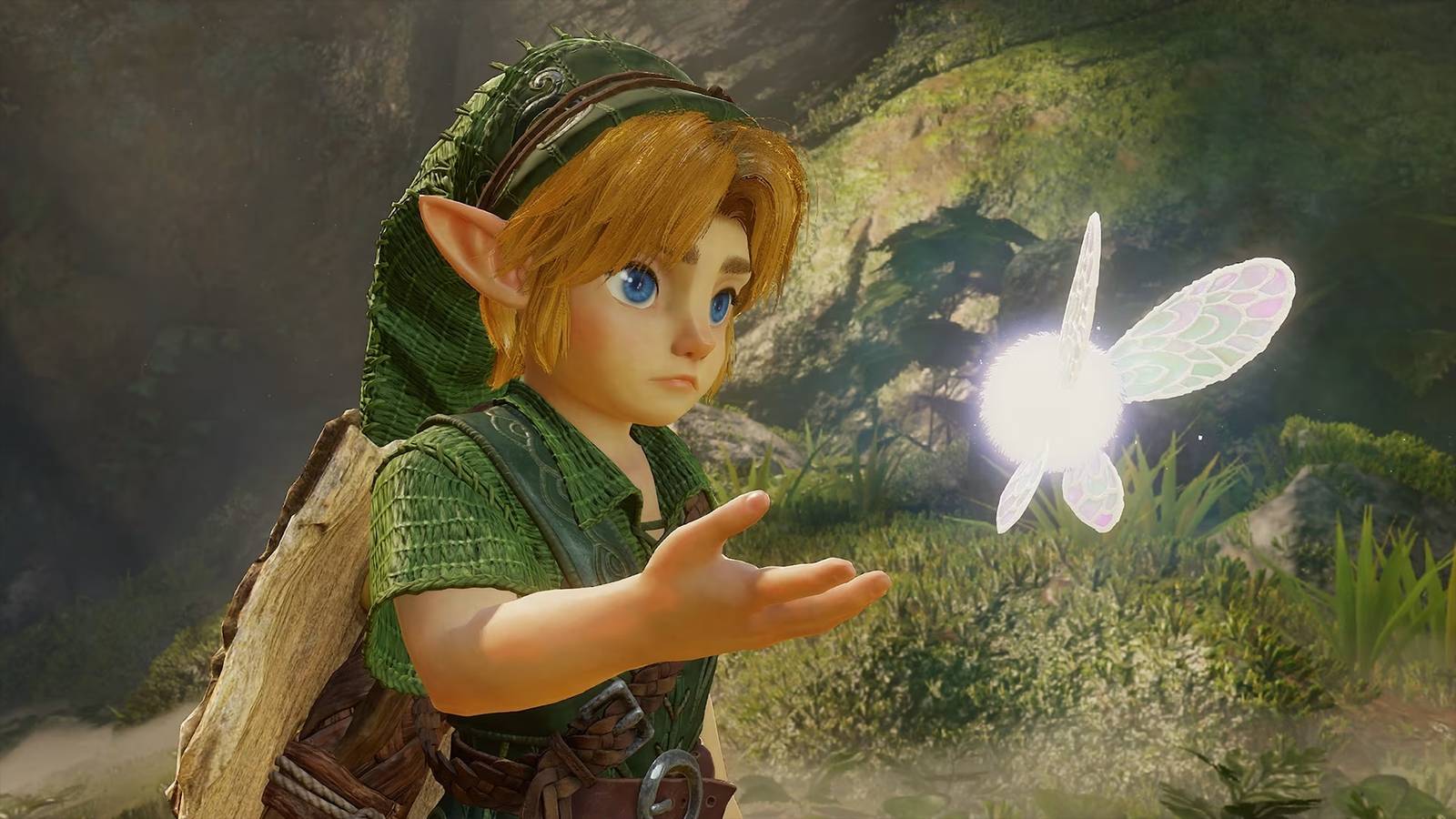
Nintendo meant for Link to look like a puppet in the new remake, and the studio has now explained the decision.
Nearly 28 years have passed since Ocarina of Time came out on the Nintendo 64, so nobody expected the Switch 2 remake of The Legend of Zelda: Ocarina of Time to resemble it much. The sharper graphics haven’t bothered longtime fans. The character designs have. Link, Zelda and everyone around them now look like handmade puppets, nothing like photorealistic humans, and the developers have described in a new interview how they arrived at that look.
Making everything realistic was only part of the idea
Aya Shida, the Nintendo developer who was art director on the remake, said the team considered the obvious approach first.
“When we first considered how to leverage the capabilities of Nintendo Switch 2 to explore new forms of visual expression, a fairly natural direction seemed to be to create a richly detailed world that felt as though it could truly exist. But our goal wasn’t simply to make everything look realistic,” Shida said.
She traced that thinking back to the 1998 game, and specifically to how Hyrule’s dark, beautiful setting sat against the colorful, quirky characters who lived there. Anyone who played it on the N64 will recognize the combination. The kingdom is gloomy and half in ruins, and the people in it look like they came out of a cartoon.
“I felt that this contrast was what gave The Legend of Zelda: Ocarina of Time its mysterious, almost dreamlike charm,” Shida said. “So for this game, we wanted to rebuild Hyrule as a rich, dense world that felt as though it could truly exist, while retaining the feel of the original. At the same time, we wanted its colorful and quirky characters to feel like a natural part of that world. Figuring out how to strike the right balance became one of the main themes of the art development.”
The two keywords behind the art direction
The artists built the look around two phrases: “a puppet-show feel” and “the analog feel of practical effects films.” According to Shida, both led toward “a convincing sense that the characters truly exist within their respective fantasy worlds.”
The reference point is closer to Jim Henson than Pixar. Each character reads as a physical object placed in a world that looks believable.
“We also felt that there was some overlap between these forms of expression and the distinctive nostalgia evoked by the original game,” Shida said. “We began by drawing sketches of Link, Zelda, and the other characters. At the same time, to show the kind of world they would inhabit, we created a 3D model of the Great Deku Tree that looked truly alive, carefully adjusting the lighting and textures. We then presented the concept to Aonuma-san, explaining that we wanted characters like these to blend naturally into a world like this.”
Using the Great Deku Tree for the pitch was a sensible choice. It’s the first major sight in the game, so it needed to look alive enough that puppet-style characters in front of it wouldn’t seem out of place.
How Aonuma sees it after working on the 1998 game
Longtime Zelda series producer Eiji Aonuma approved the concept. He worked on the original, so he’s in the odd spot of seeing his own game become something people feel nostalgic about.
“Back when we were developing the game for Nintendo 64, we thought we were making something cutting-edge for the time,” Aonuma said. “We weren’t trying to create anything nostalgic. But after all these years, the current development team feels a certain sense of nostalgia when they look back at the original. And their efforts to express that nostalgia led them to an analog, puppet-show-like feel. As one of the original developers, that progression made sense to me.”
No one at Nintendo has defended the style more plainly than this. The developers grew up with Ocarina and remember it as handmade and slightly odd, so they designed the remake around that memory more than around the old polygons.
You can decide for yourself whether that convinces the doubters. The remake itself is sharp and streamlined, and it plays better than the original ever did. Puppet-show Hyrule arrives later this week when The Legend of Zelda: Ocarina of Time launches on Nintendo Switch 2.