

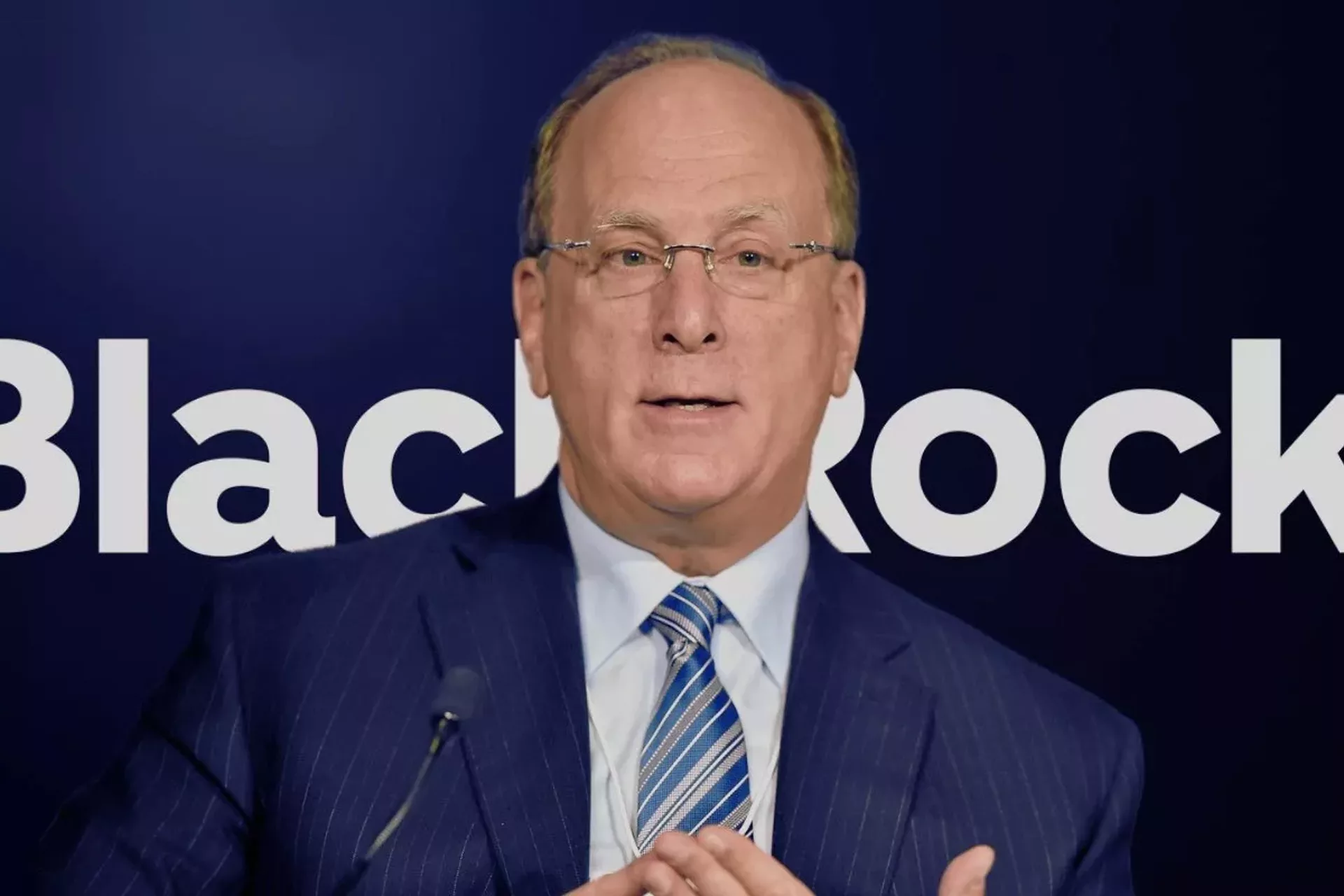
Larry Fink believes a single policy decision could push the U.S. into a recession, and he isn’t pointing at tariffs or interest rates. His concern is a freeze on data center construction.
In a CNBC interview on Wednesday, the CEO of BlackRock, the world’s largest asset manager, said that “a moratorium of some sort in this country” would put the U.S. in a recession. A recession is commonly defined as two consecutive quarters of declining economic output.
The AI buildout is holding up more than stocks
Fink was responding to a possible push to stop data center construction across the U.S. over environmental concerns. Data centers are warehouse-scale facilities packed with the computers that power AI.
In his view, companies are now pouring so much money into these sites that any slowdown would hurt the broader economy, not only the stock market.
“So much of our economy is based on the buildout of this capex,” Fink said.
The spending numbers at least support the scale of his claim. Moody’s puts planned capital spending on U.S. data centers at $700 billion this year, climbing to between $2.4 trillion and $2.48 trillion through 2030. Worldwide, spending is projected to hit $7 trillion by the end of the decade.
A shock would also come at a bad moment. The U.S. economy is already strained by sticky inflation and climbing bond yields.
The public isn’t buying it
Voters, meanwhile, are souring on these projects. According to a Pew Research Center survey, at least 49% of Americans say data centers are mostly bad for the environment, home energy costs and the quality of life of people who live nearby.
Fink waved off most of those worries as “misinformation” and said, “Data centers are not the problem.”
He highlighted the jobs the buildout generates, pointing to demand for construction workers, energy infrastructure and AI compute hardware. On employment, that’s a reasonable argument. It does not, however, address the complaint about energy bills, which is the one residents near these facilities actually experience.
It also helps to consider the source. BlackRock manages a large share of the money flowing into the companies doing this building, so weigh his judgment on what qualifies as misinformation accordingly.
A $32 trillion problem
Fink’s other warning concerned federal borrowing.
“U.S. deficits are starting to have a serious impact,” he said. He pointed out that the national debt has risen from $8 trillion in 2000 to $40 trillion in 2026.
“We grew $32 trillion in 26 years,” Fink said. “That’s a massive impact on demand for credit. The government is demanding more and more credit, and bond auctions are getting larger and larger.”
His proposed solution is private money. “We need to unlock private capital to grow the U.S. economy by 3%,” he said. That’s a convenient prescription from the head of a firm whose business is deploying private capital.
Why bitcoin traders should pay attention
Recessions typically dampen investor appetite for risky assets. Bitcoin supporters describe it as a haven, yet it has historically come under selling pressure when risk aversion sweeps through markets. At press time, bitcoin was trading near $81,200, down 0.8% since midnight UTC.
The debt picture points in the opposite direction. Growing government debt is widely regarded as bullish for scarce assets such as gold and bitcoin.
BlackRock has a direct interest in both scenarios. Its iShares Bitcoin Trust (IBIT) is the world’s largest publicly listed bitcoin fund, having drawn cumulative net inflows of $65.62 billion since its January 2024 launch.
BlackRock itself is doing fine
Whatever Fink worries about for the economy, his own firm’s results looked healthy. BlackRock’s third-quarter net inflows, meaning new money from clients, totaled $205 billion, while revenue climbed 19%. Organic asset growth eased slightly over the past 12 months.
Adjusted earnings per share jumped 38% year over year. Operating margin reached 47.8%, a figure worth keeping in mind the next time Fink weighs in on what the economy can and can’t afford.