

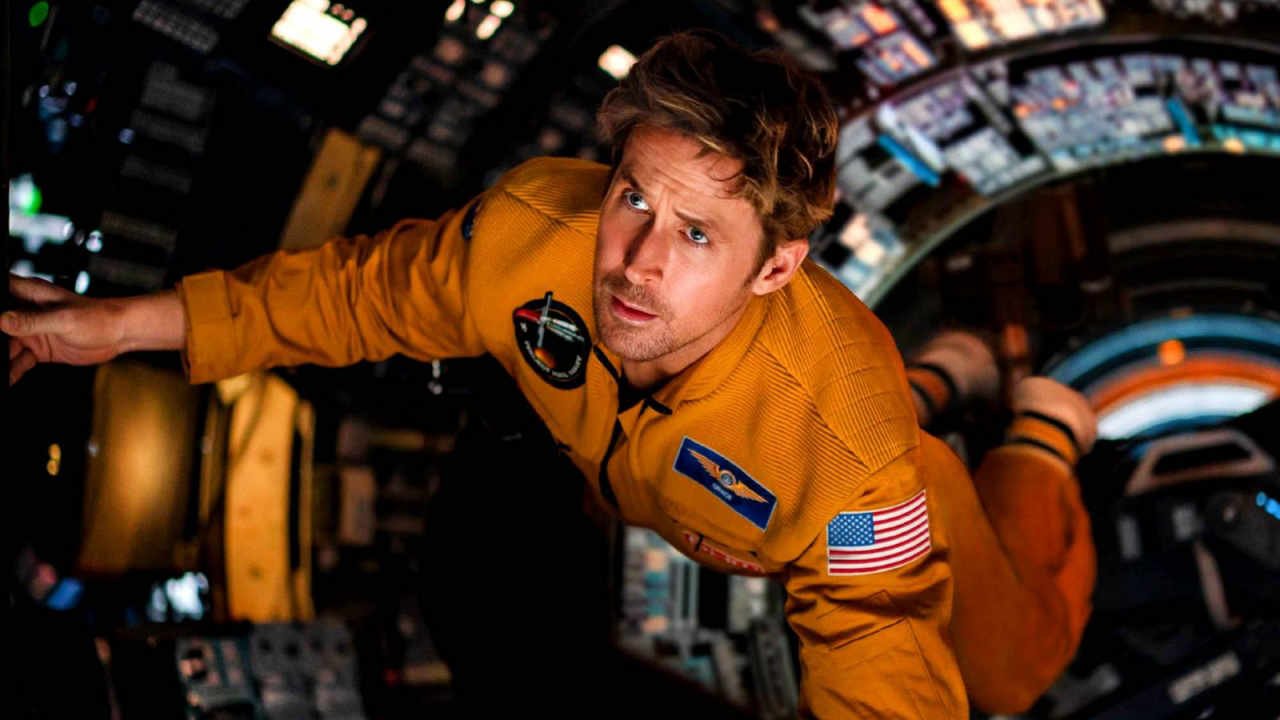
No memory. No idea who he is. A dead crew for company, and a spacecraft he doesn’t remember boarding. That’s how Ryland Grace starts. Then comes the math — mountains of it. Somehow, that turns out to be the highlight.
Project Hail Mary has already secured its spot among 2026’s defining science-fiction releases, casting Ryan Gosling as a man who realizes that cracking an astronomical crisis might be humanity’s final shot. Much like The Martian, Andy Weir’s earlier work, it turns experiments, calculations and scientific problem-solving into legitimate thrills.
All of which places it firmly in hard science fiction — the corner of the genre more invested in scientific plausibility and technical rigor than in laser duels. Where exactly the boundary sits gets blurry, especially once alien life and theoretical physics show up, yet a genuine gap remains between this material and the fantastical space-opera crowd.
There’s no shortage of sci-fi movies that would pair nicely with Project Hail Mary for a double feature. That’s not what follows. The standard here is steeper: earlier generations of filmmakers arrived first with films that are more rigorous, weirder, or simply more ambitious about what science can ask.
Labeling any of them “better” is a matter of taste, especially considering how deftly Project Hail Mary juggles dense scientific concepts with blockbuster appeal. Every one of these still makes its argument.
The one that started this whole conversation
Any discussion of Project Hail Mary loops back to Weir’s breakout story sooner or later. Directed by Ridley Scott, The Martian features Matt Damon as Mark Watney, an astronaut stranded on Mars after his crew concludes he’s dead. Staying alive turns into a chain of problems to work through: food, water, some way of contacting NASA.
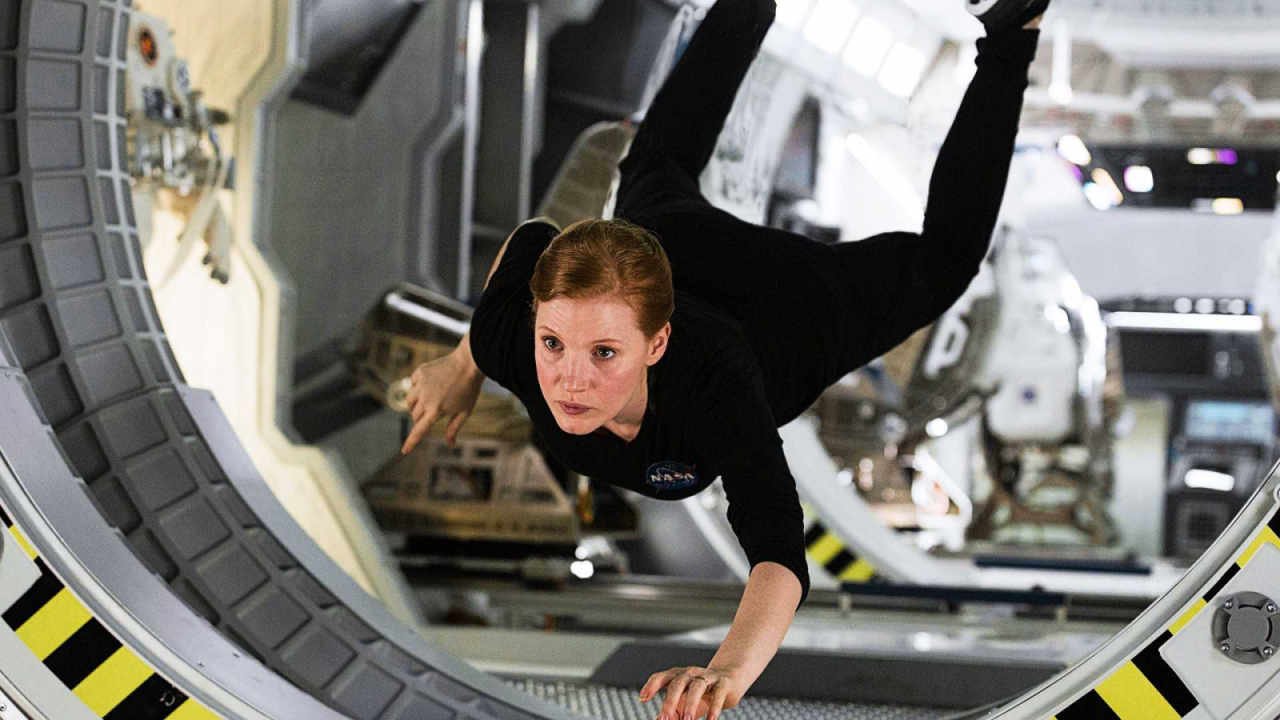
Sure, liberties are taken. The Martian windstorm has become a famous exaggeration. Still, the joy is in watching Watney reason his way out of hopeless corners, and each breakthrough feels like something he earned.
Project Hail Mary is by far the larger production, its reported budget close to double The Martian’s. Scott’s film, though, is arguably the more disciplined of the two — smaller in scale, more tightly locked onto ingenuity.
Three years alone is its own kind of physics
Duncan Jones’ Moon (official site) heads in precisely the opposite direction from Project Hail Mary’s enormous scope. Sam Rockwell plays Sam Bell, the lone employee at a lunar mining outpost as his three-year contract winds down. For company he has GERTY, an artificial intelligence voiced by Kevin Spacey. When Sam’s health begins deteriorating, he discovers his simple posting conceals something disturbing.
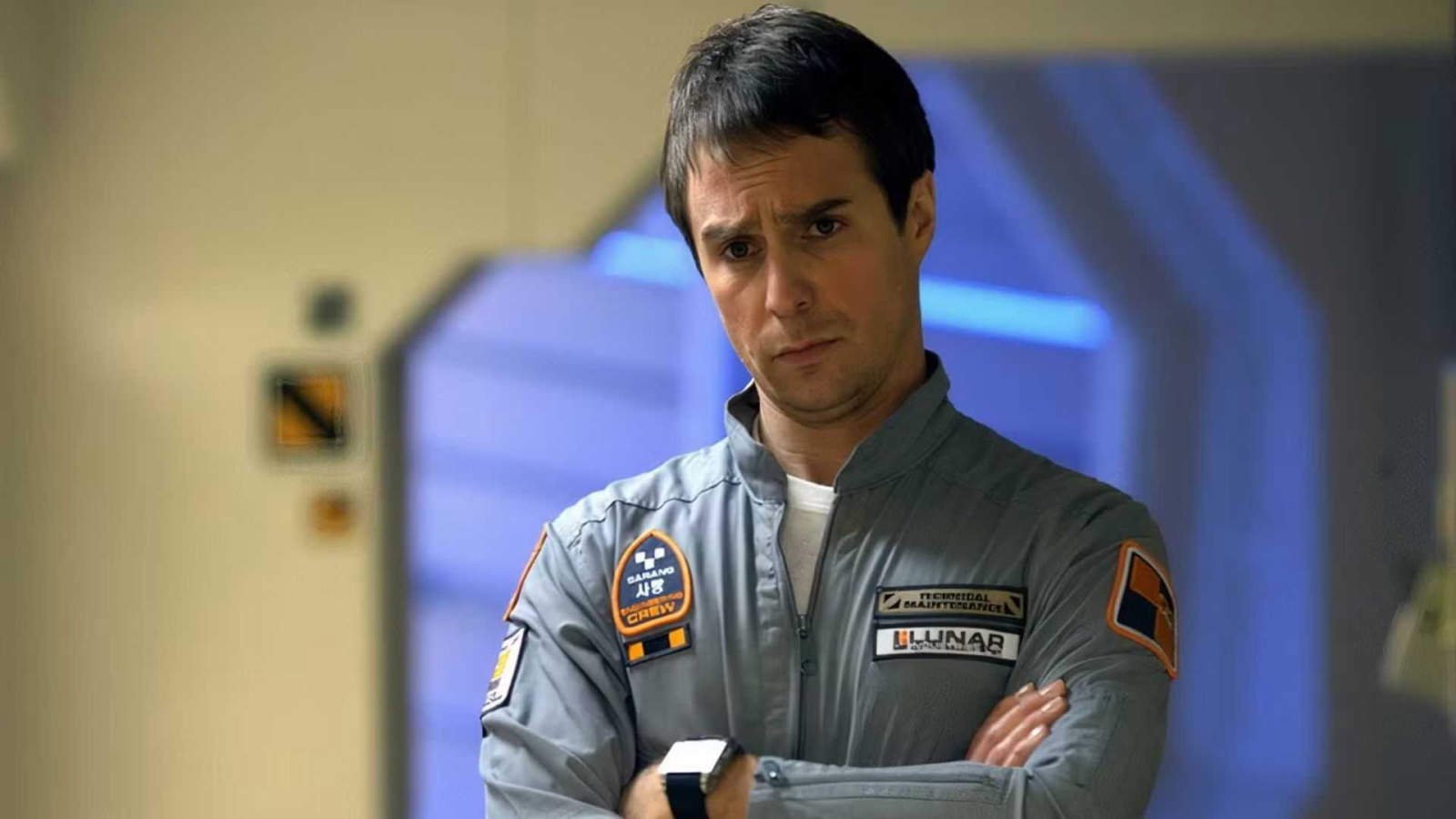
Its technology remains speculative, but the pared-back setting lends everything an unnervingly believable quality. Isolation counts for as much as engineering does, and the economics of exploiting labor in space hand the story a bite Project Hail Mary never bothers hunting for.
Rockwell shoulders virtually the whole film on his own. Something that might have stayed a clever puzzle instead becomes intimate and profoundly unsettling.
What if first contact wrecked us instead of saving us
Robert Zemeckis’ Contact, adapted from Carl Sagan’s novel, frames the discovery of alien life as the single greatest scientific breakthrough in human history instead of an excuse for an action beat. Jodie Foster plays SETI astronomer Ellie Arroway, who picks up a signal originating from Vega. Encoded within it are blueprints for a mysterious machine, triggering an international battle over humanity’s next move.
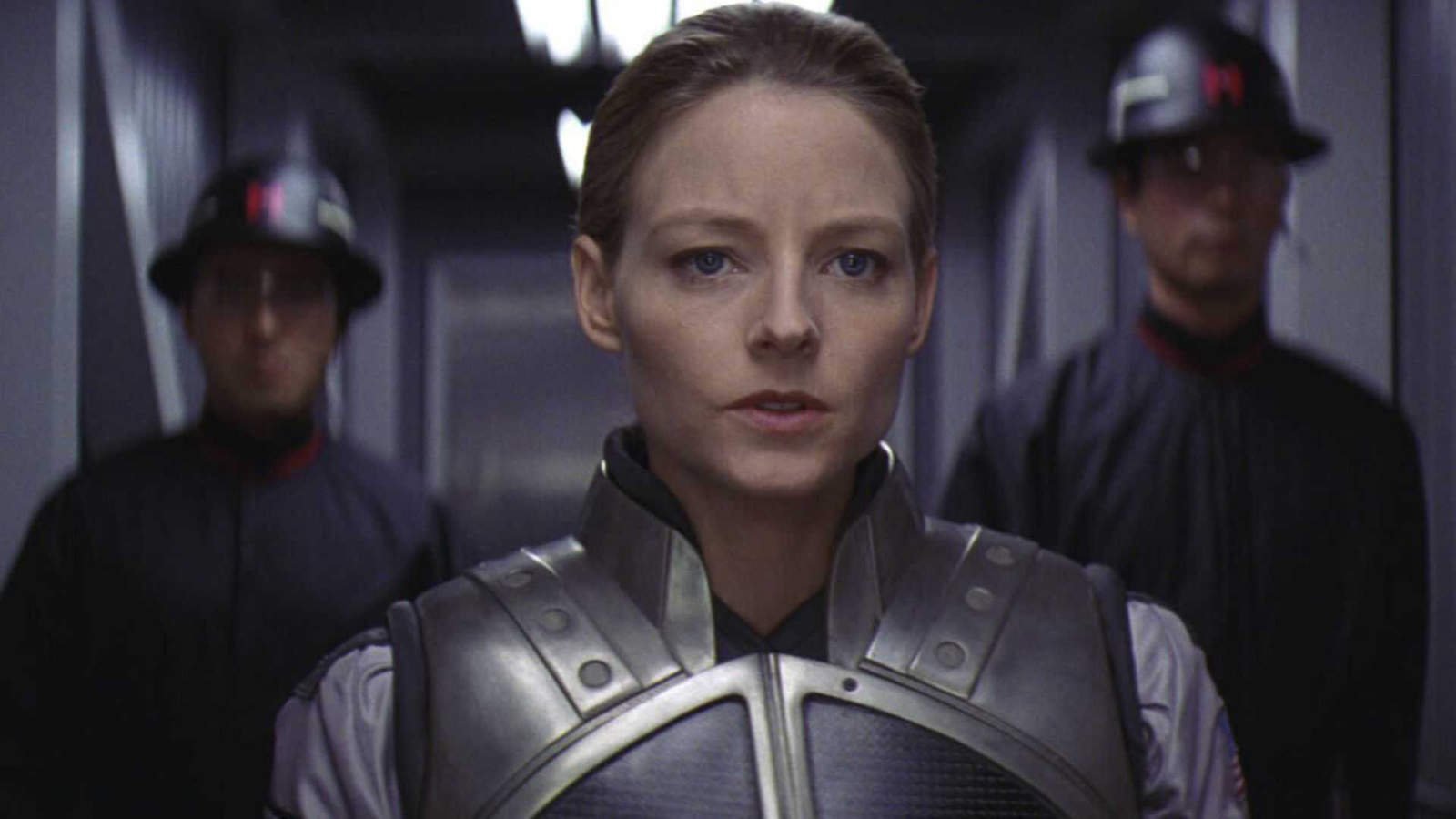
There’s tremendous heart in Project Hail Mary’s take on first contact. Contact poses the tougher question — what a discovery like that would do back on Earth, where science collides head-on with government bureaucracy and religious conviction, and where Ellie keeps running up against the limits of proof.
As crowd-pleasers go, it’s the lesser one next to Weir’s story. As a study of the people left waiting at home, it’s considerably more curious.
The alien movie where nobody fires anything
Extraterrestrial visitors open Denis Villeneuve’s Arrival too, except here the scientific puzzle is language itself. Amy Adams plays linguist Louise Banks, brought in once 12 alien spacecraft materialize around the globe. There are no weapons and no reverse-engineered gadgets — Louise simply has to construct a shared language with beings whose very concept of communication is radically unlike our own.
Linguistic relativity supplies the starting point, though the film pushes well beyond established science, particularly in the way language reshapes how Louise perceives time. Emotionally, that leap more than pays for itself.
Cross-species communication in Project Hail Mary is charming and inventive. Arrival mines the same ground through a far stranger lens, and its closing revelation retroactively rewrites everything you believed you were watching.
The movie that refuses to explain itself
Few films in existence have shown less appetite for simplifying their science than Shane Carruth’s Primer. Aaron and Abe, a pair of engineers, assemble something in a garage that proves capable of manipulating time. A technical problem at the outset, it spirals once the consequences slip beyond their control.
Carruth’s own training was in engineering, and he permits his characters to speak like technically-minded people rather than stopping to brief the audience. Bewilderment is the result, and Primer retains its notoriety for just how knotted its time travel becomes.
Project Hail Mary renders hard science wonderfully accessible; Primer refuses to translate any of it. Should you be willing to put in the effort, that refusal is the entire appeal.
Blockbuster money, actual physics
Christopher Nolan’s Interstellar blows hard sci-fi ideas up to tentpole proportions. With crop failures endangering Earth’s future, ex-NASA pilot Cooper (Matthew McConaughey) signs on to a mission through a wormhole in search of another habitable world. Along the way the crew confronts gravitational time dilation and Gargantua, an enormous black hole.
Nolan collaborated closely with theoretical physicist Kip Thorne, and the film’s handling of space science ended up playing an unusually large role in its development. Its black hole visuals have drawn praise from astrophysicists for their accuracy, even where other elements wander into outright speculation.
Following Project Hail Mary is the easier task. Interstellar gambles more heavily on ideas, and Miller’s planet on its own converts relativity into a devastating dramatic weapon.
The mission where nobody saves the day
Europa Report envisions a privately financed voyage to Europa, the Jovian moon where evidence points to an ocean beneath the ice. Assembled largely from footage recovered off the spacecraft, it tracks an international crew venturing farther than any humans before them in hopes of finding signs of extraterrestrial life.
Found footage could easily have been a gimmick here. Instead it supplies the mission with a documentary texture — procedures count, equipment breaks down, and communication with Earth is never conveniently instantaneous.
No in-house genius arrives with the right answer at the right moment. Europa Report runs colder and far less sentimental than Project Hail Mary, and the way it lets scientific curiosity march intelligent people directly into danger gives it an eerie authenticity.
Hard sci-fi without a single spaceship
Adapted from Michael Crichton’s novel, Robert Wise’s The Andromeda Strain demonstrates that leaving the ground isn’t a requirement. After a military satellite comes down near a small New Mexico town and kills nearly everyone living there, scientists are sealed inside an underground laboratory to determine the cause. What they trace it to is a lethal extraterrestrial microorganism carried back by the satellite.
The result plays as an investigation rather than a disaster thriller — containment procedures and microscopes in place of explosions, with the scientists devoting most of the running time to simply understanding what sits in front of them.
Warmth is very much Project Hail Mary’s advantage. The Andromeda Strain commits harder to the grinding reality of scientific discovery, and more than 50 years later its clinical manner still renders the danger disturbingly credible.
The dystopia built entirely out of blood tests
Andrew Niccol’s Gattaca hauls hard science fiction back down to Earth. Ethan Hawke is Vincent Freeman, born without genetic selection into a future where DNA dictates social standing and career prospects. Determined to reach space, Vincent takes on the genetic identity of Jerome Morrow (Jude Law) in order to infiltrate Gattaca, the elite aerospace corporation.
Spectacular futuristic machinery is nowhere to be found. This dystopia operates on genetic screening and on the temptation to boil human potential down to biological data — precisely the reason Gattaca still draws praise for how plausible its world feels.
Science, in Project Hail Mary, is the thing that overcomes impossible odds and gets celebrated for it. Gattaca regards it with suspicion, asking what follows when scientific progress becomes yet another mechanism for deciding who gets a chance.
Kubrick got there in 1968 and we’re still catching up
Serious cinematic science fiction is still measured against Stanley Kubrick’s 2001: A Space Odyssey. Co-written with Arthur C. Clarke and released a year ahead of the Apollo 11 moon landing, it charts humanity from prehistoric beginnings into a spacefaring future, eventually falling in with the crew of Discovery One on a mission toward Jupiter overseen by HAL 9000.
More than half a century on, its weightlessness, the movement of its spacecraft and its silences all still hold. Kubrick, though, was every bit as absorbed by artificial intelligence and by the notion that our evolution might be bound to forces beyond our comprehension.
Project Hail Mary is the warmer film and much the easier one to love. 2001 is playing an entirely different game.
The questions Kubrick put on screen in 1968 are ones modern hard sci-fi continues to wrestle with, and Gosling waking up alone aboard that ship is simply one more stab at an answer.