

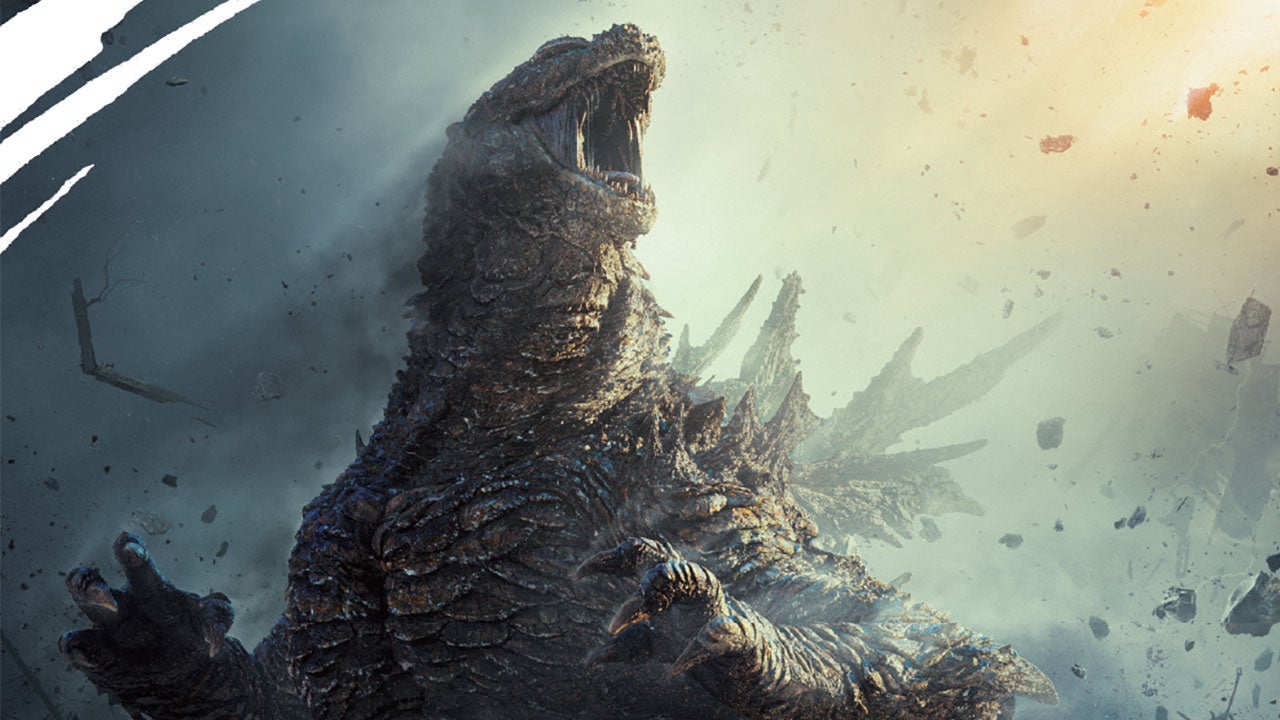
At one point in Godzilla Minus Zero, Godzilla tears off his own arm. His opponent has bitten down on it so hard that there is no other way to break free.
That scene sums up the film. The follow-up to Godzilla Minus One comes out on top in every monster fight it stages. Where it falls short is in making you care about the humans caught beneath them.
Godzilla Minus Zero reaches Japanese theaters on November 3 and North American theaters on November 6. This review comes from a screening held around the New York Film Festival.
The sequel problem nobody has solved
For decades, Godzilla movies have been stuck with the same curse. A serious origin story with real thematic weight is followed by a sequel that has to deliver bigger spectacle and still keep its soul. The genre’s best entries have always said something about the world we live in, and that gets harder to do when lizards the size of skyscrapers are trading blows MMA-style.
Minus Zero is on the ropes before the opening bell even rings. Minus One, released three years ago, explored survivor’s guilt, hope in the face of hopelessness and found family, among other ideas. Takashi Yamazaki, back as writer and director, now has to get more out of characters who have already been to hell and back, while also blowin’ up stuff real good.
He can’t manage both, and the explosions win.
Two years later, and two monsters now
The story is set two years after the events of Minus One. Ryunosuke Kamiki returns as Kōichi Shikishima, the World War II pilot who was supposed to be a kamikaze and who played a key role in bringing Godzilla down the first time. Minami Hamabe is back as Noriko, whom he took in after the American air raids on Tokyo.
The two are married now. They have also adopted Akiko, the orphaned baby they looked after following that same disaster, and they are living happily as a family. In a Godzilla movie, that means the clock is ticking.
This time, though, there are two threats. Godzilla returns, of course, but the film actually opens on a different creature.
That first sequence is pure devastation. A new monster rips through the city while civilians run through the streets, dodging rubble from falling buildings and the lightning breath coming out of its mouth. Fans already guessed who it is, and the marketing has hinted at it: this is Ghidorah, called King Ghidorah in the wider Toho mythology and usually considered the big guy’s archnemesis. (Ghidorah has also been known as “Monster Zero,” which accounts for the title.)
The effects are still the best in the business
Yamazaki and his visual effects team, who took home the Oscar for Best Visual Effects for the previous film, do it again. These creatures never come across as CGI monstrosities. They come across as real: humongous, slow-moving and reptilian, and all the scarier for it.
Ghidorah also has a personality of his own. He moves in a frightening but herky-jerky way that is almost cat-like, and that sets him apart from his counterpart as soon as he appears.
Unsurprisingly, the film proves its VFX credentials within minutes. It also establishes something else. A Godzilla Part 2 is bound to bring more monsters, and more monsters come at a price.
Monster-on-monster action isn’t a problem in itself, and everyone loves it. But the more a monster movie becomes a mash, whether it’s Toho, Universal or Alien, the smaller the human characters and their emotional baggage look next to these god-like beings.
A hill of beans
In Casablanca, Humphrey Bogart says, “It doesn’t take much to see that the problems of three little people don’t amount to a hill of beans in this crazy world.” Yes, a Godzilla review is quoting Bogart. That line also captures the entire problem with Minus Zero.
Next to everything Godzilla and company can destroy, Kōichi, Noriko and little Akiko simply fade. The first film showed all that destruction through the trio’s trauma, both from the monster and from what they went through in the war. This film doesn’t have that resonance.
Noriko’s role is larger this time. At the end of Minus One, she miraculously lived through a Godzilla attack but was left with a mysterious scar on her neck. It comes as no surprise that it was never only a scar, and that she has become an important player in the fight against the monsters.
Still, both she and Kōichi are pawns in a bigger game unfolding on the world stage. Ordinary people on the ground bear the trauma of each battle, and the powers that be seem indifferent. If the film has a central theme, it’s that humanity can’t outrun its own mistakes and will keep repeating them, however hard the best of us try.
The best character gets the least to do
Minus Zero’s most interesting character may also be the one it serves worst. Min Tanaka plays Kanji Murakami, a scientist whose research is crucial to fighting the monsters this time.
He’s also a bit warped WARPED $0.0000724 ▼ -9%. One scene in particular, too spoilery to describe here, gives Tanaka a standout moment and is among the film’s highlights. Like Kōichi, Noriko and everyone else in the movie, Murakami had his life irrevocably changed by the war. He is still struggling with that as he tries to stop a pair of living A-bombs from doing more damage to humankind.
Then there’s the Statue of Liberty. The much ballyhooed sequence pairing Godzilla with Lady Liberty, first seen in last spring’s trailer, is certainly something to behold.
Toho has asked critics to keep the details under wraps. What can be said is that it’s everything you’ve imagined and theorized about, and at the same time none of that at all. It connects back to Murakami at one of his darkest moments, which makes it one of the film’s most memorable Godzilla-on-human scenes.
That’s also where the nagging feeling returns. Godzilla stomps through what looks like Spider-Noir’s take on New York City, and the emotional weight of the entire scene sits on Murakami. Yet his true motivations, and how they’re resolved, feel like an afterthought instead of the thematic or emotional core of the movie. The film is weaker for it.
When it’s time to brawl, it brawls
By the final act, it’s clear exactly where things are going. That’s fine, because monsters must brawl.
As before, the period setting gives the effects and action real luster. Seeing Kōichi return to the pilot seat, now flying 1949-era fighter planes, is thrilling.
Kenji Noda (Hidetaka Yoshioka) also returns, now running the “Large-Scale Disaster Response Bureau.” His plans to slow and ultimately stop Godzilla and his enemy are often ingenious and satisfyingly crunchy.
As a kaiju movie, Minus Zero delivers everything you came for, and that’s before the final showdown between Godzilla and his archnemesis. The characters from Minus One, however, have somehow become mostly two-dimensional between films. The last movie was about what survivors carry. This one is mostly about how much a monster can carry. The answer is a lot, right up to the moment it rips off its own arm to escape.