

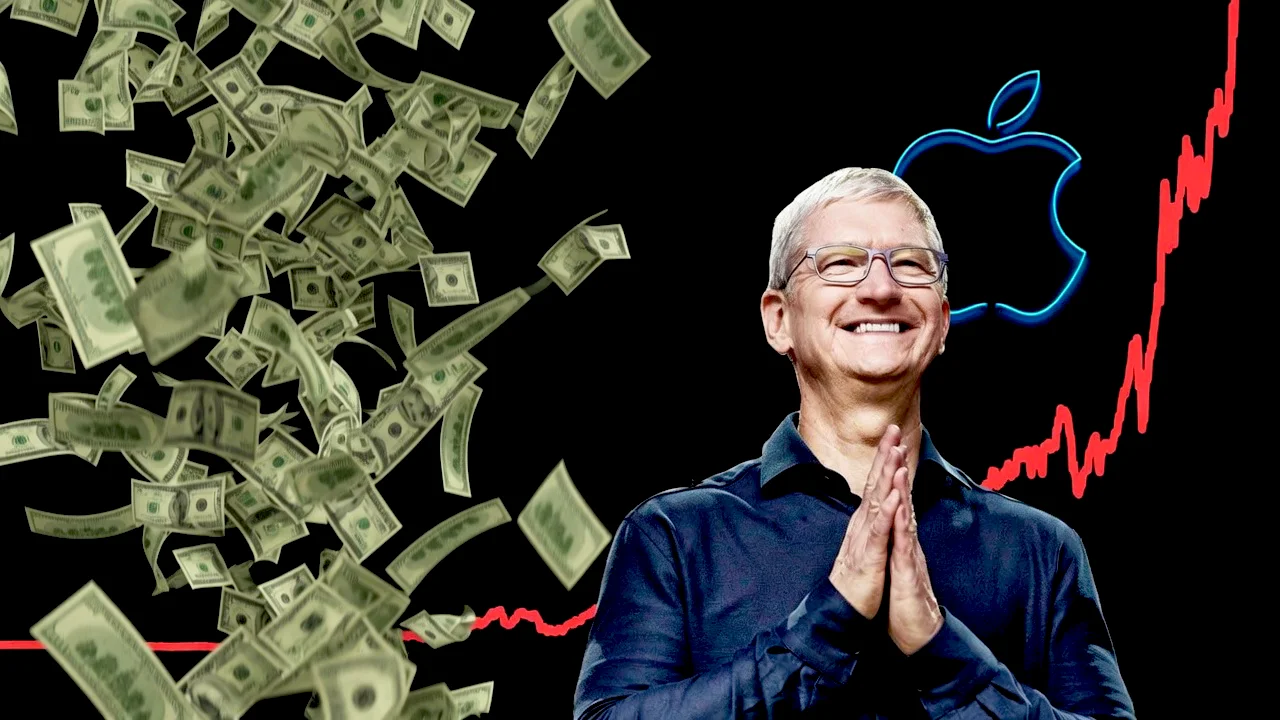
The world’s most valuable publicly traded company is Apple once again, and the route it took to the top involved doing less than any of its rivals.
A gain of roughly 1% across the week lifted Apple’s valuation to $4.9 trillion. Nvidia slid the opposite way, giving up about 5% to sit near $4.8 trillion.
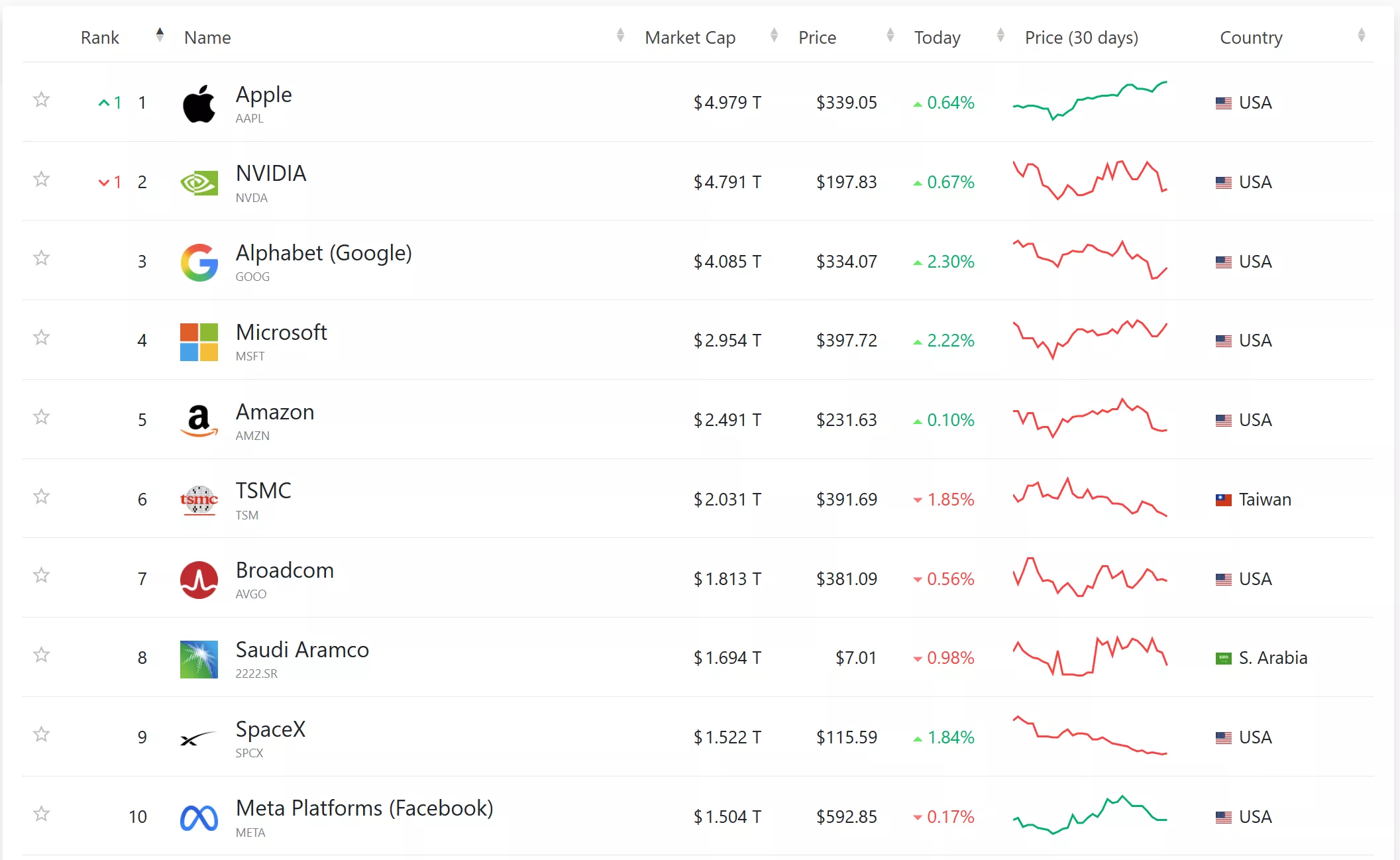
Call it a $100 billion spread — a figure that seems massive right up until you recall that both firms can swing that much in value on an uneventful Tuesday. The number itself isn’t the story. What pushed it is.
Wall Street blinked
Momentum at the two companies only explains part of it. Sentiment among investors has turned, and plenty of them are now looking for steady ground away from the violent swings the artificial intelligence sector keeps generating.
Back in 2025, Nvidia became the first company in history to pass $5 trillion, carried by the AI boom. Its graphics cards sit at the heart of training and serving the most advanced AI models, a dependency that sent the biggest tech firms racing to sink billions into fresh data centers.
For a long stretch, that bet paid off enormously. Then it stopped paying off quite so well.
The company that skipped the arms race
Apple picked another path entirely. After years of developing its own large language models in-house, it decided at the last moment to lean on Google’s solutions for the next Siri rather than join the spending race that now defines its competitors.
It’s worth sitting with that, because it is the entire story. The company sitting on more cash than anyone else in tech studied the capex figures its peers were reporting and opted to rent rather than build.
That measured stance, analysts say, is precisely what’s lifting investor confidence at the moment. With AI-exposed stocks swinging harder than usual, Apple looks like the safer place to park money.
Boring is a strategy
You could easily tell this as a story about Apple dropping the ball. The company hyped its AI plans, spent years on internal models, and wound up handing the brain of its own voice assistant to a rival. From a product standpoint, that’s hard to spin.
From a balance-sheet standpoint, it’s exactly why Apple is worth more than Nvidia again.
There’s a precise message in that. Investors aren’t saying Apple’s AI is superior. They’re saying Apple’s outlay is smaller. Those are two very different kinds of praise, and only one of them ever makes it into a keynote.
A handover at the worst possible moment, or the best
The reshuffle arrives during a pivotal window for the company. Tim Cook is expected to step down as CEO.
Reporting points to John Ternus as the leading candidate to replace him, with the expectation that he’ll stick to Apple’s conservative approach to money.
That detail carries more weight than the name attached to it. The same investors currently rewarding Apple for holding back on spending are being reassured that the next occupant of the chair won’t open the taps either. Continuity is the sales pitch.
What actually changed
None of the underlying technology shifted over the past week. Everyone still needs Nvidia’s chips to train frontier models. Siri still isn’t powered by Apple’s own flagship model.
The thing that moved is how much investors will pay for a promise compared with a proven cash machine.
The company to watch from here is Nvidia, not Apple. Apple’s standing is a passive one, won by staying put while the sector wobbled. Nvidia’s $4.8 trillion still depends on data center orders holding their present pace, and that 5% slide hints that some investors have begun to wonder how much longer that runs.