

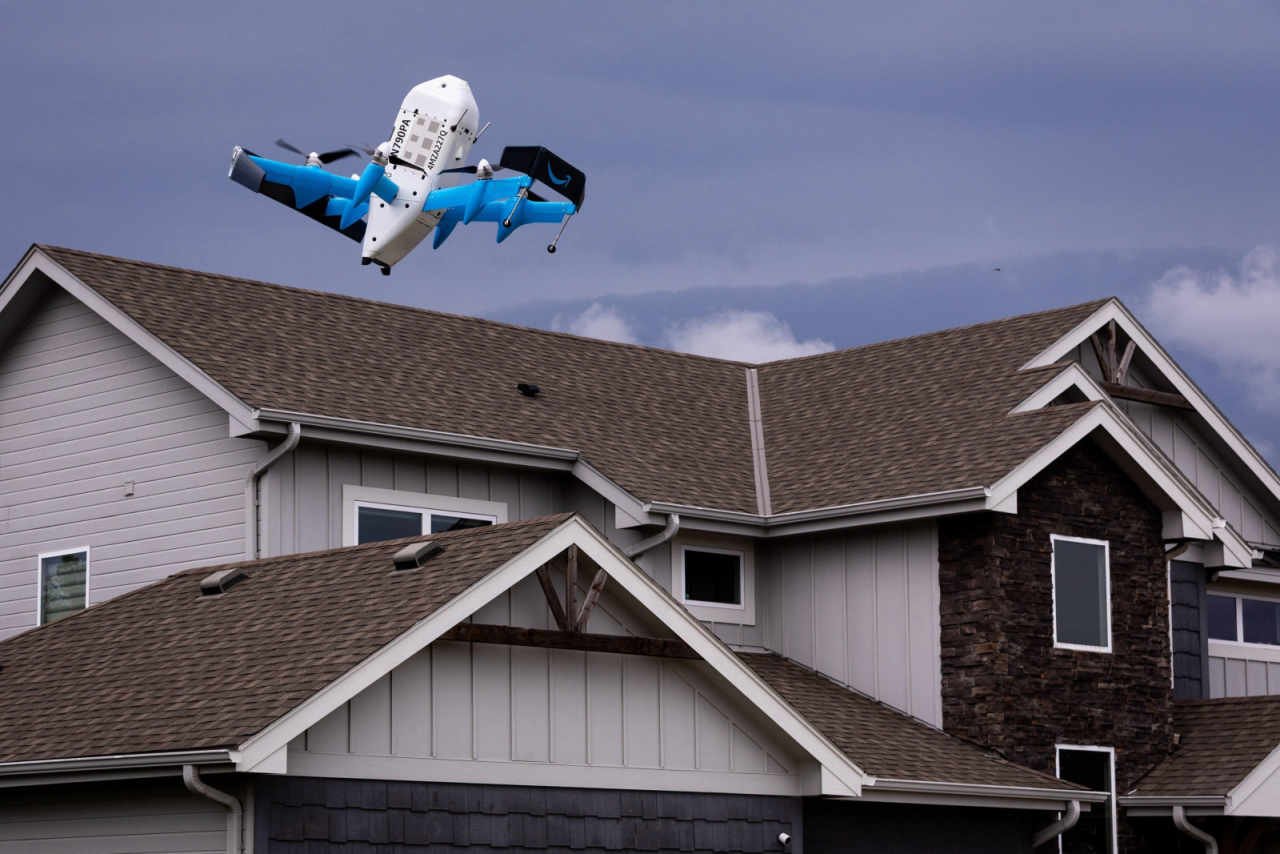
By December, Amazon intends to have its drones covering more than six times the American territory they serve today. Prime Air, the company says, will be operating in “nearly 500 cities and towns in the United States” before the year closes.
That figure is what grabs attention. What deserves a longer look is everything the drones have collided with getting to this point.
Five new metros, and more coming
Amazon’s announcement names the next launch markets: the metro areas around Chicago, Illinois; Syracuse, New York; Cleveland, Ohio; Atlanta, Georgia; and Boise, Idaho. Beyond those, the company promises “more communities to come later this year.”
Add that quintet to the 11 US locations already served by Amazon’s aircraft. A single Prime Air site reaches about 175 square miles — a tighter footprint than a word like “Chicago” or “Atlanta” suggests. Sitting somewhere in the metro area and sitting under the delivery cone aren’t the same thing.
What actually fits on a drone
Anything shipped this way has to weigh 5 pounds or less. That single limit defines the entire product.
Think phone case, vitamins, a charging cable, over-the-counter medicine — not a grocery run, not a monitor, not a case of seltzer. Nobody is promising to retire the van parked outside your house. This is for the little thing you wanted an hour ago.
An hour is more or less the promise, too: David Carbon, vice president of Amazon Prime Air, says most orders land roughly 60 minutes after checkout. Carbon also said the service has moved “hundreds of thousands of packages to customers” so far this year.
Hundreds of thousands is an impressive-sounding number right up until you compare it with the volume Amazon moves through conventional delivery. What’s really happening here is a pilot program dressed in the outfit of a national rollout.
The safety pitch and why it’s in the press release
A chunk of the expansion announcement was devoted to rehearsing the drones’ safety credentials, among them what Amazon bills as Prime Air’s “industry-leading Detect-and-Avoid system.”
Firms rarely open with collision avoidance unless collisions are weighing on them. The aircraft have already attracted scrutiny after hitting cranes, internet cables, gardens and an apartment building.
An apartment building. That detail is the one that sticks, since it’s exactly the scenario that comes to mind when a rotor buzzes overhead and you glance up.
The real test is the neighbors
Multiplying the coverage area by six also multiplies by six the number of residents who never requested this and still get a say — via noise complaints, city council meetings and whatever local reporting follows the next crash.
Prime Air has been a work in progress at Amazon for over ten years. For most of that stretch, the engineering puzzle was whether a drone could put a package in a backyard. What’s unresolved today is whether 500 towns want one landing there.
Anyone in Chicago, Syracuse, Cleveland, Atlanta or Boise should confirm their address sits within that 175-square-mile radius before getting excited. Most of a metro area doesn’t.