

Before a single volunteer underwriter takes a hit, Aave’s DAO would swallow the first 33 ETH of bad debt on Core WETH. That’s the line in TokenLogic's Sept. 11 Umbrella proposal that deserves a second read, because it flips the usual pecking order of who absorbs the damage when a liquidation goes wrong.
What the proposal actually covers: lenders who supply wrapped Ether (WETH), USDC or USDT into Aave V4’s Core liquidity Hub on Ethereum. Three markets, and nothing beyond them. Not the protocol as a whole.

Those figures are goals, not funded balances
The underwriting targets TokenLogic puts forward are 800 ETH for Core WETH, 400,000 USDC for Core USDC and 400,000 USDT for Core USDT — amounts calibrated against six to eight weeks of anticipated loan growth.
It’s worth slowing down here. These are targets attached to a proposed configuration. No one has yet pledged that capital to shielding lenders, and the proposal makes no claim to the contrary.
What the DAO puts up as a first-loss layer is both smaller and far more definite: 33 ETH for Core WETH, 15,000 USDC for Core USDC and 15,000 USDT for Core USDT, absorbed via a mechanism the proposal labels “deficit offsets.”

Protection follows the reserve, not the token — and that catches people out
This is the piece most suppliers are likely to misread. Coverage is bound to the particular reserve your deposit lands in, not to the asset itself.
Put USDC into Core USDC and you have protection. Put that same USDC into a different Hub and you have none. Capital earmarked for one Hub asset cannot be used to close the deficit of another reserve — there’s no flexibility in it.
Bad debt appears when a liquidation chews through a borrower’s collateral and still leaves debt outstanding. Once the DAO’s offset layer is exhausted, Umbrella underwriters can forfeit the capital they committed to plug that hole. The way it happens is a burn of supplied Hub shares.
While it sits unused, that capital continues to earn supply yield, and extra rewards are paid out to compensate participants for carrying the loss risk. A fair bargain — but a bargain nonetheless.
Loans written through Spokes still come back to the Core reserve
Eligibility reaches every borrow against a protected reserve, Spoke-originated loans included — Spokes being the components where the debt itself is created. The collateral behind those loans may be parked in completely different Hubs.
That changes nothing. The credit line still leaves the Core reserve that supplied the borrowed asset exposed, which means the backstop is on the hook for it.
Getting out takes longer than the headline suggests
Every proposed market carries a 20-day cooldown, after which a two-day withdrawal window opens. Let that window close, per Aave’s withdrawal guidance, and you trigger a fresh cooldown and another 20-day wait.
Nor does hitting the exit button move you to safety. Aave’s Umbrella documentation states that staked assets stay subject to slashing throughout the cooldown, all while continuing to accrue rewards.
In other words, the enhanced yield arrives packaged with both the possibility of capital loss and limited access to your own money. Anyone who views underwriting as a marginally racier savings product should dwell on that.
The omissions in TokenLogic’s plan, and the reasoning
USDG and frxUSD get no general-purpose coverage at the outset. TokenLogic points to uncertainty around incentive-sensitive lending activity, plus doubt over whether the market can draw underwriters who actually shift risk off existing suppliers. In frxUSD’s case, it highlights a supplier base that is concentrated and tied to the issuer.
Reserves belonging to other Hubs are likewise left out of the initial plan, with limited incremental protection and narrow supplier bases among the reasons given.
One thing bears spelling out: being excluded is not an allegation. It carries no implication that those loans are under-collateralised or that losses are on the way.
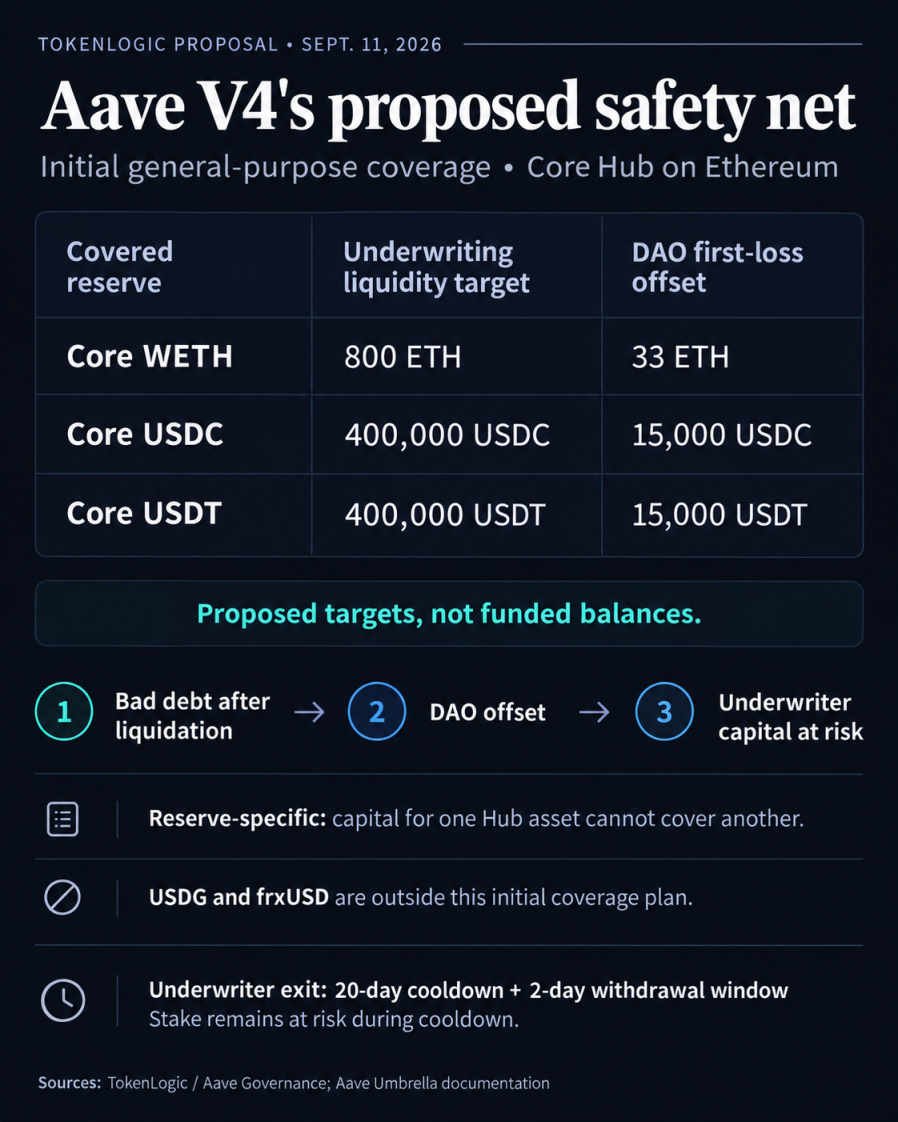
TokenLogic’s plan calls for monitoring conditions once the setup goes live and revisiting the framework at the three-month mark, with the excluded markets up for reconsideration as lending activity matures and supplier bases spread out.
For anyone supplying to Core WETH, USDC or USDT right now, the figure that matters isn’t the 800 ETH headline target. It’s whether underwriters turn up to fund it — because the 33 ETH offset is the only tranche the DAO has genuinely committed to.