

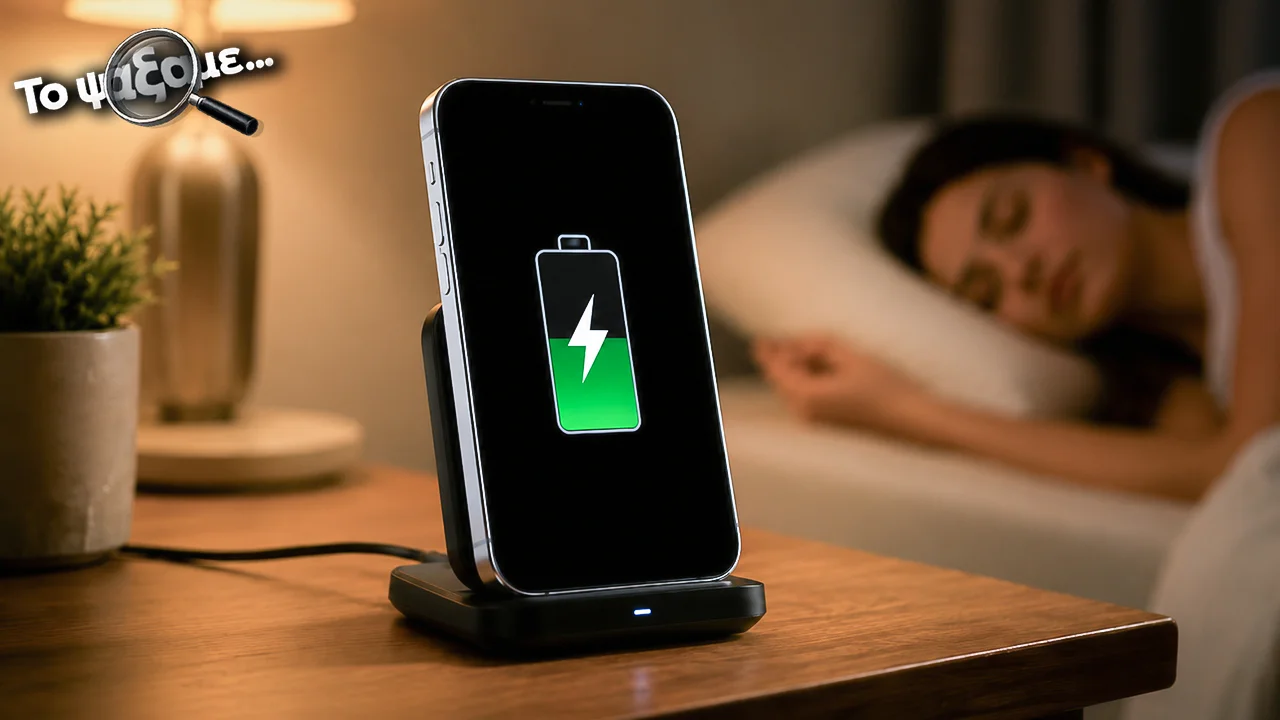
Those eight hours spent plugged in aren’t what ruins your phone battery. The pillow you tucked it under is.
That’s the condensed takeaway from digging into what battery engineers — and the handset makers themselves — actually say about charging while you sleep. The habit that so many people feel vaguely guilty about sits near the very bottom of the list of things that genuinely matter.

Your phone stops charging before you’re asleep
Today’s smartphones combine lithium batteries with charge management chipsets that behave exactly as you’d want them to. Once the meter reads 100%, the handset essentially shuts the charging process down.
Your phone isn’t quietly drinking power all night the way it does during that panicked 15-minute top-up before you rush out the door. What happens instead: the battery loses a small amount of charge on its own, the system flicks charging back on just long enough to restore 100%, then switches off again.

Apple takes it a step further with Optimized Battery Charging, a feature that holds the handset at 80% through most of the night and finishes the climb to 100% only in the hour or so before your alarm. Android offers equivalents of its own: Adaptive Charging, or Samsung’s Battery Protection, which limits charging to 85%.
Switch those on and an overnight charge becomes gentler still. None of this is a loophole you’re getting away with — it’s how the hardware was designed to work.
The real culprit is heat, and you’re probably creating it
Now for the honest caveat. “Not a problem” and “ideal” aren’t the same thing.
Lithium cells really do wear out faster when they sit at a full charge for extended periods, and that effect intensifies if the device is running warm. Time plugged in isn’t the villain. The damaging combination is a high charge percentage paired with high temperature.

And that’s precisely why sleeping with the phone stuffed under your pillow is the habit worth breaking. Charge it beneath a pillow, under a heavy blanket, or anywhere air can’t circulate, and the heat has nowhere to go. That puts strain on the battery, and in extreme cases it becomes an actual safety hazard.
The guidance from researchers who study this is decidedly unglamorous: charge on a hard, flat surface so the device can shed the heat it produces.

Cheap chargers are the other variable
Manufacturer-branded chargers — and accessories from firms with a reputation on the line — ship with protection circuitry that guards against voltage swings and overheating. That no-name adapter you picked up for the price of a coffee may not clear the same safety bar.
In fairness, the vast majority of them do the job without incident. But the probability of something going wrong is measurably higher than with a certified charger, which makes it a poor trade for the few dollars saved.
The 80% rule is real, but it’s not for everyone
There’s no shortage of people who swear you should never take a battery past 80%. And several studies do indicate that a lithium battery retains its performance over a greater number of charge cycles when it isn’t repeatedly pushed to maximum.
None of which makes 100% harmful or something to dodge at all costs. Most people simply want to leave the house with a full tank and the longest possible runtime, and that’s an entirely sensible priority.
Weigh it against your own upgrade habits. Trade phones every two or three years and the difference in battery wear is unlikely to be noticeable day to day. Hang onto a handset for many years, and capping at 80% whenever it’s convenient can help protect battery health.
About those phones bursting into flames
The clips circulating online have left their mark on everyone. The reality is that such incidents are extremely uncommon, and the cause is usually a faulty battery, significant physical trauma to the battery or the phone, or the wrong charger and cable.
A modern handset in good shape, drawing power from a trustworthy charger, is defended by several layers of protection. Even so, it’s sensible to keep it away from flammable surfaces and spots where heat can’t escape.
What I’d change tonight
Stick with the charger that came in the box, or a well-made alternative. Keep the phone away from soft surfaces such as beds and couches, and never under a pillow. Give it a hard, flat spot with airflow.
If squeezing out maximum battery lifespan is the goal, top up in shorter sessions throughout the day. There’s no need to reach 100% on every charge. A common expert recommendation is to avoid dipping below 20% and to avoid parking the battery at 100% for long stretches. Small habits, compounded over years.
Where you can influence it, ambient temperature counts as well. Avoid charging the phone in direct scorching sun or in very cold conditions. Roughly 16 to 22 degrees Celsius is the sweet spot.
So go ahead and charge overnight. Battery lifespan is really shortened by heat, low-quality chargers and repeated exposure to extreme conditions — and not one of those is an unavoidable consequence of leaving the phone plugged in while you sleep. Pick a decent charger, give the device room to breathe, and it should hold up well for years.